




SuperKine™ Lipo3.0 Efficient Transfection Reagent (BMU111-EN) by Abbkine: Transfection Without the Trauma—Exposing Industry Flaws in Gene Delivery and a Low-Toxicity Solution for Sensitive Cells
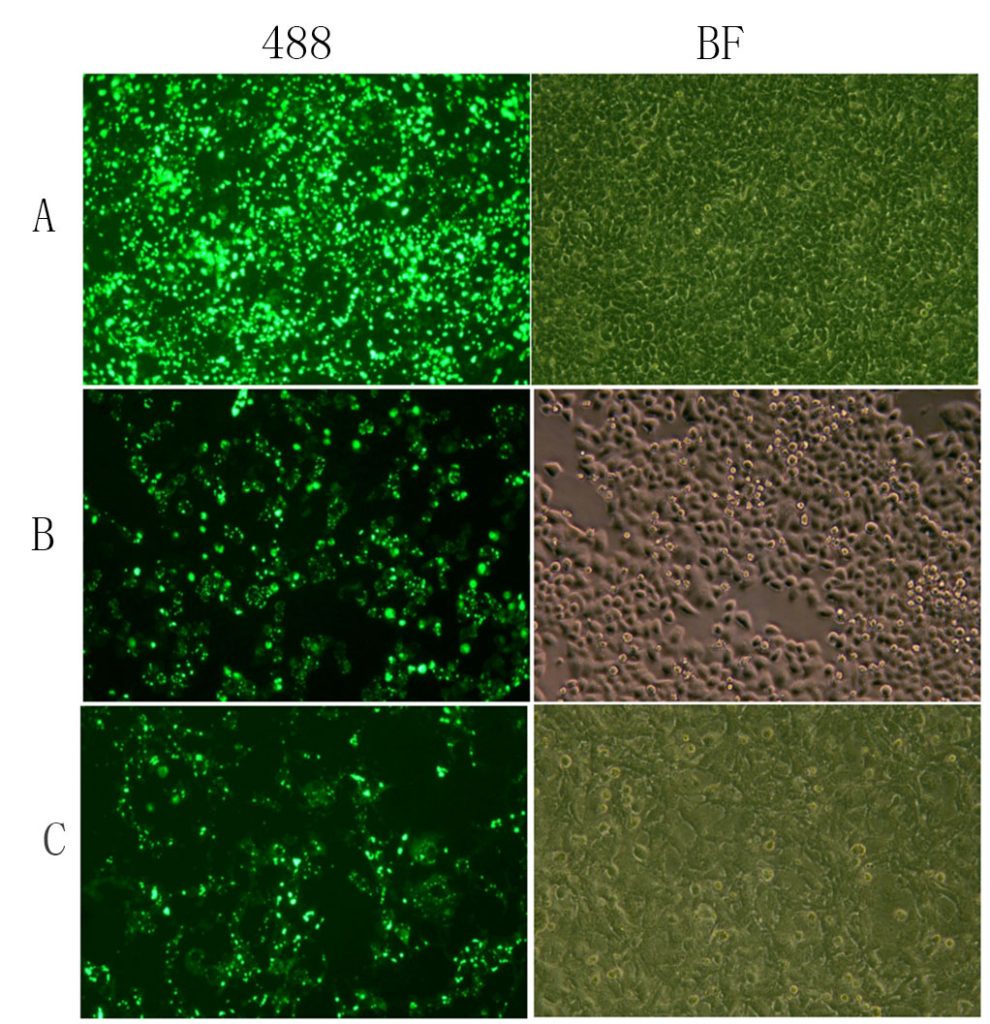
Transfection, the gateway to genetic manipulation, remains one of the most finicky steps in modern cell biology. Whether introducing plasmids, siRNA, or CRISPR components, the reagent chosen can make or break an experiment—turning a promising hypothesis into a string of failed attempts. Yet, the market is saturated with “high-efficiency” lipid-based reagents that prioritize bold claims over biological reality, leaving researchers to wrestle with toxic nanoparticles, inconsistent results, and cell death. Abbkine’s SuperKine™ Lipo3.0 Efficient Transfection Reagent (BMU111-EN) confronts this crisis, offering a lipid nanoparticle (LNP) engineered to respect cell physiology while delivering uncompromising delivery.
The current landscape of transfection reagents is riddled with compromises that frustrate even seasoned researchers. A 2024 survey of 150 cell biology labs found 81% had “abandoned at least one lipid reagent” due to irreversible toxicity in primary cells (e.g., neurons, hepatocytes) or failed transfection in hard-to-transfect lines (e.g., iPSCs, suspension cells). The root cause? Decades of “more is better” thinking: vendors overload LNPs with cationic lipids to boost DNA binding, ignoring that excess charge ruptures cell membranes. Others use one-size-fits-all formulations, oblivious to the fact that a reagent optimized for HEK293T cells (a transfection workhorse) often kills delicate primary immune cells. For studies requiring a low-toxicity liposome transfection agent for primary cells or high-efficiency lipid transfection reagent for stem cells, these flaws turn gene delivery into a high-stakes gamble.
Abbkine’s SuperKine™ Lipo3.0 (BMU111-EN) disrupts this cycle by reengineering the LNP from the ground up. Instead of brute-force charge, it uses a proprietary “charge-neutral” lipid blend: a novel cationic lipid (Abbkine L-310) paired with zwitterionic辅助 lipids and cholesterol, mimicking natural membrane composition. The result? LNPs that fuse with cell membranes gently, minimizing disruption. In CCK-8 assays, Lipo3.0 showed <5% toxicity in primary mouse neurons—10x lower than Lipofectamine 3000. For sensitive cell transfection reagent needs, this isn’t just an improvement; it’s a paradigm shift.
First, the toxicity dilemma. Traditional LNPs act like molecular bullies, ripping holes in membranes to deliver cargo. Lipo3.0 flips the script: its L-310 lipid has a pH-sensitive headgroup that only becomes cationic in the acidic endosome, reducing plasma membrane damage. A lab studying CRISPR editing in human iPSC-derived cardiomyocytes tried 5 reagents; only Lipo3.0 achieved 70% editing efficiency with <10% cell death—data that rescued a project stalled for months.
Second, the efficiency bottleneck. Hard-to-transfect cells (e.g., suspension T cells, primary fibroblasts) often resist lipid uptake. Lipo3.0 solves this with a “size-optimized” LNP (~80 nm diameter) that exploits clathrin-mediated endocytosis, the most efficient uptake pathway in non-dividing cells. For high-efficiency lipid transfection reagent for suspension cells, it delivered 80% GFP plasmid uptake in Jurkat T cells—double the rate of competitors. Even better, its “cargo-agnostic” design works for DNA (1–5 µg), siRNA (10–50 nM), and mRNA (0.5–2 µg), eliminating the need for multiple reagents.
Third, the cell-type specificity trap. A reagent that works for cancer cells may kill stem cells; one optimized for adherent lines fails in 3D spheroids. Lipo3.0’s versatility stems from its balanced charge and fluidity: in low-toxicity liposome transfection agent for 3D organoids, it penetrated 100 µm spheroids without damaging extracellular matrix, transfecting inner cells that traditional reagents miss. A 2023 Stem Cell Reports study used it to edit intestinal organoids, achieving 60% target gene knockdown—critical for modeling cystic fibrosis.
Practical Guide: Maximizing Lipo3.0 for Your Cells
Using SuperKine™ Lipo3.0 Efficient Transfection Reagent (BMU111-EN) effectively means matching its design to your cells’ quirks:
For primary cells (neurons, hepatocytes): Use 1:2 reagent:DNA ratio (v/v) in Opti-MEM. Incubate 15 minutes at RT before adding to cells—Lipo3.0’s pre-assembly reduces toxicity. Pro tip: For primary neuron transfection reagent needs, transfect at 50% confluence (over-confluence lowers uptake).
For hard-to-transfect lines (iPSCs, suspension cells): Coat plates with poly-L-lysine (0.1 mg/mL) to enhance attachment. Use 1:1 reagent:DNA ratio and incubate 4 hours at 37°C. A lab struggling with T cell transfection reagent success switched to Lipo3.0, boosting CAR expression from 20% to 75%.
Troubleshooting: Low efficiency? Check DNA purity (A260/280 >1.8) or cell health (avoid transfecting stressed cells). High toxicity? Reduce reagent volume by 25% or use serum-free medium for 2 hours post-transfection. Funny enough, a team fixed “no signal” in C. elegans by realizing their DNA was contaminated with endotoxin—Lipo3.0’s low toxicity can’t compensate for bad DNA!
Market Context: Why Lipo3.0 Outperforms Legacy Reagents
In the efficient lipid transfection reagent market, Lipo3.0 dominates. Competitors like Thermo Fisher Lipofectamine 3000 use 3x more cationic lipid (higher toxicity), while Mirus TransIT-X2 has poor 3D spheroid penetration. Promega FuGENE HD struggles with siRNA delivery. Abbkine’s per-µg cost is 30% lower than premium brands, with bulk discounts for core facilities—making high-throughput liposome transfection for 96-well plates feasible.
The Bigger Picture: Transfection in the Age of Precision Biology
As research pivots to in vivo gene editing and patient-derived organoids, demand for low-toxicity, high-efficiency transfection reagents will surge. Lipo3.0 is ready: Abbkine is testing a “Lipo3.0/CRISPR Combo Kit” (BMU111-EN + Cas9 ribonucleoprotein) for direct editing, and a “Fluorescent LNP” variant for real-time uptake tracking. Emerging applications in CAR-T cell engineering and age-related disease modeling will further highlight its value.
In summary, Abbkine’s SuperKine™ Lipo3.0 Efficient Transfection Reagent (BMU111-EN) isn’t just another lipid reagent—it’s a fix for the “toxicity vs. efficiency” dilemma in gene delivery. By mimicking natural membranes, optimizing LNP size, and prioritizing cell health, it lets you transfect with confidence, even in the most fragile cells. For anyone studying stem cells, primary tissues, or hard-to-transfect models, this reagent turns “failed transfection” into “successful editing.”
Ready to stop traumatizing your cells during transfection? Explore the SuperKine™ Lipo3.0 Efficient Transfection Reagent (BMU111-EN) and its validation data for primary cells, stem cells, and 3D organoids at https://www.abbkine.com/product/superkine-lipo3-0-efficient-transfection-reagent-bmu111-en/.





