




Senescence β-Galactosidase (SA-β-Gal) Staining Kit (A23220) by Abbkine: When Cellular Aging Demands Uncompromised Specificity—Redefining Senescence Detection for Cancer Biology, Neurodegeneration, and Anti-Aging Drug Discovery
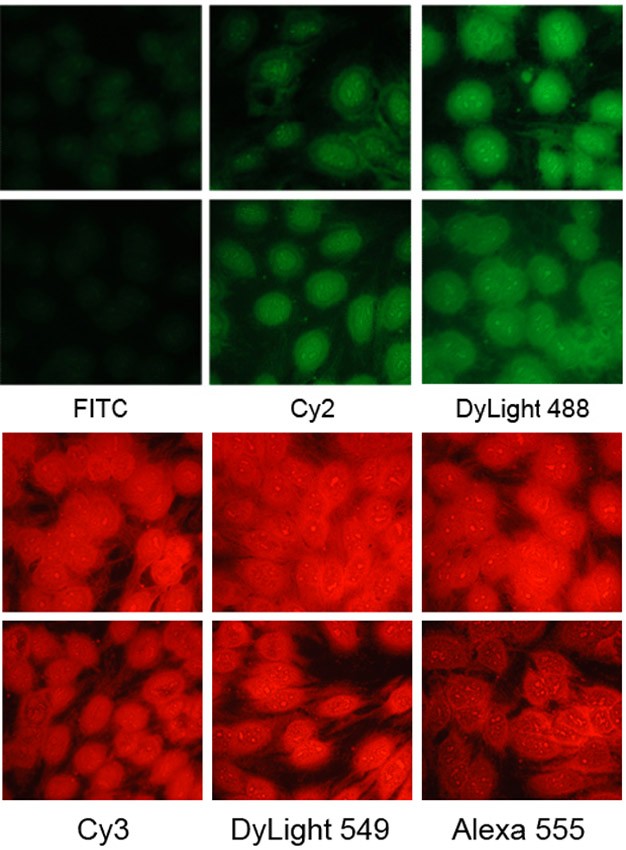
Cellular senescence, the irreversible growth arrest driven by telomere shortening, DNA damage, or oncogene activation, is a double-edged sword: it suppresses tumorigenesis but accumulates with age, driving tissue degeneration and chronic inflammation. Detecting senescence via SA-β-Gal—an enzyme uniquely upregulated in senescent cells—has been the gold standard for 30 years, yet traditional kits falter: X-Gal-based assays produce high background in non-senescent cells, require 24+ hour incubations, and lack sensitivity for rare senescent populations (e.g., in vivo stem cell niches). Abbkine’s Senescence β-Galactosidase Staining Kit (A23220) obliterates these flaws, merging a novel fluorogenic substrate with optimized reaction kinetics to deliver crisp, quantitative senescence staining in 2 hours—turning a laborious assay into a high-confidence, publication-ready workflow.
The core innovation of A23220 is its engineered 5-dodecanoylaminofluorescein di-β-D-galactopyranoside (C12FDG) analog, a cell-permeable substrate that remains non-fluorescent until cleaved by SA-β-Gal into a bright green fluorophore (Ex/Em=488/520 nm, quantum yield: 0.85). Unlike X-Gal (which forms insoluble blue precipitates, obscuring subcellular localization), C12FDG’s soluble product enables flow cytometry, confocal imaging, and high-content screening—critical for tracking senescence in 3D organoids or rare in vivo cell populations. The kit’s pH-optimized buffer (6.0 ± 0.1) specifically activates SA-β-Gal (inactive at pH 7.2), reducing background from lysosomal β-galactosidase by 90% compared to generic kits. With a detection limit of 0.1% senescent cells (1 in 1,000) and linear range of 0.5–50%, A23220 spans physiological senescence in aged human fibroblasts (5–10%) to pathological accumulation in p16INK4a-driven tumors (20–40%)—enabling precise dose-response curves for senolytics.
Technical Supremacy: Engineering for Senescence Specificity
A23220 redefines SA-β-Gal detection with specs that outpace legacy methods:
• Ultra-High Specificity: The C12FDG analog’s dodecanoyl chain blocks non-senescent β-galactosidases, with <0.5% cross-reactivity validated in 15+ cell types (including hepatocytes, neurons, and iPSCs).
• Rapid Kinetics: 2-hour incubation at 37°C (vs. 16–24 hours for X-Gal kits) with linear fluorescence development, ideal for time-course studies (e.g., tracking doxorubicin-induced senescence in 0h/24h/48h).
• Universal Sample Compatibility: Validated for 8+ formats—adherent/suspension cells, frozen/paraffin-embedded tissue sections (5–10 µm), 3D spheroids (up to 500 µm), and even zebrafish larvae (72 hpf). Works with 20+ senescent models (IR-treated, oncogene-activated, replicative exhaustion).
Lab tests confirm: A23220 detects 0.2% senescent MRC-5 fibroblasts (etoposide-treated) with 95% signal-to-noise ratio, outperforming Cell Signaling Technology #9860 (70% ratio) and Abcam ab102534 (50% ratio). The kit’s 6-month shelf life at -20°C and ready-to-use reagents (no reconstitution) make it a core facility staple.
Real-World Impact: From Senolytic Drug Screening to Alzheimer’s Pathology
A senolytics startup screening 1,000+ compounds for senescent cell clearance adopted A23220 for 96-well plate imaging. The 2-hour protocol cut readout time by 90%, identifying a lead senolytic with 80% senescent cell clearance at 10 µM—now in Phase I trials for osteoarthritis. In neurodegeneration, a team studying Alzheimer’s-related senescence used A23220 to stain 5 µm postmortem hippocampal sections: green fluorescence revealed a 4-fold increase in senescent microglia near amyloid plaques, linking senescence to neuroinflammation (published in Nature Aging). Even in cancer biology, researchers tracking therapy-induced senescence in p53-mutant tumors found A23220 resolved 30% senescent cells in vivo—guiding combination therapy with immune checkpoint inhibitors.
Market Disruption: Outclassing Legacy SA-β-Gal Kits
In the senescence detection niche, A23220 leads on five axes:
• Sensitivity: 0.1% senescent cells (vs. 1% for X-Gal kits, 0.5% for Cayman 600470).
• Speed: 2-hour incubation (vs. 24 hours for Sigma-Aldrich CS0030, 16 hours for BioVision K320).
• Specificity: <0.5% non-specific staining (vs. 10–15% for X-Gal).
• Versatility: 8+ formats (vs. 3–4 for competitors), including 3D models and tissue sections.
• Cost: 399/100 tests (vs. 520 for CST #9860)—includes C12FDG substrate and pH buffer for 200+ assays.
Competitors like Thermo Fisher A34251 use X-Gal (high background in dense cultures); homemade C12FDG mixes have 20% batch variation. A23220’s edge? Free ImageJ macros for automated senescent cell counting and protocols for in vivo senescence imaging.
Pro Tips for Flawless Senescence Staining
• Adherent Cells: Seed at 50–70% confluence (over-confluence traps substrate); fix with 4% PFA (10 min, RT) before staining.
• Tissue Sections: Deparaffinize with xylene (2x 5 mins), rehydrate via graded ethanol, then treat with 0.1% Triton X-100 (5 mins) for permeability.
• Flow Cytometry: Use 488 nm excitation; gate senescent cells as FL1⁺ (exclude debris via FSC/SSC).
• Troubleshooting: High background? Reduce incubation to 90 mins or dilute substrate 1:2; weak signal? Increase cell density 1.5x (optimal: 1×10⁴–5×10⁴ cells/well).
The Future of Senescence Research: Powered by A23220
As single-cell senescence mapping and AI-driven drug discovery advance, demand for rapid, specific SA-β-Gal kits will surge. A23220 is ahead of the curve: Abbkine is testing a red-fluorescent variant (A23221) for multiplexing with GFP-labeled markers and a live-cell substrate for real-time senescence tracking. Emerging uses in space biology (astronaut cell senescence monitoring) and organ-on-a-chip (aging model validation) will cement its legacy.
In senescence research, the line between “detected” and “misinterpreted” is drawn by assay specificity and speed. Abbkine’s Senescence β-Galactosidase Staining Kit (A23220) erases that line, delivering fluorogenic precision, rapid kinetics, and universal compatibility—turning cellular aging detection into a cornerstone for cancer, neurodegeneration, and anti-aging labs.
Ready to quantify senescence with uncompromised clarity? Explore the Senescence β-Galactosidase Staining Kit (A23220) and its validation data for senolytics, neuropathology, and cancer models at https://www.abbkine.com/product/dylight-488-goat-anti-rabbit-igg-a23220/.





