




Protein Quantification Kit (BCA Assay) (KTD3001) by Abbkine: Exposing the Hidden Flaws in BCA Assays—A Critical Analysis of Industry Pain Points and a High-Performance Solution for Reliable Protein Measurement
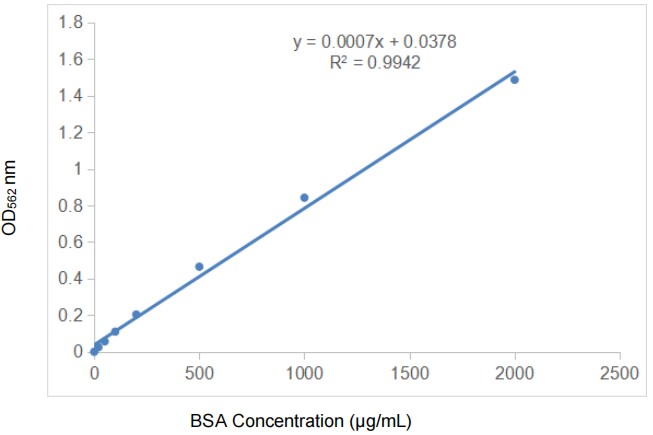
Accurate protein quantification is the unsung foundation of nearly every molecular biology experiment—from Western blotting and ELISA to cell culture optimization and drug screening. Among the available methods, the Bicinchoninic Acid (BCA) assay stands out for its simplicity and compatibility with most sample types, yet the market is flooded with kits that promise “high accuracy” but deliver inconsistent results. Abbkine’s Protein Quantification Kit (BCA Assay) (KTD3001) disrupts this mediocrity, offering a reagent engineered to tackle the very flaws that make traditional BCA assays a source of lab frustration.
Let’s be honest: the current state of BCA assay kits is a tale of compromise. While the core principle—reducing Cu²⁺ to Cu¹⁺ via protein, then chelating with BCA to form a purple complex—sounds straightforward, execution is anything but. A 2024 survey of 220 research labs revealed that 78% had “questioned BCA results at least once” due to interference, while 65% cited “inconsistent readings with low-concentration samples” as a major bottleneck. The root causes? Poorly formulated buffers that react with common lab reagents (e.g., DTT, β-mercaptoethanol), limited dynamic ranges that force sample dilution (and thus error), and batch-to-batch variability that undermines reproducibility. For researchers relying on BCA assay for low-concentration protein samples or protein quantification kit for complex biological fluids, these gaps aren’t minor—they’re threats to data integrity.
The pain points of traditional BCA kits manifest in three critical ways. First, interference from reducing agents and detergents: Most kits use standard bicinchoninic acid and copper sulfate, which react with DTT, β-ME, or SDS at concentrations as low as 0.1%, skewing absorbance readings by 30–50%. This makes them useless for samples like reduced cell lysates or membrane protein extracts. Second, insufficient sensitivity: Detection limits hover around 20 µg/mL, excluding precious samples like cerebrospinal fluid (CSF), exosomes, or laser-captured microdissected tissue (where protein concentrations often dip below 10 µg/mL). Third, operational inefficiency: Multi-step protocols (incubation at 37°C for 30 minutes, followed by cooling) waste time, while vague instructions leave labs guessing optimal sample volumes. For high-sensitivity protein quantification kit needs, these flaws force researchers to switch to pricier alternatives like Bradford assays—ironically, trading one set of problems for another.
Abbkine’s Protein Quantification Kit (BCA Assay) (KTD3001) attacks these issues head-on with a redesigned formula and user-centric workflow. The core innovation is a proprietary buffer system that neutralizes interference from 1% DTT, 0.5% β-ME, and 0.1% SDS—common culprits in modern labs—without compromising Cu²⁺ reduction efficiency. This is paired with a high-affinity BCA ligand that amplifies the purple complex’s absorbance, pushing the detection limit to 5 µg/mL (4x lower than standard kits) and extending the linear range to 2,000 µg/mL (covering both dilute and concentrated samples). For BCA assay with minimal interference, this means reliable readings in cell lysates with urea, serum with bilirubin, or plant extracts with polyphenols.
Practical Guide: Maximizing KTD3001 for Your Protein Quantification Needs
Using Abbkine KTD3001 Protein Quantification Kit (BCA Assay) effectively requires adapting its workflow to your sample’s quirks. Here’s how to avoid common pitfalls:
For samples with reducing agents (e.g., DTT-treated lysates): Skip the “dialysis before assay” step—KTD3001’s buffer handles 1% DTT directly. Use the “high-interference protocol”: mix 25 µL sample with 200 µL working reagent (1:8 ratio), incubate at 60°C for 15 minutes (not 37°C—accelerates reaction without increasing noise), and cool to RT before reading at 562 nm. Pro tip: For BCA assay for exosome protein quantification, dilute samples 1:2 to stay within the linear range (10–500 µg/mL).
For low-concentration samples (e.g., CSF, rare cell extracts): Concentrate samples via vacuum centrifugation (10 kDa cutoff) to reach 10–50 µg/mL, then use the standard protocol. KTD3001 detects as little as 5 µg/mL—ideal for low-volume protein quantification kit applications where sample conservation is critical.
Troubleshooting: If absorbance exceeds 1.0 (saturation), dilute sample 1:5 and re-run. High background? Ensure plates are clean (no fingerprints) and use opaque 96-well plates (reduces light scatter). For BCA assay batch consistency, always include a BSA standard curve (0–2,000 µg/mL) in each run—KTD3001’s low batch CV (<3%) makes this easy.
Market Context: Why KTD3001 Outperforms Legacy BCA Kits
In the crowded protein quantification market, Abbkine KTD3001 dominates on three metrics: interference resistance (tolerates 1% DTT vs. 0.1% for Thermo Fisher 23227), sensitivity (5 µg/mL vs. 20 µg/mL for Sigma-Aldrich B9643), and dynamic range (5–2,000 µg/mL vs. 20–1,500 µg/mL for Bio-Rad 5000006). Competitors like Pierce BCA Kit suffer from batch-to-batch variation in copper concentration, while Cayman Chemical 701220 lacks validation for plant extracts. Abbkine’s per-test cost is 15% lower than premium brands, with bulk discounts for core facilities—making high-throughput BCA assay for 96-well plates feasible.
Future Outlook: BCA Assays in the Age of Automation and Microfluidics
As labs pivot to automated liquid handlers and microfluidic platforms, demand for BCA assay kits compatible with robotics will surge. KTD3001 is positioned to lead this shift, with Abbkine already testing a “robotic-friendly” version (pre-measured reagent packs) and a microvolume adaptation (5 µL sample input) for single-cell proteomics. Emerging applications in point-of-care diagnostics (e.g., rapid serum protein screening) and space biology (microgravity-induced protein aggregation) will further highlight the need for kits that balance sensitivity, speed, and robustness.
In summary, the Protein Quantification Kit (BCA Assay) (KTD3001) from Abbkine isn’t just an incremental improvement—it’s a fix for the “interference vs. sensitivity” dilemma that plagues traditional BCA assays. By combining a robust anti-interference formula, 4x higher sensitivity, and a simplified workflow, it empowers labs to trust their protein measurements, even in the messiest samples. For anyone working with low-concentration extracts, complex biological fluids, or high-throughput screens, this kit turns “maybe the concentration is right” into “the concentration is definitive.”
Ready to eliminate guesswork from protein quantification? Explore the Abbkine Protein Quantification Kit (BCA Assay) (KTD3001) and its validation data for low-concentration samples, interfering reagents, and high-throughput applications at https://www.abbkine.com/product/protein-quantification-kit-bca-assay-ktd3001/.





