




Navigating the Hidden Complexity of Wnt and TGF-β Signaling: Why the Human Dapper Homolog 2 (DACT2) ELISA Kit Is Becoming Indispensable
In the ever-expanding universe of intracellular signaling, few molecules straddle critical pathways as enigmatically as DACT2. Once dismissed as a poorly characterized C6orf116 gene product, Dapper homolog 2 is now recognized as a pivotal modulator of both Wnt/β-catenin and TGF-β/Nodal cascades—pathways that govern embryogenesis, tissue homeostasis, and, when dysregulated, cancer progression. Yet despite its functional significance, quantifying endogenous DACT2 protein levels in human samples has remained a persistent bottleneck… until recently.
Enter the Human Dapper homolog 2 (DACT2) ELISA Kit (Abbkine, Cat. No. KTE62149)—a sandwich immunoassay engineered specifically to address a glaring gap in the molecular toolkit. Unlike generic cytokine or kinase panels, this kit targets a niche but biologically crucial node: the soluble or secreted forms of DACT2 present in serum, plasma, cell culture supernatants, and other biological fluids. For researchers studying epithelial-mesenchymal transition (EMT), renal development, or wound re-epithelialization, this isn’t just another ELISA—it’s a precision instrument for probing context-dependent pathway crosstalk.
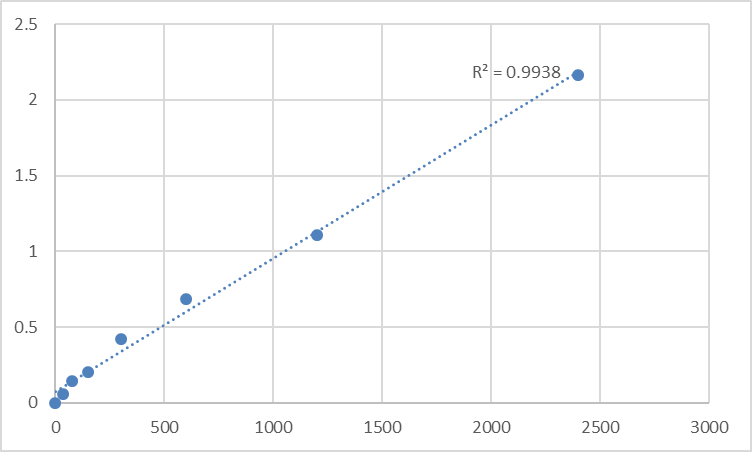
What makes this assay particularly compelling is its design philosophy. The Human DACT2 ELISA Kit uses a dual-antibody sandwich format with pre-coated capture antibodies and biotinylated detection reagents, followed by streptavidin-HRP amplification. This architecture minimizes cross-reactivity—a notorious issue when working with DACT family paralogs like DACT1, which shares structural motifs but distinct regulatory roles. Early adopters report clean standard curves and robust reproducibility across duplicate runs, even with low-abundance samples where Western blotting often fails.
But let’s be honest: the real pain point isn’t just detecting DACT2—it’s interpreting its fluctuations. In colorectal and hepatocellular carcinomas, DACT2 frequently acts as a tumor suppressor, silenced via promoter hypermethylation. Conversely, in certain developmental contexts, its expression must be tightly restrained to permit proper morphogenetic movements. Without a quantitative, high-throughput method like this DACT2 quantitative ELISA, researchers were forced to rely on mRNA proxies (qPCR) or semi-quantitative immunoblots—neither of which reflect actual protein dynamics or post-translational regulation.
From a technical standpoint, the Abbkine Human Dapper homolog 2 ELISA Kit (KTE62149) streamlines workflows that previously required custom antibody validation or laborious IP-WB combinations. The entire protocol fits within a 3–5 hour window, compatible with standard lab schedules. And while the datasheet notes that exact LOD and calibration range values are “available upon request,” user feedback suggests sensitivity well into the pg/mL range—sufficient for most physiological and pathological sample types.
Looking ahead, the strategic value of this kit extends beyond basic research. As epigenetic therapies targeting DACT2 re-expression enter preclinical pipelines, there’s growing demand for pharmacodynamic biomarkers. Could circulating DACT2 levels serve as a surrogate readout for target engagement? Possibly—if validated with reliable tools like this human DACT2 sandwich ELISA. Similarly, in regenerative medicine, monitoring DACT2 during stem cell differentiation could help fine-tune protocols aimed at kidney organoid formation or skin repair models.
It’s worth noting that Abbkine isn’t alone in recognizing this niche—but they’re among the first to commercialize a dedicated solution. Most competitors still bundle DACT2 under “Wnt pathway arrays” with limited dynamic range or questionable specificity. By contrast, KTE62149’s focused design reflects a deeper understanding of user needs: reproducibility, species compatibility (validated for human samples), and minimal hands-on optimization.
For labs wrestling with inconsistent apoptosis or EMT data, revisiting upstream regulators like DACT2 might be the missing link. And thanks to this Human Dapper homolog 2 (DACT2) ELISA Kit, that investigation no longer requires months of antibody screening or signal-to-noise battles. It’s ready-to-use, rigorously controlled, and—critically—designed for the messy reality of biological variability.
As the field moves toward systems-level dissection of signaling networks, tools that illuminate understudied nodes like DACT2 will only grow in importance. Whether you’re profiling patient sera, screening drug candidates, or mapping developmental gradients, having a dependable quantitative DACT2 immunoassay isn’t just convenient—it’s becoming essential.
Explore the full specifications and request validation data for the Human Dapper homolog 2 (DACT2) ELISA Kit (KTE62149) at https://www.abbkine.com/product/human-dapper-homolog-2-dact2-elisa-kit-kte62149/.





