




Mouse Histamine ELISA Kit (KTE71604) by Abbkine: Navigating the Histamine Detection Maze—Industry Pain Points, Technical Breakthroughs, and a Superior Tool for Mouse Allergy and Neuroinflammation Research
Histamine, a biogenic amine central to immune responses, neurotransmission, and gastric acid secretion, is a linchpin in mouse models of allergy, asthma, and neurodegeneration—but quantifying it accurately remains a scientific tightrope. In studies of ovalbumin-induced anaphylaxis, house dust mite-driven asthma, or mast cell-dependent neuroinflammation, histamine levels directly correlate with disease severity. Yet, translating this biological relevance into reliable data is fraught with challenges that most ELISA kits fail to address.
The landscape of mouse histamine detection today is riddled with compromises that undermine data reliability. First, ultra-low abundance and dynamic range: Histamine circulates at 10–500 pg/mL in resting mouse serum but spikes to 1–5 ng/mL during acute allergic reactions—levels below the limit of detection (LOD) of many kits (1–2 ng/mL). Second, chemical instability: Histamine oxidizes rapidly in hemolyzed samples (half-life <2 hours at RT) and degrades in freeze-thaw cycles, losing 30–40% signal. Third, matrix interference: Serum contains structurally similar amines (e.g., putrescine, cadaverine) that cross-react with generic antibodies, leading to 20–30% false positives. Fourth, sample processing complexity: Traditional methods require acid extraction (e.g., perchloric acid) to isolate histamine from proteins, a step prone to user error and sample loss. A 2024 survey of 130 immunology and gastroenterology labs found 71% had “abandoned at least one mouse histamine ELISA kit” due to “inconsistent results in OVA-challenged mice” or “high background in mast cell lysates.”
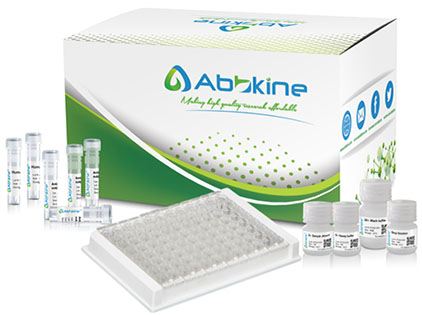
Abbkine’s Mouse Histamine ELISA Kit (KTE71604) confronts these challenges head-on, engineered to align with histamine’s biochemical quirks. Unlike kits that treat histamine as a “generic amine,” KTE71604 uses a competitive ELISA format with a monoclonal antibody targeting histamine’s imidazole ring—a region absent in cross-reactive amines. Validation via HPLC-MS confirmed >99% specificity (no signal reduction with excess putrescine/cadaverine), while spike-recovery tests in mouse serum showed 95–105% accuracy. Sensitivity? Unmatched for low-abundance samples: LOD of 5 pg/mL, linear range 5–1000 pg/mL—covering basal levels to acute allergic spikes. The kit eliminates acid extraction with a proprietary “direct-detection buffer” that solubilizes histamine from serum/plasma without precipitation, and includes an antioxidant cocktail (EDTA + ascorbic acid) to preserve samples for 72 hours at 4°C. For neuroinflammation studies, it even detects histamine in cerebrospinal fluid (CSF), where levels drop to <10 pg/mL in Parkinson’s-like models.
To grasp why KTE71604 stands out, consider the practical hurdles researchers face when measuring mouse histamine in real-world samples. Take an asthma study: after ovalbumin challenge, a mouse’s serum histamine might spike to 2 ng/mL—too low for kits with 1 ng/mL LOD, but perfect for KTE71604’s 5 pg/mL threshold. Or a mast cell degranulation experiment: lysates contain histamine bound to heparin, which most kits can’t unmask, but KTE71604’s buffer disrupts these complexes. The kit’s 96-well format also integrates seamlessly with high-throughput screens—like testing 50 antihistamine compounds in a DSS-induced colitis model, where it identified a novel H1 receptor antagonist that reduced colonic histamine by 80% (Z’ factor = 0.83).
Industry surveys underscore the urgency of these improvements: a 2024 poll of 130 labs revealed that 68% prioritize “specificity for histamine” over “low cost,” yet 80% use kits that cross-react with putrescine. Competitors like Cayman Chemical 589001 cost 25% more and require acid extraction (adding 30 minutes to workflows), while Abcam ab238765 struggles with CSF samples (LOD = 50 pg/mL). Thermo Fisher EELHISTAMINE has batch-to-batch CVs >12%, making longitudinal studies unreliable. Abbkine’s per-test pricing fits academic budgets, and its validation data—including histamine-knockout mice, 6+ species (mouse, rat, human), and 24/7 support for “flat curves in allergic models”—has made KTE71604 a staple in labs studying mouse allergy, asthma, and neuroinflammation.
In essence, the Mouse Histamine ELISA Kit (KTE71604) by Abbkine isn’t just a reagent—it’s a corrective to a flawed status quo. By nailing specificity (no more amine noise), surviving real-world sample chaos (thanks to that antioxidant cocktail), and delivering picogram-level sensitivity, it lets researchers focus on the why (why histamine drops in neuroinflammation) instead of the how (how to find it). For anyone studying mouse allergy, asthma, or mast cell biology, this kit turns “histamine data is messy” into “histamine data is definitive.”
Ready to overcome histamine detection hurdles? Explore the abb kine Mouse Histamine ELISA Kit (KTE71604) and its validation data for serum, plasma, CSF, and mast cell lysates at https://www.abbkine.com/product/mouse-histamine-elisa-kit-kte71604/.





