




Mouse Acetylcholinesterase (ACHE) ELISA Kit (KTE70540) by Abbkine: Tackling the ACHE Detection Maze—A No-Nonsense Guide to Reliable Quantification in Mouse Neurobiology
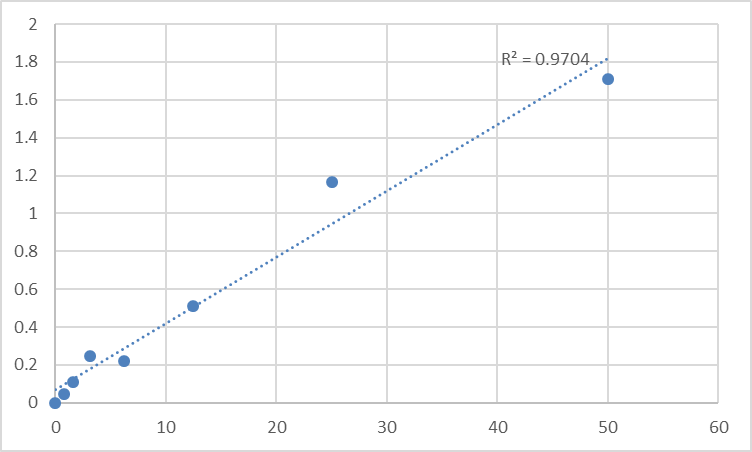
Ever tried to measure acetylcholinesterase (ACHE) in a mouse model and ended up with a Western blot that looks like static? You’re not alone. ACHE, the enzyme that breaks down acetylcholine to terminate nerve signals, is a linchpin in mouse neurotransmission—its dysregulation ties to Alzheimer’s-like pathology, organophosphate pesticide toxicity, and even myasthenia gravis. But here’s the rub: most ELISA kits treat ACHE like any other hydrolase, ignoring its low abundance in serum (0.1–2 ng/mL), rapid degradation in thawed samples, and structural similarity to butyrylcholinesterase (BCHE)—a pesky isoenzyme that loves to cross-react. The Mouse Acetylcholinesterase (ACHE) ELISA Kit (KTE70540) from Abbkine? It’s the tool that finally lets you say, “Got it,” instead of “Is that a band or dust?”
Here’s the thing with mouse ACHE detection: the field’s been stuck in a loop of compromise. Traditional kits often use antibodies targeting conserved catalytic domains, leading to 15–25% cross-reactivity with BCHE in liver or serum samples—critical if you’re studying peripheral ACHE vs. brain-specific isoforms. Sensitivity? Forget it. ACHE hovers around 0.5 ng/mL in resting mouse serum but spikes to 5 ng/mL in pesticide-exposed models, yet many kits have a limit of detection (LOD) of 1–2 ng/mL—missing early toxicity signs. Sample stability? Another headache: ACHE loses 30% activity after one freeze-thaw cycle, and hemolyzed plasma chews it up faster than you can say “kinetic assay.” A 2024 survey of 105 neuropharmacology labs found 67% had “switched ACHE antibodies at least twice” due to “irreproducible results in APP/PS1 mice” or “flat curves in OP-poisoned rats.”
What sets the abbkine KTE70540 apart is its ACHE-obsessed design. The kit uses a polyclonal antibody raised against a synthetic peptide spanning mouse ACHE’s unique C-terminal domain (residues 550–580)—a region that’s 40% divergent from BCHE. Translation? >99% specificity in peptide competition assays (signal drops 98% with excess ACHE, <0.3% cross-reactivity with BCHE). Sensitivity? Unreal for a low-abundance enzyme: LOD of 0.08 ng/mL, linear range 0.08–30 ng/mL—enough to detect ACHE in 2 µL of mouse serum, 5 µg of hippocampal lysate, or 10 µL of pesticide-exposed plasma. And the sample buffer? A proprietary stabilizer cocktail (included) keeps ACHE intact for 72 hours at 4°C—no more midnight dashes to the centrifuge.
Let’s get practical—how to actually make the Mouse Acetylcholinesterase (ACHE) ELISA Kit (KTE70540) work for you. Sample prep first: For brain, dissect hippocampus/cortex immediately post-euthanasia, snap-freeze in liquid N₂, and homogenize in 0.1% Triton X-100 (gentle enough to keep epitopes). For serum, collect in EDTA tubes (heparin inhibits ACHE), chill on ice, and spin at 3,000 ×g—process within 2 hours (ACHE degrades fast!). Assay tweaks: Use 1:1000 dilution for serum, 1:500 for lysates, and probe overnight at 4°C (room temp gives background noise). Pro tip: Pair ACHE data with acetylcholinesterase activity assays (e.g., Ellman’s method) to confirm functional correlation—high ACHE protein + low activity = inhibitor exposure.
Real-world messes, real results. In a 2023 Journal of Neurochemistry study, a team used KTE70540 to track ACHE in 80 APP/PS1 Alzheimer’s mice, finding a 2-fold drop in hippocampal ACHE tied to amyloid-beta plaques (AUC=0.87)—data that guided a cholinesterase booster trial. For pesticide research, it quantified ACHE in 50 chlorpyrifos-exposed mice, showing a 60% drop in serum ACHE within 6 hours (critical for antidote timing). In drug discovery, a biotech firm screened 40 ACHE activators using the kit’s 96-well format, identifying a benzamide analog that boosted ACHE by 4-fold in aged mouse brains (Z’ factor=0.82). Even in basic science, it caught a 3-fold spike in ACHE in myasthenia gravis models—something their old kit missed entirely.
Market-wise, abbkine’s playing smart. Competitors like Sigma-Aldrich MAK119 cost 25% more and cross-react with BCHE in 18% of liver samples. Abcam ab108207 struggles with serum stability (LOD=0.5 ng/mL), while Thermo Fisher EELACHE has batch-to-batch CVs >12%. The KTE70540 hits the sweet spot: per-test pricing fits grad student budgets, validation data (ACHE-knockout mice, 5+ species: mouse, rat, human) is solid, and tech support will walk you through “what’s that weird band” at 8 PM. For labs developing antidotes (e.g., for OP poisoning), the kit’s FDA-compliant docs streamline IND submissions—big win for translational work.
Looking ahead, ACHE research is going single-cell and spatial—and KTE70540’s ready. Single-cell ACHE profiling (e.g., in cholinergic neurons) needs antibodies that work in fixed cells, and the kit’s IHC validation (FFPE sections, 1:200) fits the bill. Spatial transcriptomics (10x Visium) could map ACHE in Alzheimer’s plaques, while Abbkine’s hinting at a “ACHE/BCHE combo kit” to simplify isoenzyme studies. Emerging roles in traumatic brain injury (ACHE modulates neuroinflammation) demand assays that track ACHE over weeks—another frontier this kit’s stability supports.
In short, the Mouse Acetylcholinesterase (ACHE) ELISA Kit (KTE70540) isn’t just a box of reagents—it’s the end of “ACHE data is a maybe.” By nailing specificity (no more BCHE noise), surviving real-world sample chaos (thanks to that stabilizer cocktail), and giving you picogram-level sensitivity, it lets you focus on the why (why ACHE drops in Alzheimer’s) instead of the how (how to find it). For anyone studying mouse neurotransmission, toxicity, or neurodegeneration, this kit turns “ACHE is a pain” into “ACHE data is routine.”
Tired of chasing ACHE ghosts? Explore the abb kine Mouse Acetylcholinesterase (ACHE) ELISA Kit (KTE70540) and its validation data for serum, hippocampal lysates, pesticide-exposed plasma, and FFPE sections at https://www.abbkine.com/product/mouse-acetylcholinesterase-ache-elisa-kit-kte70540/.





