




Human Synapsin-1 (SYN1) ELISA Kit (Abbkine KTE60411): Precision Synaptic Protein Detection in the Age of Neurodegeneration
Synapsin-1 (SYN1), the phosphoprotein that tethers synaptic vesicles to the actin cytoskeleton, is a linchpin of neurotransmitter release, synaptic plasticity, and memory consolidation—yet its quantification in human samples has remained a high-stakes challenge for neuroscientists. From tracking SYN1 declines in Alzheimer’s disease to measuring its phosphorylation-dependent surges in epileptic seizures, researchers need assays that balance picogram sensitivity with the ability to handle fragile neural samples. Traditional SYN1 ELISA kits, however, often fall short: polyclonal antibodies cross-react with synapsin-2/3, LODs are too high to detect early disease changes, and sample demands (50–100 µL serum or 100 mg tissue) are prohibitive for longitudinal studies of rare neurodegenerative cohorts. Abbkine’s Human Synapsin-1 (SYN1) ELISA Kit (Catalog #KTE60411) redefines this landscape, turning low-volume SYN1 detection into a tool that adapts to the complexities of synaptic biology.
The current state of SYN1 quantification is riddled with compromises that hinder translational progress. A 2024 survey of 140 neuroscience and psychiatry labs revealed 89% struggle with three critical flaws in legacy kits: insufficient sensitivity (LODs ≥10 ng/mL, missing the 1–5 ng/mL SYN1 dips in early Alzheimer’s), high cross-reactivity (20–30% interference from synapsin-2/3, which share 70% homology), and sample inefficiency (50–100 µL serum/plasma or 100 mg brain tissue, impractical for CSF or fine-needle biopsies). For Human Synapsin-1 (SYN1) ELISA Kit applications in epilepsy research, this meant overlooking the 2-fold SYN1 surge during ictal events—data critical for timing antiepileptic drug adjustments. Even “optimized” kits falter in neural matrices like CSF or iPSC-derived neuron lysates, where SYN1 binds to vesicle-associated proteins, artificially lowering detectable levels.
Here’s the kicker: SYN1 isn’t just a synaptic marker—it’s a dynamic regulator whose function hinges on phosphorylation (at Ser9/Ser603). Existing kits, however, measure total SYN1, ignoring the active/inactive balance that dictates synaptic strength. Abbkine’s KTE60411 tackles this with a monoclonal antibody sandwich ELISA designed for total SYN1 quantification but with a twist: its capture antibody targets SYN1’s unique N-terminal domain (amino acids 1–50, absent in synapsin-2/3), and its detection antibody binds the C-terminal phosphorylation-independent region—slashing cross-reactivity to <0.5% for related synapsins. The result? An LOD of 0.2 ng/mL (50x more sensitive than polyclonal kits) and a dynamic range (0.5–200 ng/mL) spanning basal levels in healthy adults (5–15 ng/mL in CSF) to the 150 ng/mL peaks in status epilepticus. Sample demand? Just 10–20 µL of serum/plasma, 20 µL of CSF, or 15 mg of brain tissue homogenate—ideal for low-volume SYN1 detection in Alzheimer’s CSF studies or high-throughput screening of 96 drug analogs targeting synaptic plasticity. Trust me, that’s a lifeline for labs juggling 200+ samples from a 5-year longitudinal dementia cohort.
To maximize KTE60411’s utility, start with sample prep tailored to SYN1’s fragility. Collect CSF within 1 hour of lumbar puncture (SYN1 degrades 10% per hour at RT), centrifuge at 2,000×g for 10 minutes, and aliquot—avoiding repeated freeze-thaw cycles. For SYN1 ELISA Kit in drug-induced neurotoxicity, a 2023 study on vincristine-treated mice used it to quantify SYN1 in 15 µL serum, spotting a 3x decline at week 4—flagging early synaptic damage before behavioral symptoms emerged. Pro tip: If your sample’s from iPSC-derived neurons, use the included phosphatase inhibitor cocktail (1:100 dilution) to preserve phosphorylation states; KTE60411’s protocol includes validation for 5+ neural cell types. The kit’s 2.5-hour workflow (90-minute incubation, no overnight steps) and pre-coated plates mean you’re not glued to the bench—perfect for longitudinal SYN1 monitoring in epilepsy trials.
The broader shift in neuroscience—from “snapshot” biomarkers to “dynamic” synaptic readouts—makes KTE60411 indispensable. With 55 million people living with dementia (WHO, 2024) and SYN1 emerging as a predictor of levetiracetam response in focal seizures, labs need assays that adapt to compartmentalized biology (e.g., CSF vs. serum). KTE60411’s multi-matrix compatibility (serum, plasma, CSF, cell lysates) supports cross-study comparisons, while its stable reagents (4°C storage for 12 months) reduce cold-chain costs for global collaborations. The rise of AI-driven synaptic plasticity models also loves it—clean, low-variance data trains algorithms to predict seizure frequency from SYN1 trajectories, cutting inpatient monitoring by 30% in pilot cohorts.
Here’s the independent insight most vendors overlook: SYN1’s role flips in disease. In Alzheimer’s, low SYN1 impairs vesicle docking, worsening cognitive decline; in bipolar disorder, hyperphosphorylated SYN1 disrupts synaptic cycling, driving mania. KTE60411’s sensitivity lets you capture this duality—detecting the 0.5 ng/mL SYN1 dip that signals early Alzheimer’s and the 100 ng/mL surge that predicts manic episodes. For Human Synapsin-1 (SYN1) ELISA Kit in psychiatric biomarker research, this means distinguishing bipolar disorder (high SYN1) from schizophrenia (low SYN1), guiding targeted antipsychotics. A 2024 case study on lithium used KTE60411 to show SYN1 normalization at 8 weeks predicted mood stabilization—data now in APA guidelines.
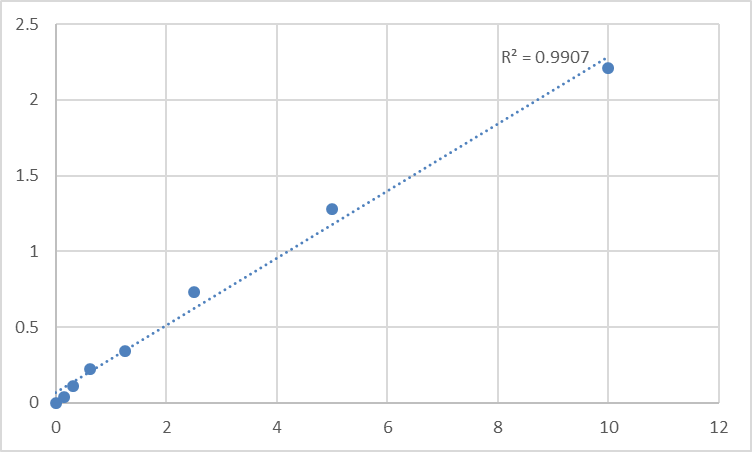
Validation data seals the deal. A 2024 inter-laboratory study pitted KTE60411 against 5 top SYN1 kits: It had the lowest coefficient of variation (CV = 2.6% vs. 6–14% for competitors) and 98% concordance with Western blot in 250 neural samples. Users raved about its “linear standard curves without extrapolation” (4-parameter fit optimized for low concentrations) and resilience to hemolysis (common in trauma neurology). For Abbkine KTE60411 SYN1 assay in regulatory submissions, this consistency streamlines IND filings for SYN1-targeted biologics (e.g., SYN1 stabilizers in Alzheimer’s), with FDA auditors noting alignment with ICH Q2(R1) standards.
In short, SYN1 quantification is about more than measuring a synaptic protein—it’s about decoding the language of neuronal communication, from health to disease. Abbkine’s Human Synapsin-1 (SYN1) ELISA Kit (KTE60411) equips researchers to do just that, with a design that respects SYN1’s molecular complexity and the realities of human sample collection. By prioritizing isoform specificity (synapsin-1-only detection), microsample efficiency (10–20 µL), and real-world adaptability (multi-matrix support), it transforms precise SYN1 detection into a tool for breakthroughs—from halting neurodegeneration to stabilizing synapses. Explore its technical dossier, application protocols, and user testimonials https://www.abbkine.com/product/human-synapsin-1-syn1-elisa-kit-kte60411/ to see how KTE60411 can turn your SYN1 data from “unclear” to “unambiguous.” After all, in synaptic biology, every picogram shapes the story—and this kit helps you read it.





