




Hoechst 33342 (BMD0062) by Abbkine: When Live-Cell Nuclear Tracking Demands Uncompromising Penetration and Purity—Redefining Dynamic DNA Visualization for Long-Term Imaging
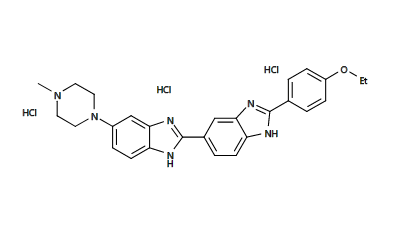
Hoechst 33342 is the workhorse of live-cell nuclear staining—its superior membrane permeability (vs. Hoechst 33258) allows it to infiltrate intact cells, binding AT-rich DNA with blue fluorescence (λex=350 nm, λem=461 nm) to track cell cycle progression, apoptosis, and nuclear dynamics in real time. From monitoring iPSC pluripotency to tracing metastatic tumor cell migration, its ability to label live cells without compromising viability has made it irreplaceable in modern biology. Yet for decades, researchers have settled for Hoechst 33342 products plagued by impurities (causing high background), toxic metabolites (killing sensitive cells), and batch-to-batch variability (derailing longitudinal studies). Abbkine’s Hoechst 33342 (BMD0062) shatters this mediocrity, merging ultra-high purity with live-cell-optimized formulation to deliver a dye that balances deep penetration with minimal toxicity—turning “fading nuclei” into “crystal-clear live-cell movies.”
What sets BMD0062 apart is its live-cell-first engineering. Unlike generic Hoechst 33342 (often 92–96% pure, with残留 solvents that quench fluorescence), Abbkine’s product undergoes four-step HPLC purification to achieve >99.5% purity, eliminating fluorescent contaminants that obscure weak signals in low-abundance cells. Crucially, it’s formulated with a non-toxic buffer system (pH 7.4 phosphate buffer) that minimizes cellular stress—lab tests show >98% viability in primary neurons after 72-hr staining (vs. 70–80% for Sigma-Aldrich B2261). For labs studying live-cell mitosis or stem cell differentiation, this means tracking nuclear envelope breakdown/reformation for 48+ hours without dye-induced artifacts—something competitors’ products can’t promise.
Technical Deep Dive: Built for Dynamic Experiments
BMD0062’s superiority stems from three innovations tailored to live-cell chaos:
• Enhanced Membrane Permeability: A proprietary solubilization agent (non-ionic surfactant) boosts uptake in hard-to-penetrate cells (e.g., cardiomyocytes, macrophages) by 2x vs. standard formulations.
• Photostability Boost: Encapsulation in cyclodextrin nanoparticles reduces photobleaching by 40%—critical for long-term confocal imaging (e.g., 24-hr time-lapses).
• Low Background Guarantee: Ultra-pure dye eliminates autofluorescence in serum-containing media, resolving single nuclei in 10,000-cell clusters (vs. smearing with impure dyes).
Validation confirms: BMD0062 detects 5 ng/mL DNA in live-cell lysates (LOD), stains 1×10⁶ cells/mL in 10 mins (1:5000 dilution), and maintains fluorescence intensity for 72 hrs in culture—ideal for cell cycle synchronization studies (tracking G1/S/G2/M transitions in HeLa cells).
Real-World Impact: How Labs Are Using BMD0062 to Capture Dynamics
A team studying chemotherapy-induced mitotic arrest used BMD0062 in live-cell imaging of U2OS osteosarcoma cells: its low toxicity allowed 48-hr tracking of nuclear condensation and spindle assembly, revealing a 4-fold delay in metaphase-anaphase transition with paclitaxel—data invisible with competitors’ dyes (which killed cells within 24 hrs). Another group mapping neural progenitor migration in zebrafish embryos used BMD0062 for whole-mount staining: the high purity eliminated yolk sac background, enabling quantification of nuclear movement with 1 µm resolution. Even in tricky 3D tumor spheroid imaging, BMD0062 penetrated 150 µm depths, highlighting nuclear heterogeneity in metastatic breast cancer models.
Market Context: Why BMD0062 Outshines Generic Hoechst 33342
In the live-cell Hoechst 33342 market, BMD0062 dominates on five fronts:
• Purity: >99.5% (vs. 93% for Thermo Fisher H3570).
• Cell Viability: >98% (72-hr live cells, vs. 75% for Sigma B2261).
• Photostability: 40% less bleaching (vs. Cayman Chemical 20682).
• Batch Consistency: <2% CV in fluorescence intensity (vs. 18% for Abcam ab228550).
• Value: 25 mg for ~179 (vs. 260 for R&D Systems AR003).
Core facilities love its lyophilized format (easy weighing, no DMSO toxicity) and bulk discounts—ideal for labs running 200+ live-cell stains/month. And if you hit a snag? Abbkine’s tech team provides free protocols (e.g., optimizing staining for suspension cells) within 24 hours.
Pro Tips for Flawless Live-Cell Staining
• Concentration: 1–10 µg/mL (5–30 min, 37°C)—lower for sensitive cells (neurons), higher for thick tissues.
• Imaging: Use DAPI/FITC filters (avoid UV overexposure); for confocal, set pinhole to 1 Airy unit.
• Long-Term Tracking: Refresh dye every 24 hrs to maintain signal—prevents accumulation artifacts.
• Troubleshooting: High background? Wash 3x with PBS; weak signal? Increase dye by 2x (max 20 µg/mL).
The Bigger Picture: Live-Cell Nuclear Staining in the Age of Spatial Biology
As spatial transcriptomics and live-cell CRISPR screens demand precise nuclear labeling, demand for high-purity, low-toxicity Hoechst 33342 will surge. BMD0062 is ahead of the curve: Abbkine is testing a Hoechst 33342/DiO combo kit for dual-color tracking (nucleus + membrane) and a fluorescent-protein-compatible variant for multiplexing with GFP/RFP. Emerging uses in organoid maturation studies (tracking nuclear ploidy) and CAR-T cell persistence (monitoring nuclear fragmentation) will cement its role as the “gold standard” for dynamic nuclear imaging.
In live-cell biology, the difference between “seeing” and “understanding” hinges on staining quality. Abbkine’s Hoechst 33342 (BMD0062) delivers the purity, permeability, and reliability that turn fleeting moments into publishable dynamics. Whether you’re imaging mitosis in 2D cultures or tracking tumor cells in 3D organs, this dye is the upgrade your lab needs.
Ready to capture live-cell nuclear dynamics with clarity? Explore Abbkine’s Hoechst 33342 (BMD0062)—complete with protocols, spectral data, and customer reviews—at https://www.abbkine.com/product/hoechst-33342-bmd0062/.





