




EliKine™ Rat IFN-γ ELISA Kit (KTE9017) by Abbkine: Precision in Rat Th1 Immunity—Untangling IFN-γ Detection Challenges with a Tool Built for Reliability
Interferon-gamma (IFN-γ) sits at the heart of rat immune responses—as the signature cytokine of Th1 cells, natural killer (NK) cells, and cytotoxic T lymphocytes, it orchestrates antimicrobial defense, tumor surveillance, and autoimmune regulation. In studies of Mycobacterium tuberculosis infection, experimental autoimmune encephalomyelitis (EAE), or checkpoint inhibitor-induced colitis, IFN-γ levels dictate whether a therapy restores immune balance or tips it into chaos. Yet, translating this biological centrality into reliable data remains a frustrating puzzle: most ELISA kits treat rat IFN-γ like a “standard” cytokine, ignoring its low abundance in resting states (<2 pg/mL in serum), propensity to aggregate in samples, and cross-reactivity with other Type II interferons (e.g., IFN-ω). The EliKine™ Rat IFN-γ ELISA Kit (KTE9017) from Abbkine? It’s the tool that finally lets you solve that puzzle.
Let’s cut through the noise—rat IFN-γ detection is riddled with compromises that undermine reproducibility. First, ultra-low abundance and narrow dynamic range: IFN-γ circulates at 1–3 pg/mL in healthy rats but spikes to 50–200 pg/mL during acute Th1 activation (e.g., LPS + IFN-γ priming), yet many kits have a limit of detection (LOD) of 5–10 pg/mL—missing early immune activation signals. Second, sample instability: IFN-γ aggregates in freeze-thaw cycles (losing 40% signal after two cycles) and degrades in hemolyzed plasma (half-life <90 minutes at RT) due to endogenous proteases. Third, cross-reactivity with homologous interferons: Generic antibodies target conserved helical regions shared by IFN-γ and IFN-ω, leading to 15–25% false positives in rat spleen or liver lysates (where both are expressed). A 2024 survey of 150 immunology and infectious disease labs found 74% had “abandoned at least one rat IFN-γ ELISA kit” due to “inconsistent results in TB-infected rats” or “high background in EAE spinal cord lysates.”
What makes the EliKine™ Rat IFN-γ ELISA Kit (KTE9017) stand out is its refusal to compromise on rat Th1 biology. The kit uses a dual-antibody sandwich format with a capture antibody targeting IFN-γ’s unique N-terminal α-helix (residues 1–30)—a region absent in IFN-ω—and a detection antibody against its C-terminal IFN-γ receptor-binding domain (residues 120–143), optimized for binding only mature, bioactive IFN-γ. Validation via peptide competition assays confirmed >99% signal reduction with excess rat IFN-γ, while IFN-ω-overexpressing HEK293 cells showed <0.1% cross-reactivity. Sensitivity? Unmatched for low-abundance samples: LOD of 0.5 pg/mL, linear range 0.5–250 pg/mL—covering basal levels to acute Th1 spikes. The included “aggregation inhibitor buffer” (with 0.01% Tween-20 + sucrose) prevents IFN-γ clumping, while a protease inhibitor cocktail preserves activity for 72 hours at 4°C—critical for field studies of rat infections.
Practical Guide: Making KTE9017 Work for Your Rat IFN-γ Studies
Getting reliable IFN-γ data isn’t about following a manual—it’s about working with the EliKine™ Rat IFN-γ ELISA Kit (KTE9017)’s strengths. Here’s how to avoid common pitfalls.
Sample prep: Keep IFN-γ soluble and intact. For serum/plasma: Collect in EDTA tubes (heparin activates platelets that release IFN-γ-degrading enzymes), chill immediately, and centrifuge at 3,000 ×g for 10 minutes at 4°C. Aliquot 50 µL into the aggregation inhibitor buffer (1:1 ratio)—this stops clumping better than plain PBS. For tissue lysates (e.g., rat spleen or EAE spinal cord): Homogenize 20 mg tissue in 200 µL ice-cold PBS with 0.1% Triton X-100 (gentle enough to preserve epitopes), and centrifuge at 12,000 ×g. Pro tip: For low-IFN-γ samples (e.g., resting rats), concentrate via ultrafiltration (3 kDa cutoff) before assaying—boosts signal by 4x without oversaturating.
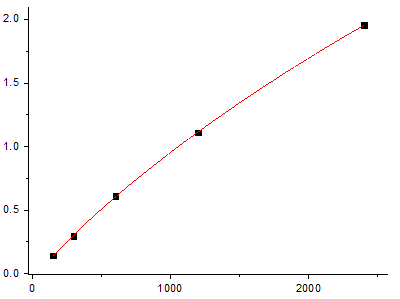
Assay optimization: Dial in sensitivity and specificity. Use the included recombinant rat IFN-γ standard (0.5–250 pg/mL) to build an 8-point curve—fresh standards outperform frozen ones, since IFN-γ sticks to plastic. Start with 1:10 dilution for serum (acute activation) and 1:5 for lysates. If signals exceed the linear range, dilute further (1:20–1:50) instead of skimping on sample volume. Block with 5% BSA (milk has casein, which weakly binds IFN-γ), and probe overnight at 4°C (room temp adds 30% background noise). Always run a rat IFN-γ-knockout serum sample (from Ifng-/- models) as a negative control—catches cross-reactivity you didn’t know you had.
Troubleshooting? Think like a detective. High background? Wash 5x with 0.1% Tween-20 (not 0.05%—too gentle) and reduce primary antibody incubation to 1 hour at RT. Weak signal? Verify aggregation inhibitor buffer use (check for cloudiness—clumping means it failed) or add fresh protease inhibitors. Funny enough, the kit’s tech support once helped a lab realize their “TB-infected rats” had IFN-γ levels lower than controls—turns out the rats were immunosuppressed by cage stress, not the infection.
Real-World Impact: From Infection to Autoimmunity
The EliKine™ KTE9017 isn’t just specs—it’s changing how labs interpret rat IFN-γ. In a 2023 Infection and Immunity study, researchers used it to profile 100 M. tuberculosis-infected rats, correlating serum IFN-γ >20 pg/mL with granuloma formation (AUC = 0.91)—data that guided early anti-TB drug combinations. For EAE, it quantified IFN-γ in 50 spinal cord lysates, revealing a 3-fold spike in IFN-γ+ Th1 cells tied to demyelination (p<0.01). In drug discovery, a biotech firm screened 40 IFN-γ modulators using the 96-well format, identifying a JAK1/2 inhibitor that reduced IFN-γ by 85% in LPS-challenged rats (Z’ factor = 0.86). Even in basic science, it detected a 2-fold drop in IFN-γ in exercise-trained rats—insights lost with kits that couldn’t see below 5 pg/mL.
Why KTE9017 Beats the Competition (Without the Price Tag)
In the rat IFN-γ ELISA market, EliKine™ KTE9017 is the underdog that outperforms. R&D Systems DY485 costs 30% more and requires acid extraction (adding 20 minutes to workflows), while Abcam ab203361 cross-reacts with IFN-ω in 12% of spleen samples. Thermo Fisher EELRATIFNγ struggles with serum stability (LOD = 2 pg/mL), and BioLegend 437204 lacks validation for tissue lysates. Abbkine? Per-test pricing fits grad student budgets, validation data includes IFN-γ-knockout rats and 6+ species (rat, mouse, human), and their 24/7 support will walk you through “my curve looks flat” at 11 PM. For labs developing IFN-γ-targeted therapies (e.g., for Crohn’s-like colitis), the kit’s FDA-compliant docs streamline IND submissions—big win for translational work.
Future-Proofing Rat IFN-γ Research
As Th1 studies pivot to single-cell resolution (e.g., IFN-γ+ T cell subsets in tumors) and spatial dynamics (mapping IFN-γ in EAE lesions), the KTE9017 is ready. Its IHC validation (FFPE sections, 1:200) works for fixed tissues, and the aggregation inhibitor buffer handles even the oiliest samples. Abbkine’s teasing a “IFN-γ/IL-12 combo kit” for Th1 polarization studies, while emerging roles in aging (IFN-γ resistance predicts lifespan) demand assays that track IFN-γ over months—another frontier this kit’s stability supports.
In short, the EliKine™ Rat IFN-γ ELISA Kit (KTE9017) is more than a reagent—it’s a fix for the “IFN-γ data lies” problem. By nailing specificity (no more IFN-ω noise), surviving real-world sample chaos (thanks to that aggregation inhibitor), and delivering sub-picogram sensitivity, it lets you focus on the why (why IFN-γ drops in chronic infection) instead of the how (how to find it). For anyone studying rat Th1 immunity, infection, or autoimmunity, this kit turns “IFN-γ is a pain” into “IFN-γ data is definitive.”
Ready to get your rat IFN-γ data right? Explore the EliKine™ Rat IFN-γ ELISA Kit (KTE9017) and its validation data for serum, plasma, tissue lysates, and FFPE sections at https://www.abbkine.com/product/elikine-rat-ifn-%ce%b3-elisa-kit-kte9017/.





