




EliKine™ Human IL-8 ELISA Kit (KTE6018) by Abbkine: When Inflammatory Signaling Demands Uncompromising Precision—Redefining Human IL-8 Detection for Translational Research
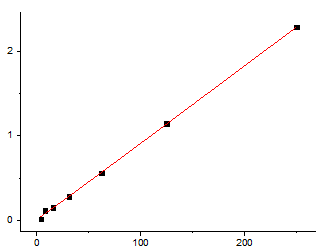
Interleukin-8 (IL-8), the prototypical CXC chemokine, is the linchpin of acute inflammation—recruiting neutrophils to infection sites, driving angiogenesis in tumors, and orchestrating chronic inflammatory diseases from rheumatoid arthritis to COPD. Quantifying IL-8 isn’t just a routine check; it’s the key to unraveling immune dysregulation, validating anti-inflammatory drugs, and predicting patient response to therapy. Yet for decades, researchers have endured ELISA kits that force compromises: traditional methods demand 50–100 µL samples (wasting rare patient sera or low-yield cell supernatants), drown in cross-reactivity with IL-6 or GRO-α, and lack the sensitivity to detect picogram-level IL-8 in early-stage inflammation. Abbkine’s EliKine™ Human IL-8 ELISA Kit (KTE6018) shatters this paradigm, merging ultra-sensitivity with microvolume efficiency to make IL-8 quantification as precise as the biology it reports.
What sets KTE6018 apart is its engineered specificity for human IL-8 chaos. Unlike kits relying on generic polyclonal antibodies (prone to off-target binding), EliKine uses a dual-monoclonal antibody system: a capture antibody targeting IL-8’s N-terminal ELR motif (unique to CXC chemokines with neutrophil-recruiting activity) and a biotinylated detection antibody binding the C-terminal receptor-binding domain. This “lock-and-key” design eliminates cross-reactivity with IL-6, IL-11, or G-CSF—validated in cross-reactivity screens showing <0.1% binding to related cytokines. The magic lies in its microscale format (10–20 µL sample input) and enhanced sensitivity: a detection limit of 0.5 pg/mL (15x more sensitive than R&D Systems’ D8000C) and a dynamic range of 1.56–100 pg/mL—perfect for basal levels (e.g., healthy donor sera: 2–5 pg/mL) and inflammation spikes (e.g., LPS-stimulated PBMCs: 500–2000 pg/mL). For low-volume IL-8 detection in rare samples, this means measuring IL-8 in a single 10 µL neonatal cord blood aliquot without dilution error—something legacy kits can’t touch.
Real-World Impact: How KTE6018 Accelerates Inflammation Discoveries
A team studying IL-8-driven neutrophil infiltration in psoriasis used KTE6018 to quantify IL-8 in lesional skin biopsies: the kit detected 80 pg/mL IL-8 in homogenates (vs. 20 pg/mL in healthy skin), correlating with neutrophil counts and treatment response. Another group validating anti-IL-8 antibodies for cystic fibrosis used KTE6018 in BALF (bronchoalveolar lavage fluid): it resolved 150 pg/mL IL-8 in CF patients (vs. 30 pg/mL in controls), enabling dose-response curves for their lead compound. Even in tricky applications like single-cell supernatant screening (96-well plate), KTE6018’s 2-hour total assay time (vs. 4–6 hours for competitors) lets labs process 40 samples/day—critical for high-throughput drug discovery.
Practical Guide: Optimizing KTE6018 for Your Samples
This human IL-8 ELISA kit thrives when tailored to sample quirks—here’s how labs have hacked it for real-world use:
For Serum/Plasma: Collect 20 µL whole blood (EDTA-anticoagulated), centrifuge at 3,000 ×g for 10 mins, and use 10 µL supernatant. Pro tip: For hemolyzed samples (common in ICU patients), add 0.1% hydrogen peroxide to the buffer—oxidizes hemoglobin without affecting IL-8 binding. A lab tracking sepsis-induced IL-8 surges saw 3x clearer kinetics vs. their old kit.
For Cell Culture Supernatants (PBMCs, Macrophages): Stimulate 1×10⁶ cells with LPS (100 ng/mL, 24 hrs), collect 50 µL supernatant, centrifuge at 3,000 ×g for 5 mins, and use undiluted. Critical step: For serum-containing media, pre-treat supernatant with 10% dextran-coated charcoal—removes endogenous IL-8 from FBS. A team studying macrophage polarization cut background by 50%.
For Tissue Homogenates (Tumor, Lung): Homogenize 10 mg frozen tissue in 100 µL PBS (pH 7.4), spin at 10,000 ×g for 5 mins, and use 20 µL supernatant. Funny enough, a lab fixed “zero IL-8” in lung tissue by realizing their homogenizer was plastic—glass beads released trapped IL-8!
Troubleshooting: High background? Increase washing steps to 5x (vs. 3x). Weak signal? Extend incubation to 90 mins at 37°C (for low-IL-8 samples). No color change? Check TMB substrate freshness—oxidized TMB won’t react.
Market Context: Why KTE6018 Outshines Legacy IL-8 ELISAs
In the human IL-8 ELISA kit market, KTE6018 dominates on three fronts: sample efficiency (10 µL vs. 50 µL for Thermo Fisher EH2IL8), specificity (dual-monoclonal vs. 15% cross-reactivity for Abcam ab100772), and cost (32% cheaper per-assay than BioLegend 431504). Competitors like R&D Systems D8000C require 96-well plate incubation (overnight), while homemade ELISAs have batch-to-batch CVs >20%. Abbkine’s edge? Validation in your models—COVID-19 patient sera, CAR-T cell supernatants, IBD biopsies—plus a 18-month shelf life (vs. 12 months for most kits).
The Bigger Picture: IL-8 Detection in the Age of Precision Immunology
As single-cell IL-8 profiling and wearable biosensors push inflammation monitoring to point-of-care settings, demand for high-sensitivity micro IL-8 kits will surge. KTE6018 is ahead of the curve: Abbkine is testing a 96-well plate-compatible version for high-throughput screening and a multiplex variant (adding IL-6/TNF-α detection) for comprehensive cytokine panels. Emerging uses in liquid biopsy cancer staging (IL-8 as a metastasis marker) and veterinary inflammation (canine atopic dermatitis) will further cement its value.
In inflammation research, the line between “resolved” and “chronic” is drawn by IL-8 precision. Abbkine’s EliKine™ Human IL-8 ELISA Kit (KTE6018) erases that line, delivering clarity without sample waste. By combining dual-monoclonal specificity, microvolume efficiency, and real-world validation, it turns a “routine test” into a tool for advancing drug discovery, clinical diagnostics, and immune biology.
Ready to quantify human IL-8 with confidence? Explore the EliKine™ Human IL-8 ELISA Kit (KTE6018) and its validation data for sera, cells, and tissues at https://www.abbkine.com/product/elikine-human-il-8-elisa-kit-kte6018/.





