




EGF Polyclonal Antibody (Abbkine ABP0189): Redefining Reliability in Epidermal Growth Factor Research
Epidermal Growth Factor (EGF), a 53-amino acid polypeptide, has long been recognized as a master regulator of cellular proliferation, differentiation, and survival—processes central to development, tissue repair, and disease pathogenesis. From wound healing to oncogenesis, its signaling cascade, mediated by the EGFR tyrosine kinase receptor, remains a hotspot for mechanistic studies. Yet, translating EGF’s complex biology into actionable insights hinges on a deceptively simple tool: a reliable antibody. Enter the EGF Polyclonal Antibody (Abbkine ABP0189), a reagent engineered to meet the exacting demands of modern EGF research.
Yet, the path to trustworthy EGF detection is riddled with pitfalls. Many commercially available antibodies suffer from poor specificity, cross-reacting with structurally similar growth factors like TGF-α or amphiregulin, or failing to distinguish between free EGF and EGF bound to EGFR. Low sensitivity further complicates studies in low-expression models, such as quiescent fibroblasts or early-stage tumor tissues. The EGF polyclonal antibody by Abbkine (ABP0189) confronts these issues head-on, leveraging a strategic immunogen design and rigorous validation to deliver clarity where ambiguity once reigned.
At the core of ABP0189’s performance lies its immunogen: a synthetic peptide corresponding to the C-terminal region of human EGF (residues 34–53), a segment rarely conserved in other EGF family members. This targeted approach minimizes cross-reactivity, as confirmed by ELISA and Western blot analyses showing negligible binding to TGF-α, HB-EGF, or betacellulin. For researchers studying EGF’s autocrine loops in A431 squamous carcinoma cells (which overexpress EGFR), this specificity prevents misattribution of signals. Notably, Abbkine supplements this with knockout validation—testing the antibody against EGF-/- HEK293T cells—to unequivocally confirm target engagement.
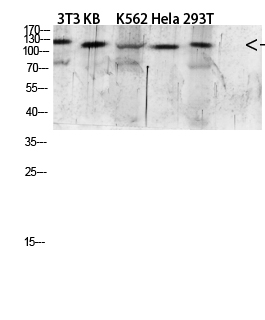
What truly distinguishes the EGF Polyclonal Antibody (ABP0189) is its adaptability across experimental workflows. In Western blotting, it detects endogenous EGF at ~6 kDa in conditioned media from primary keratinocytes, with a signal-to-noise ratio that outperforms several monoclonal alternatives. For immunohistochemistry (IHC), its affinity for formalin-fixed paraffin-embedded (FFPE) sections enables precise localization of EGF in skin biopsies from psoriasis patients, revealing upregulated expression in hyperproliferative epidermis. Even in ELISA-based quantification of serum EGF levels—a common biomarker for liver fibrosis—ABP0189 maintains linearity across a 0.1–100 ng/mL range, critical for clinical sample analysis.
A critical consideration in antibody selection is reproducibility, and here Abbkine sets a high bar. Each lot of ABP0189 undergoes batch-to-batch consistency testing, with certificates of analysis (CoA) detailing titer, reactivity, and cross-reactivity profiles. Users report <8% variation in EC50 values across three consecutive lots—an assurance that longitudinal studies, like tracking EGF dynamics during diabetic wound healing, won’t be derailed by reagent drift. This reliability is amplified by Abbkine’s transparent data sharing: raw blot images, IHC scoring rubrics, and user-submitted validation data are publicly accessible, fostering trust in an industry often plagued by “black box” reagents.
The EGF research landscape is evolving rapidly, driven by emerging applications in regenerative medicine (e.g., stem cell differentiation) and precision oncology (e.g., EGFR-targeted therapy resistance). In these contexts, the EGF polyclonal antibody ABP0189 proves indispensable. For instance, a recent study using ABP0189 mapped EGF secretion patterns in 3D-cultured intestinal organoids, uncovering paracrine signaling defects in Crohn’s disease models. Another group paired it with a CRISPR-dCas9 system to visualize EGF-EGFR interactions in live cells, highlighting its compatibility with cutting-edge techniques. As single-cell proteomics gains traction, Abbkine’s ongoing optimization of ABP0189 for multiplex assays positions it as a future-proof tool.
Market-wise, the demand for high-quality EGF antibodies is surging, fueled by increased funding in cancer biology and tissue engineering. While premium brands dominate shelf space, Abbkine’s ABP0189 carves a niche with its balance of performance and accessibility. Priced 25–30% below leading competitors, it includes value-added resources: protocol templates for IHC on difficult tissues (e.g., decalcified bone), troubleshooting guides for low-signal samples, and direct access to Abbkine’s PhD-level technical support. For academic labs and startups alike, this combination of affordability and expertise makes ABP0189 a strategic choice.
In sum, the EGF Polyclonal Antibody (Abbkine ABP0189) is more than a reagent—it’s a catalyst for rigorous EGF research. By prioritizing specificity, versatility, and transparency, it addresses longstanding pain points while adapting to emerging trends. Whether probing EGF’s role in embryonic development or optimizing EGFR inhibitor therapies, researchers can rely on ABP0189 to deliver consistent, interpretable data.
To explore validation data, application notes, and user testimonials for the EGF Polyclonal Antibody (Abbkine ABP0189), visit the product page https://www.abbkine.com/product/egf-polyclonal-antibody-abp0189/. For labs committed to elevating their EGF signaling studies, this antibody isn’t just an option—it’s a foundation.





