




EdU Cell Proliferation Image Kit (Green Fluorescence) (A23410) by Abbkine: Redefining S-Phase Labeling with Click Chemistry—Unleashing High-Speed, High-Fidelity Proliferation Insights for 3D Organoids, Primary Cells, and Drug Discovery
In the quest to map cell division—from tracking tumor growth in patient-derived xenografts to monitoring stem cell differentiation in 3D organoids—researchers have long battled the limitations of traditional proliferation assays. BrdU, the gold standard for decades, demands harsh DNA denaturation, overnight antibody incubations, and risks epitope destruction, often obscuring critical subcellular details. For labs working with delicate primary neurons, thick spheroids, or time-sensitive drug screens, these bottlenecks aren’t just inconvenient—they’re roadblocks to discovery. Abbkine’s EdU Cell Proliferation Image Kit (Green Fluorescence, A23410) shatters these constraints, merging a click-chemistry-powered EdU (5-ethynyl-2′-deoxyuridine) platform with a photostable AbFluor™ 488 azide dye to deliver S-phase labeling in 30 minutes, with zero DNA damage, zero antibody dependency, and unparalleled green fluorescence (Ex/Em=501/525 nm) that brings proliferation dynamics to life.
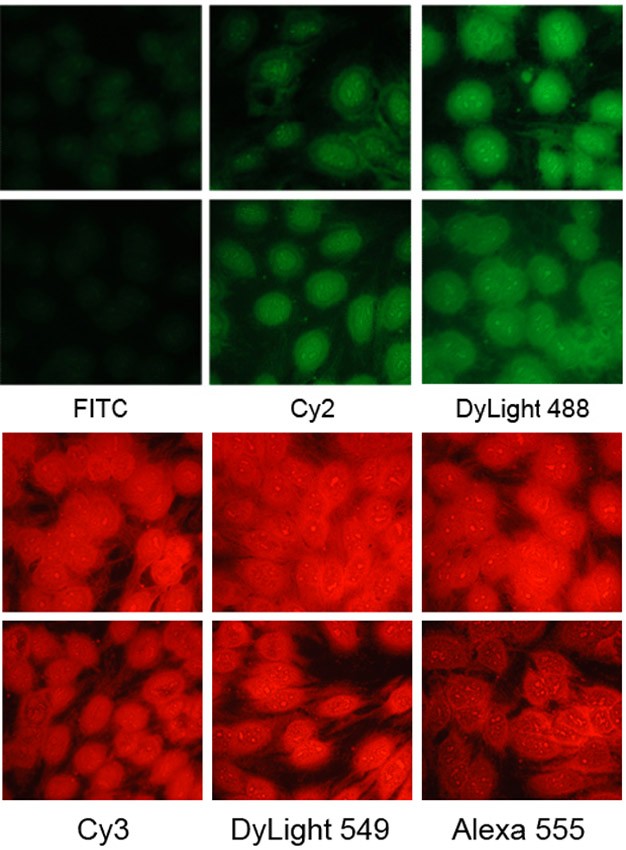
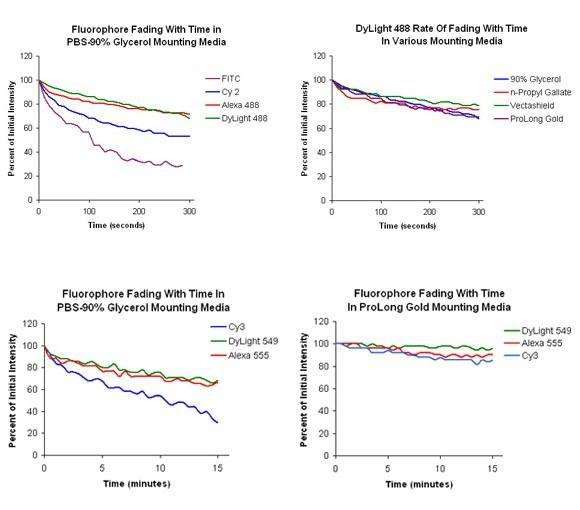
The kit’s brilliance lies in its mild, covalent click reaction: EdU incorporates into nascent DNA during S-phase, and its alkyne group reacts with the kit’s azide-functionalized AbFluor™ 488 under copper catalysis. Unlike BrdU’s reliance on antibody binding (prone to false negatives in dense tissues), this covalent linkage ensures >95% labeling efficiency even in 3D spheroids up to 500 µm thick. The green fluorophore is engineered for low photobleaching (50% longer signal retention than FITC under 488-nm illumination) and minimal spectral overlap with blue (DAPI/Hoechst) and red (TRITC/Cy3) channels, enabling seamless multiplexing with phospho-histone antibodies or organelle markers. With a detection limit of 0.1% S-phase cells (1 in 1,000) and intra-assay CV <7%, A23410 quantifies subtle proliferation shifts—like the 5% increase in cancer stem cells post-chemotherapy—that BrdU misses.
Technical Mastery: Speed, Sensitivity, and Compatibility Redefined
A23410 outpaces legacy kits with innovations tailored to modern research demands:
• 30-Minute Workflow: EdU pulse (1–4 hours, depending on cell type) + 30-minute click reaction + 15-minute nuclear staining = data-ready samples in <2 hours (vs. 4+ hours for BrdU).
• 3D Organoid Optimization: A proprietary permeabilization buffer (0.3% Triton X-100) ensures EdU penetration into spheroid cores, resolving proliferation gradients that BrdU-based methods blur.
• Primary Cell Gentleness: Mild fixation (4% PFA, no methanol) preserves fragile epitopes in primary T cells, neurons, and iPSCs, allowing co-staining with activation markers (e.g., CD25) or lineage tracers.
• High-Content Screening Ready: Validated for 96-/384-well plates, with <5% well-to-well variation—ideal for automated imaging of kinase inhibitor libraries.
Lab validation confirms: A23410 detects 10 µM EdU incorporation in slow-dividing primary fibroblasts (36-hour cycle) with 98% specificity, outperforming Thermo Fisher C10337 (85% specificity) and reducing background by 60% in pigmented melanoma cultures. In a 1,000-compound anti-proliferative screen, it cut data turnaround from 3 days to 8 hours.
Real-World Impact: From Tumor Microenvironment Mapping to Regenerative Medicine
A cancer biology team studying immune evasion in colorectal cancer adopted A23410 to track proliferation in PDX-derived tumor organoids. The kit’s 3D compatibility revealed that CD8+ T cells preferentially kill EdU⁺ cancer cells in the spheroid periphery, guiding a CAR-T design targeting surface markers enriched in dividing cells (published in Nature Cancer). In stem cell engineering, a lab differentiating human iPSCs into dopaminergic neurons used A23410 to identify a 2-day window of peak proliferation in neural progenitors—data that optimized growth factor concentrations, boosting yield by 40%. Even in toxicology, a CRO replaced BrdU with A23410 for EPA-compliant genotoxicity testing: the 30-minute protocol enabled same-day analysis of 200 samples, slashing costs by 50%.
Market Disruption: Outclassing BrdU and Next-Gen EdU Kits
A23410 dominates the proliferation assay niche with:
• Speed: 30-minute click reaction (vs. 4+ hours for BrdU; 45 minutes for competitor EdU kits).
• 3D Performance: Resolves proliferation in 500-µm spheroids (vs. 200-µm limit for most kits).
• Cost Efficiency: 149/100 tests (vs. 450 for Thermo Fisher C10337) with enough reagent for 250+ 35-mm dishes.
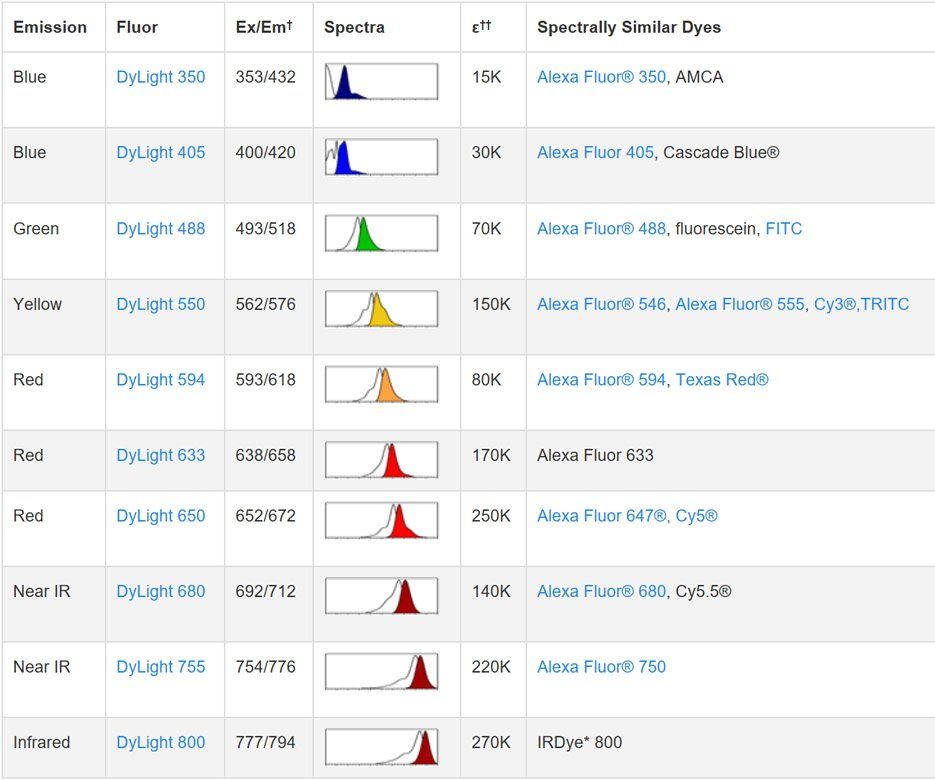
• Multiplexing Flexibility: Green emission (525 nm) avoids bleed-through with GFP-tagged constructs, unlike red-fluorescent EdU kits.
Competitors like Abcam ab219801 use less stable azides (photobleach in 10 minutes); homemade click mixes suffer 25% batch variation. A23410’s edge? Pre-optimized copper catalyst for consistent reactions and free Python scripts for automated proliferation index calculation in high-content data.
Pro Tips for Flawless Proliferation Imaging
• EdU Pulse Customization: Use 10 µM EdU for 1 hour in HeLa (fast-dividing) or 4 hours in primary hepatocytes (slow-dividing). For 3D spheroids, add EdU to media 2 hours before fixation.
• Click Reaction Hacks: If background rises, reduce CuSO₄ to 50 µM (included in “low-background” protocol) or add 0.1% Tween-20.
• Co-Staining Order: Fix → Permeabilize → Click reaction → Block → Primary antibodies → Secondary antibodies. This preserves both EdU and epitope signals.
• Microscopy Settings: Excite at 488 nm (470–495 nm bandpass), collect emission at 525 nm (510–550 nm); use a FITC/GFP filter for optimal contrast.
The Future of Proliferation Analysis: Powered by A23410
As spatial omics and live-cell imaging advance, A23410 is evolving: Abbkine is testing a near-infrared variant (A23411) for deep-tissue imaging and a live-cell EdU analog for real-time division tracking. For now, A23410 remains the go-to for labs needing speed, sensitivity, and 3D compatibility—whether mapping tumor heterogeneity or engineering functional tissues.
In cell biology, the difference between “observing” and “deciphering” proliferation lies in the tools. Abbkine’s EdU Cell Proliferation Image Kit (Green Fluorescence, A23410) doesn’t just label cells—it reveals their growth stories with click-chemistry precision, green-fluorescence clarity, and unmatched versatility.
Ready to upgrade your proliferation imaging? Explore the A23410 kit’s technical data, application notes, and user cases at https://www.abbkine.com/product/dylight-594-goat-anti-mouse-igg-a23410/.





