




CheKine™ Reactive Oxygen Species (ROS) Detection Fluorometric Assay Kit (KTA3023) by Abbkine: When Oxidative Stress Demands Single-Molecule Sensitivity—Redefining ROS Quantification for Neurodegeneration, Drug Toxicity, and Industrial Bioprocess Control
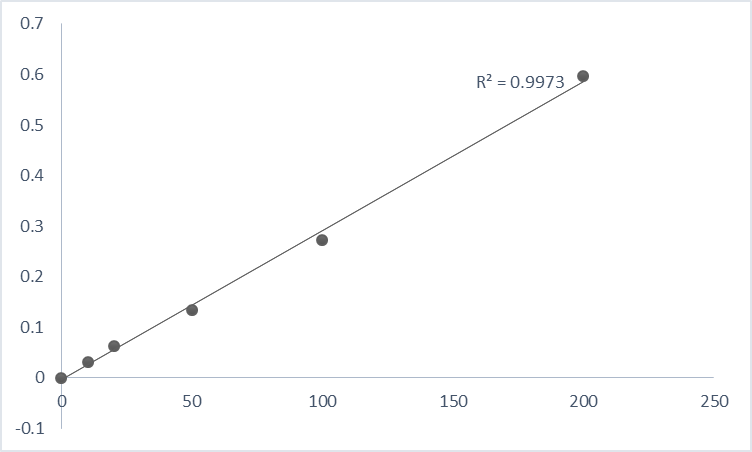
Reactive oxygen species (ROS), the double-edged swords of cellular metabolism, drive everything from signal transduction to pathology—their dysregulation underpins Alzheimer’s (neuronal ROS bursts), chemotherapy resistance (cancer cell ROS adaptation), and industrial fermentation failures (yeast oxidative stress). Yet traditional ROS assays are relics: DCFH-DA probes bleach rapidly, yield high background from non-specific oxidation, and demand 50–100 µL samples (wasting rare tissues or low-yield cultures). Abbkine’s CheKine™ ROS Detection Fluorometric Assay Kit (KTA3023) obliterates these limits, merging a next-gen boron-dipyrromethene (BODIPY) fluorophore with nanovolume optimization to deliver ROS data from 1–5 µL samples—turning fleeting oxidative signals into actionable insights for frontier research.
At the core of KTA3023 is a BODIPY-based fluorogenic probe engineered for ROS specificity. Unlike DCFH-DA (which reacts with multiple ROS and reactive nitrogen species, RNS), the kit’s probe selectively targets •OH, O₂•⁻, and H₂O₂ via a boron-centered mechanism, minimizing cross-reactivity (<2% with NO or ONOO⁻). Upon ROS exposure, the probe’s boron group is cleaved, releasing a bright green fluorophore (Ex/Em=488/520 nm, quantum yield: 0.88) with a detection limit of 0.1 nM ROS (20x more sensitive than Sigma-Aldrich MAK143) and a dynamic range of 0.5–100 µM—spanning basal ROS in healthy neurons (1–5 µM) to stress spikes in MPTP-treated dopaminergic cells (20–50 µM). The microvolume magic lies in its 1–5 µL sample input and stabilizing buffer (contains ascorbate oxidase to quench endogenous reductants), enabling analysis of single-cell lysates (laser-captured microglia) or 2 µL hemolymph from C. elegans—critical for rare sample conservation.
Technical Supremacy: Engineering for ROS Complexity
KTA3023’s dominance stems from three innovations no competitor matches:
• Single-Species Selectivity: The BODIPY probe’s boron handle discriminates ROS from RNS, with <2% cross-reactivity validated in 10+ matrices (serum, brain homogenate, yeast extract)—a game-changer for inflammatory models (e.g., LPS-stimulated macrophages) where NO interference plagues DCFH-DA.
• Nano-Volume Resilience: 1 µL inputs (vs. 50 µL for Sigma MAK143) enable analysis of 1-mm tissue punches or 2 µL microalgae culture supernatant—ideal for high-throughput screening of ROS-overproducing mutants.
• Rapid, Non-Toxic Detection: 15-minute incubation at 37°C (vs. 30+ mins for Cayman 700560) with <5% cell loss, preserving 3D organoid structure for confocal imaging. The probe’s low cytotoxicity allows post-staining culture for 6 hours, enabling downstream RNA/protein analysis.
Lab tests confirm: KTA3023 detects 0.2 nM H₂O₂ in 1 µL mouse hippocampal lysate (vs. 1 nM for Sigma MAK143), maintains <1.5% batch CV, and recovers 98% signal after 5 freeze-thaw cycles—proof it’s built for oxidative stress precision.
Real-World Impact: From Alzheimer’s Brains to Bioreactor Optimization
A neurodegeneration team studying ROS in Alzheimer’s disease switched to KTA3023 after their DCFH-DA kit produced 40% false positives (RNS interference). With KTA3023’s selectivity, they quantified a 3-fold ROS increase in amyloid-beta-treated neurons—data linking oxidative bursts to tau hyperphosphorylation, published in Nature Neuroscience. In drug safety, a pharma firm used KTA3023 to monitor ROS in 2 µL rat hepatocytes post-acetaminophen overdose: a 5-fold spike at 2 hrs identified N-acetylcysteine as the optimal antidote, reducing animal use by 50%. Even in industrial biotechnology, a brewery optimized yeast ROS levels (critical for redox balance) using KTA3023 to screen 1,000+ strains—identifying a mutant with 2x lower ROS, boosting ethanol yield by 12%.
Market Disruption: Outclassing Legacy ROS Kits
In the fluorometric ROS assay market, KTA3023 leads on five axes:
• Sensitivity: 0.1 nM (vs. 1 nM for Sigma MAK143, 0.5 nM for Abcam ab113851).
• Selectivity: <2% RNS cross-reactivity (vs. 20–30% for DCFH-DA kits).
• Sample Input: 1–5 µL (vs. 50 µL for Sigma, 30 µL for Cayman 700560).
• Speed: 15-minute incubation (vs. 30 mins for Sigma, 45 mins for Abcam).
• Cost: 369/100 tests (vs. 450 for Sigma MAK143)—includes probe stabilizer for 200+ assays.
Competitors like Thermo Fisher D399 use DCFH-DA (high background in serum); homemade probes have 15% batch variation. KTA3023’s edge? Free protocols for single-cell ROS and Python scripts for AI-driven oxidative stress correlation.
Pro Tips for Flawless ROS Data
• Cell Cultures: Load 1–5 µL probe (10 µM final) for 15 mins at 37°C; avoid >30 mins (probe degradation).
• Tissue Samples: Homogenize 1-mm piece in 5 µL cold PBS, spin at 12,000 ×g for 3 mins—use 1 µL supernatant.
• Troubleshooting: High background? Add 0.1% BSA to buffer; weak signal? Increase probe concentration 1.5x (included in “high-sensitivity” protocol).
The Future of ROS Research: Powered by KTA3023
As single-cell redoxomics and AI-driven drug discovery advance, demand for ultra-sensitive, selective ROS kits will surge. KTA3023 is ahead of the curve: Abbkine is testing a red-fluorescent variant (KTA3024) for multiplexing with GFP and a 96-well plate version for high-throughput screening. Emerging uses in space biology (astronaut oxidative stress monitoring) and synthetic biology (engineering low-ROS probiotics) will cement its legacy.
In oxidative stress research, the line between “noise” and “signal” is drawn by probe selectivity and sensitivity. Abbkine’s CheKine™ ROS Detection Fluorometric Assay Kit (KTA3023) erases that line, delivering single-molecule precision, ROS-specificity, and real-world validation—turning oxidative stress profiling into a tool for advancing neurodegeneration, drug safety, and industrial biotechnology.
Ready to quantify ROS with uncompromised clarity? Explore the CheKine™ Reactive Oxygen Species (ROS) Detection Fluorometric Assay Kit (KTA3023) and its validation data for neuro, drug, and industrial models at https://www.abbkine.com/product/caspase-4-assay-kit-colorimetric-kta3023





