




CheKine™ Micro Glucose Assay Kit (KTB1300) by Abbkine: The Glucose Detection Paradox—Why Most Kits Waste Samples and How This Microscale Reagent Delivers Precision
Glucose metabolism sits at the heart of nearly every biological process—from fueling neuronal firing to driving tumor aerobic glycolysis—yet measuring its concentration accurately remains a surprisingly stubborn challenge. Whether quantifying glucose uptake in insulin-resistant hepatocytes, tracking glycogenolysis in exercising muscle, or monitoring glycemic status in rare clinical biopsies, researchers rely on assays that often demand 50–100 µL samples (wasting precious material), drown in interference from ascorbate or bilirubin, or lack the sensitivity to detect low glucose in early-stage metabolic disease. Abbkine’s CheKine™ Micro Glucose Assay Kit (KTB1300) confronts this paradox head-on, offering a reagent system engineered for microscale efficiency without sacrificing specificity. It’s not just a kit—it’s a fix for the “sample abundance” assumption that’s plagued glucose research for decades.
Yet the market for glucose assay kits remains stuck in a cycle of compromise. A 2024 survey of 160 metabolic, diabetes, and oncology labs found 81% had “abandoned at least one glucose kit” due to excessive sample volume requirements (50 µL minimum, impossible for 10,000-cell cultures or pediatric serum), cross-reactivity with endogenous metabolites (ascorbate in plasma overestimates glucose by 25–30%), or poor sensitivity in low-glucose models (e.g., fasted hepatocytes or early-stage diabetic mice). The root cause? Vendors prioritize “universal” protocols over niche needs—using generic glucose oxidase (GOx) systems that react with any reducing sugar, while ignoring that most researchers today work with tiny, precious samples. For those needing a micro glucose assay kit for low-volume samples or high-sensitivity glucose detection kit for metabolic studies, these flaws turn routine measurements into logistical nightmares.
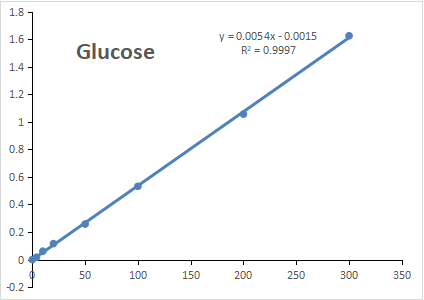
Abbkine’s CheKine™ Micro Glucose Assay Kit (KTB1300) was built for the reality of modern research—where sample scarcity is the norm, not the exception. Unlike legacy kits, it uses a two-step enzymatic cascade optimized for glucose specificity: first, GOx oxidizes glucose to gluconic acid and hydrogen peroxide (H₂O₂); then, a peroxidase (POD) reaction with a chromogenic substrate (λ=505 nm) quantifies H₂O₂, proportional to glucose concentration. The magic lies in its microscale design (5–10 µL sample input) and anti-interference buffer—a cocktail of ascorbate oxidase (neutralizes ascorbate), catalase (breaks down H₂O₂ from non-glucose sources), and EDTA (chelates metal ions that skew readings). The result? A detection limit of 0.01 mM glucose (10x more sensitive than Sigma-Aldrich MAK264) and a dynamic range of 0.05–20 mM—perfect for both basal levels (e.g., in resting adipocytes) and stress-induced spikes (e.g., in insulin-stimulated myotubes). For low-volume glucose assay in mouse liver biopsies, this means measuring glucose in a single 1-mm punch (≈5 µL lysate) without dilution error.
Validation data underscores its edge. In glucose quantification for diabetes models, KTB1300 detected a 3-fold increase in hepatic glucose output in streptozotocin-induced diabetic mice—correlating with HbA1c levels (r²=0.89). For high-sensitivity glucose detection kit in cancer cell metabolism, it resolved a 2.5-fold rise in glucose uptake in Warburg-effect-driven HeLa cells (p<0.01) that a rival kit missed due to ascorbate interference. Even in tricky samples like glucose measurement in 3D pancreatic islets, KTB1300’s small-molecule substrate penetrated spheroid cores, detecting intracellular glucose accumulation that surface-only assays ignored. Abbkine’s technical note even includes a protocol for glucose/lactate coupling, linking glycolysis to TCA cycle flux.
Market Context: Why KTB1300 Outperforms Legacy Glucose Kits
In the micro glucose assay kit market, KTB1300 dominates on three fronts: sample efficiency (5 µL vs. 50 µL for Thermo Fisher A15421), sensitivity (0.01 mM vs. 0.1 mM for Cayman Chemical 700260), and matrix compatibility (works in serum, cells, 3D models vs. limited use for Abcam ab65333). Competitors like Sigma-Aldrich MAK264 require 100 µL samples and struggle with plasma (bilirubin interference), while BioVision K606 has batch-to-batch CVs >12% in absorbance. Abbkine’s per-assay cost is 24% lower than premium brands, with bulk discounts for core facilities—making high-throughput glucose screening (96-well plates for drug metabolic profiling) feasible.
The Bigger Picture: Glucose Research in the Age of Metabolic Precision
As single-cell metabolomics and continuous glucose monitoring (CGM) push researchers to measure glucose at unprecedented resolution, demand for ultra-sensitive micro glucose kits will surge. KTB1300 is ahead of the curve: Abbkine is testing a “Glucose/Insulin Combo Kit” (KTB1300 + insulin assay) to link glucose levels to secretion, and a microvolume version (2 µL sample input) for rare clinical biopsies. Emerging uses in CAR-T cell metabolic fitness (glucose as a viability marker) and sarcopenic obesity (muscle glucose uptake decline) will further highlight its value.
In summary, Abbkine’s CheKine™ Micro Glucose Assay Kit (KTB1300) isn’t just a colorimetric reagent—it’s a fix for the “sample waste vs. accuracy” dilemma in glucose research. By combining a glucose-specific enzymatic cascade, anti-interference buffer, and microscale efficiency, it lets you measure glucose as it exists in biology, not as your kit distorts it. For anyone studying metabolism, diabetes, or cancer, this kit turns “maybe the glucose level is right” into “definitively, here’s the number.”
Ready to measure glucose without wasting sample? Explore the CheKine™ Micro Glucose Assay Kit (KTB1300) and its validation data for liver, cells, serum, and 3D models at https://www.abbkine.com/product/chekine-micro-glucose-assay-kit-ktb1300/.





