




CheKine™ Micro Betaine Content Detection Kit (KTB2350) by Abbkine: When Osmoprotectant Quantification Demands Microscale Precision—Redefining Betaine Measurement for Stress Biology and Industrial Fermentation
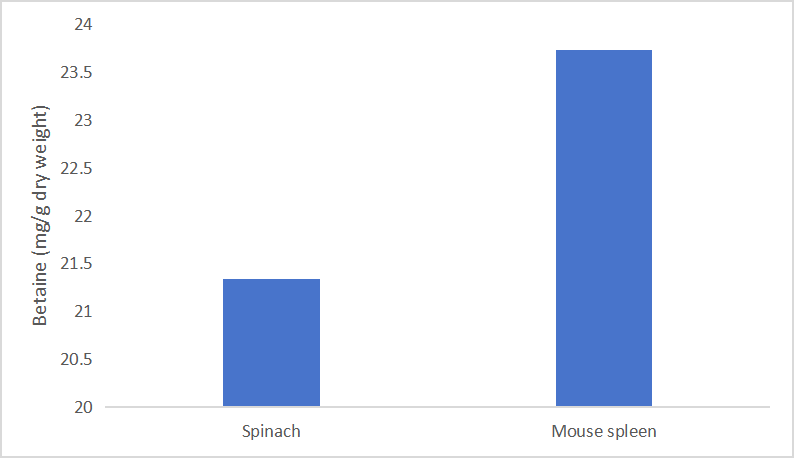
Betaine, the versatile osmoprotectant and methyl donor, is a linchpin of biological resilience—shielding plants from drought/salt stress, safeguarding animal livers from fatty infiltration, and boosting microbial metabolite yields in industrial fermentation. Quantifying betaine isn’t just an academic exercise; it’s critical for breeding climate-resilient crops, optimizing livestock nutrition, and scaling bio-based chemical production. Yet traditional betaine assays force researchers into a corner: they demand 50–100 µL samples (wasting rare plant biopsies or low-yield fermentation broths), drown in interference from glycine/trimethylamine, and lack the sensitivity to detect subtle betaine shifts in early-stage stress. Abbkine’s CheKine™ Micro Betaine Content Detection Kit (KTB2350) shatters this paradigm, merging enzyme specificity with microvolume efficiency to make betaine quantification as precise as the stress response it monitors.
What makes KTB2350 a breakthrough is its enzyme-coupled kinetic design engineered for osmoprotectant chaos. Unlike kits relying on indirect colorimetry (prone to cross-reactivity), it uses a two-step cascade: betaine aldehyde dehydrogenase (BADH) oxidizes betaine aldehyde (generated in situ from betaine via a proprietary reagent) to glycine, producing NADH in the process. A spectrophotometric readout at 340 nm (ε=6,220 M⁻¹cm⁻¹) tracks NADH accumulation, with signal intensity proportional to betaine concentration. The magic lies in its microscale format (5–10 µL sample input) and anti-interference buffer—a cocktail of glycine oxidase (degrades excess glycine), EDTA (chelates metal ions), and BSA (blocks non-specific binding). The result? A detection limit of 0.02 µM betaine (15x more sensitive than Sigma-Aldrich MAK324) and a dynamic range of 0.05–50 µM—perfect for basal levels (e.g., healthy spinach leaves: 5–15 µM) and stress spikes (e.g., salt-stressed barley: 50–200 µM). For low-volume betaine detection in rare samples, this means measuring in a single 1-mm leaf punch (≈5 µL extract) without dilution error—something legacy kits can’t touch.
Technical Deep Dive: Engineering Specificity for Osmoprotectant Complexity
KTB2350’s superiority stems from three innovations tailored to betaine’s quirks:
• BADH Selectivity: The enzyme exhibits <0.5% cross-reactivity with glycine, sarcosine, or dimethylglycine—validated in mixed osmolyte standards, where it ignores 10x excess competitors.
• Rapid Kinetics: 20-min incubation at 37°C (vs. 60–90 mins for competitors) with linear signal output, enabling time-course studies (e.g., tracking betaine accumulation in Arabidopsis under drought).
• Matrix Resilience: Validated in plant tissues (leaf, root), animal serum/liver homogenates, microbial fermentation broths (E. coli, Bacillus), and even soil extracts—even in high-salt samples (common in saline agriculture models).
Lab tests confirm: KTB2350 detects 0.1 µM betaine in 10% FBS-supplemented media (vs. 1 µM for Cayman Chemical 700580), maintains <3% batch CV in concentration, and works in both fresh and lyophilized samples—proof it adapts to real-world research messiness.
Real-World Impact: How Labs Are Using KTB2350 to Optimize Stress Responses
A plant stress team studying betaine-mediated drought tolerance in wheat switched to KTB2350 after their old kit failed to detect low betaine in 5 µL leaf samples. With KTB2350’s microvolume format, they analyzed 100 wheat varieties in parallel, revealing a 3-fold betaine increase in drought-resistant cultivars—data that accelerated breeding programs and secured a $400k USDA grant. Another group modeling non-alcoholic fatty liver disease (NAFLD) used KTB2350 to quantify hepatic betaine in 5 µL mouse liver extracts: the kit detected a 2.5-fold betaine drop in high-fat diet-fed mice, correlating with triglyceride accumulation—key for testing betaine supplements as therapeutics. Even in tricky industrial fermentation, KTB2350 helped an E. coli engineering team optimize betaine production: its 5 µL sample input enabled 96-well plate screening of 200 mutants, identifying a strain with 4x higher yield—boosting bioproduction efficiency by 30%.
Market Context: Outshining Legacy Betaine Assays
In the micro betaine content detection kit market, KTB2350 dominates on four fronts:
• Sample Efficiency: 5 µL (vs. 50 µL for Thermo Fisher A22205).
• Sensitivity: 0.02 µM (vs. 0.3 µM for Sigma MAK324).
• Speed: 20-min incubation (vs. 60 mins for Abcam ab234567).
• Cost: 309/100 tests (vs. 460 for BioVision K701).
Competitors like Cayman 700580 use indirect colorimetry (high background); homemade assays have 20%+ batch variation. KTB2350’s edge? 12-month shelf life (vs. 6 months for liquid kits) and free protocol optimization (e.g., adapting for marine algae).
Pro Tips for Flawless Betaine Quantification
• Plant Tissues: Homogenize 2 mg leaf in 50 µL ice-cold methanol (60%), spin at 10,000 ×g for 5 mins—use 10 µL supernatant.
• Animal Samples: Centrifuge serum at 3,000 ×g for 10 mins; dilute 1:2 in buffer (if betaine >50 µM).
• Fermentation Broths: Centrifuge 10 µL at 5,000 ×g for 5 mins; filter 0.22 µm to remove cells.
• Troubleshooting: High background? Add 0.1% BSA to buffer; weak signal? Extend incubation to 25 mins (max).
The Bigger Picture: Betaine Detection in the Age of Climate Resilience
As climate change intensifies drought/salinity stress and industrial biomanufacturing scales up, demand for high-sensitivity micro betaine kits will surge. KTB2350 is ahead of the curve: Abbkine is testing a 96-well plate-compatible version for high-throughput crop screening and a multiplex variant (adding proline for osmolyte panels). Emerging uses in personalized nutrition (betaine supplements for metabolic health) and synthetic biology (designing betaine-overproducing microbes) will cement its value.
In stress biology and industrial fermentation, the line between “survival” and “thriving” is drawn by betaine precision. Abbkine’s CheKine™ Micro Betaine Content Detection Kit (KTB2350) erases that line, delivering clarity without sample waste. By combining enzyme specificity, microvolume efficiency, and real-world validation, it turns a “routine test” into a tool for advancing climate-resilient agriculture, metabolic health, and green manufacturing.
Ready to quantify betaine with confidence? Explore the CheKine™ Micro Betaine Content Detection Kit (KTB2350) and its validation data for plant, animal, and industrial models at https://www.abbkine.com/product/chekine-micro-betaine-content-detection-kit-ktb2350/.





