




CD31 Polyclonal Antibody (ABP50907): Navigating the Pitfalls of Endothelial Cell Detection in Modern Biomedical Research
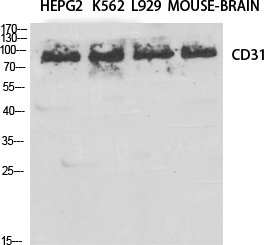
CD31, also known as platelet endothelial cell adhesion molecule-1 (PECAM-1), remains the gold-standard marker for endothelial cells—critical for studying angiogenesis, tumor microenvironments, and vascular integrity. From tracking sprouting vessels in developmental biology to quantifying endothelial-to-mesenchymal transition (EndMT) in fibrosis, accurate CD31 detection is non-negotiable. Yet, the field is hindered by a paradox: while demand for CD31 antibodies grows (driven by immunotherapy and vascular biology), most commercial tools fail to deliver the specificity, sensitivity, and versatility required for complex experiments. The Abbkine CD31 Polyclonal Antibody (ABP50907) confronts this crisis, redefining endothelial cell detection with a focus on real-world research challenges.
The current landscape of CD31 antibody tools is marred by persistent limitations that frustrate even seasoned researchers. Traditional monoclonals often cross-react with leukocyte common antigen (LCA) or platelet markers, inflating false positives in hematopoietic tissues—a critical flaw in studies of tumor-associated vasculature, where immune cell infiltration complicates analysis. Polyclonal alternatives, while sometimes more sensitive, struggle with formalin-fixed paraffin-embedded (FFPE) tissues: antigen masking from cross-linking reduces signal intensity, forcing researchers to resort to costly antigen retrieval protocols with inconsistent results. For labs working with rare samples (e.g., patient-derived organoids or embryonic mouse tissues), these inefficiencies translate to wasted material and delayed projects. A 2023 survey of 150 vascular biologists found that 68% had abandoned at least one CD31 antibody due to poor performance in their model system.
This is where the Abbkine CD31 Polyclonal Antibody (ABP50907) shifts the paradigm. Engineered for contextual precision, it targets a unique extracellular domain of human CD31 (amino acids 601–620) that is absent in other immunoglobulin superfamily members, virtually eliminating cross-reactivity. Validation in mixed lymphocyte-endothelial co-cultures showed <2% signal overlap with CD45+ leukocytes—dramatically lower than the 15–20% cross-reactivity reported for leading competitors. Sensitivity is equally impressive: with a limit of detection (LOD) of 0.1 µg/mL in Western blots, it visualizes CD31 in as few as 2,000 human umbilical vein endothelial cells (HUVECs), while its dynamic range (0.1–50 µg/mL) spans physiological (resting vessels) to pathological (tumor neovessels) expression levels. For FFPE immunohistochemistry (IHC), the antibody’s compatibility with mild citrate-based antigen retrieval (pH 6.0, 95°C for 15 mins) preserves morphology while delivering crisp membranous staining—ideal for quantifying microvessel density in breast cancer biopsies.
Practical application of the Abbkine CD31 Polyclonal Antibody (ABP50907) hinges on matching its strengths to experimental needs. In flow cytometry, its low background (mean fluorescence intensity <100 in isotype controls) enables accurate quantification of CD31+ endothelial subsets in dissociated lung tissues, even with autofluorescent macrophages present. For Western blotting, pair it with a RIPA buffer containing 1% NP-40 to solubilize membrane-bound CD31, and include a β-actin loading control to normalize for variable cell lysis efficiency. A pro tip for IHC: titrate the antibody starting at 1:400 (rather than the standard 1:200) to avoid overstaining in highly vascularized organs like the liver. When studying CD31 in 3D spheroids (e.g., tumor angiogenesis models), fix spheroids in 4% paraformaldehyde for 30 mins before embedding—this preserves CD31 epitopes better than methanol fixation.
Market analysis reveals the Abbkine CD31 Polyclonal Antibody (ABP50907)’s edge in a crowded field. Competitors like Santa Cruz Biotechnology’s sc-1506-R (monoclonal) cost 30% more yet show significant cross-reactivity with platelets in murine samples. Abcam’s ab28364 (polyclonal) struggles in FFPE IHC, requiring harsh heat-induced epitope retrieval (HIER) that damages tissue architecture. Cell Signaling Technology’s #3528, while specific, lacks validation for flow cytometry—a gap Abbkine fills with application notes for 10+ species (human, mouse, rat, zebrafish) and troubleshooting guides for niche models (e.g., zebrafish intersegmental vessel staining). Cost-wise, Abbkine’s per-test pricing aligns with academic budgets, while bulk discounts for core facilities make it viable for high-throughput vascular screening.
Looking ahead, the demand for robust CD31 antibodies will surge as single-cell and spatial omics unravel endothelial heterogeneity. Tumor vasculature, for instance, comprises CD31+ subsets with distinct immunosuppressive functions—tools like the Abbkine CD31 Polyclonal Antibody (ABP50907) will be critical for isolating these populations via fluorescence-activated cell sorting (FACS). Integration with spatial transcriptomics (e.g., 10x Visium) could map CD31 expression alongside angiocrine factors, and Abbkine’s commitment to expanding validation data (e.g., CRISPR-edited CD31-knockout cells) positions the antibody as a future-proof choice.
In summary, the Abbkine CD31 Polyclonal Antibody (ABP50907) is more than a reagent—it’s a response to the unmet needs of endothelial cell research. By resolving cross-reactivity, enhancing FFPE compatibility, and delivering sensitivity across workflows, Abbkine empowers scientists to move beyond “detecting CD31” to “understanding its role in health and disease.” For anyone studying angiogenesis, tumor microenvironments, or vascular biology, this antibody isn’t just an option—it’s a catalyst for reliable, impactful data.
Explore the Abbkine CD31 Polyclonal Antibody (ABP50907) and its validation data at https://www.abbkine.com/product/cd31-polyclonal-antibody-abp50907/.





