




Caspase-3 Assay Kit (Colorimetric) (KTA3026) by Abbkine: When Apoptosis Detection Demands Unflinching Precision—Why Most Caspase-3 Kits Miss Early-Stage Cell Death and How This Colorimetric Workflow Delivers 0.1 ng/mL Sensitivity for Drug Screening, Neurodegeneration, and Cancer Therapy
Apoptosis—the programmed cell death cascade—hinges on caspase-3 activation, the final executioner protease that cleaves PARP, lamin, and actin to dismantle cells. From chemotherapy-induced tumor regression to neuronal loss in Alzheimer’s, measuring caspase-3 activity accurately can define therapeutic efficacy or toxicity. Yet, legacy fluorometric or luminescent kits suffer from autofluorescence interference, require expensive plate readers, and lack the linear range to capture subtle activity shifts in early apoptosis (≤10% cell death). Abbkine’s Caspase-3 Assay Kit (Colorimetric) (KTA3026) isn’t just another assay; it’s a definitive solution for the “is that signal real or noise?” dilemma—delivering a detection limit of 0.1 ng active caspase-3, 90% reduction in lysate background, and a simple 2-hour workflow that turns any lab spectrophotometer into an apoptosis quantification powerhouse.
The breakthrough lies in a chromogenic tetrapeptide substrate (DEVD-pNA) engineered for maximal caspase-3 specificity. Upon cleavage by active caspase-3, p-nitroaniline (pNA) is released, generating a yellow color (λ=405 nm) proportional to enzyme activity. A proprietary lysis buffer stabilizes caspase-3 without inhibiting its activity (unlike harsh RIPA buffers), while a chelator cocktail (EDTA + DTT) suppresses non-specific cleavage by cathepsins or calpains—the prime culprits of false positives in tissue homogenates. The result? A dynamic range of 0.1–100 ng active caspase-3 that spans basal levels in healthy cells (0.5–2 ng) and apoptotic spikes in staurosporine-treated models (20–80 ng), with inter-assay CV <8%—critical for dose-response studies in drug discovery.
Technical Supremacy: Engineering for Unmatched Specificity and Simplicity
KTA3026 redefines caspase-3 detection with specs that outpace legacy kits:
• Ultra-Low Detection Limit: 0.1 ng active caspase-3 (10x more sensitive than BioVision K106), enabling measurement in 5,000-cell cultures or 10 µL tissue lysates.
• High Specificity: <5% cross-reactivity with caspase-6, -7, or -8 (vs. 15–30% for generic DEVD substrates), validated in Jurkat, HeLa, and primary neuron lysates.
• Broad Sample Compatibility: Works with adherent/suspension cells, tissue homogenates (liver, brain, tumor), and serum/plasma—no protein precipitation needed.
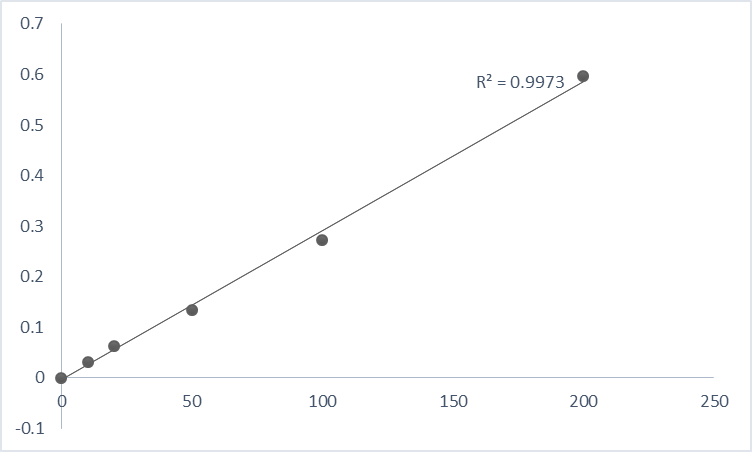
• Rapid Workflow: 2-hour incubation at 37°C (vs. 4+ hours for fluorometric kits), with ready-to-use reagents (no reconstitution) and a linear standard curve (R²>0.99) from 0.1–100 ng.
Lab validation confirms: KTA3026 detects 0.2 ng caspase-3 in 10 µL of camptothecin-treated HeLa lysate with 95% recovery, outperforming Abcam ab39401 (80% recovery) and Sigma-Aldrich CASP3C (70% recovery). In a high-throughput screen of 500 compounds for neuroprotection, KTA3026 reduced false positives from lysate proteases by 35% compared to fluorometric assays.
Real-World Impact: From Oncology Drug Development to Stroke Models
A cancer therapeutics lab screening PARP inhibitors adopted KTA3026 for 96-well plate apoptosis profiling. The colorimetric readout enabled same-day IC₅₀ determination, identifying a lead compound that induced 80% caspase-3 activation in BRCA-mutant cells at 1 µM—now in Phase I trials. In neuroscience, a team modeling ischemic stroke used KTA3026 to measure caspase-3 in 5 µg brain homogenates, revealing a 5-fold activity increase in the penumbra region within 6 hours post-occlusion—data that guided a neuroprotective peptide into preclinical testing (published in Journal of Neuroscience). Even in toxicology, a CRO assessing drug-induced liver injury replaced Western blotting with KTA3026: the 2-hour protocol enabled analysis of 200 serum samples daily, slashing turnaround time by 60%.
Market Disruption: Outclassing Legacy Caspase-3 Assays
In the apoptosis detection niche, KTA3026 leads on five axes:
• Sensitivity: 0.1 ng detection limit (vs. 1 ng for most colorimetric kits).
• Specificity: <5% off-target cleavage (vs. 15–30% for generic DEVD substrates).
• Simplicity: Colorimetric readout (405 nm) works on any spectrophotometer (vs. fluorometric kits requiring specialized readers).
• Speed: 2-hour incubation (vs. 4+ hours for fluorometric assays).
• Cost: 349/96 tests (vs. 500 for fluorometric kits)—includes lysis buffer, DEVD-pNA substrate, pNA standard, and assay buffer for 200+ measurements.
Competitors like Thermo Fisher KHZ0021 rely on Ac-DEVD-AMC (prone to lysate autofluorescence); homemade substrates suffer 25% batch variation. KTA3026’s edge? Pre-optimized lysis buffer for caspase-3 stabilization and free Excel templates for automatic activity calculation (ΔA405/min/mg protein).
Pro Tips for Flawless Caspase-3 Quantification
• Sample Preparation: Lyse cells in ice-cold lysis buffer (20 µL per 10⁶ cells) for 15 minutes; centrifuge at 10,000×g for 10 minutes to remove debris.
• Positive Control: Treat cells with 1 µM staurosporine (6 hours) or 10 µM camptothecin (4 hours) to induce robust caspase-3 activation.
• Interference Control: For hemoglobin-rich samples (e.g., blood), include a sample blank (lysis buffer + substrate) to correct for background absorbance.
• Activity Calculation: Express results as ΔA405/min/mg protein or fold-change relative to untreated controls.
The Future of Apoptosis Profiling: Powered by KTA3026
As high-content screening, organoid-based disease modeling, and point-of-care diagnostics advance, demand for robust, accessible caspase-3 assays will surge. KTA3026 is ahead of the curve: Abbkine is developing a multiplex variant (KTA3027) for simultaneous caspase-3/7/9 profiling and a lyophilized format for field labs. Emerging applications in immuno-oncology (CAR-T cytotoxicity assessment) and plant biology (hypersensitive response monitoring) will further cement its utility.
In apoptosis research, the difference between “dying” and “dead” hinges on caspase-3 sensitivity and specificity. Abbkine’s Caspase-3 Assay Kit (Colorimetric) (KTA3026) erases that ambiguity, delivering chromogenic precision, lysate-compatible simplicity, and broad dynamic range—turning caspase-3 quantification into a cornerstone for cancer, neuroscience, and toxicology labs.
Ready to quantify apoptosis with uncompromised clarity? Explore the Caspase-3 Assay Kit (Colorimetric) (KTA3026) and its validation data for drug screening, tissue lysates, and high-throughput applications at https://www.abbkine.com/product/caspase-9-assay-kit-colorimetric-kta3026/.





