




Calcein AM Demystified: A Practical Guide to Abbkine’s BMD0064 for Precision Live-Cell Imaging
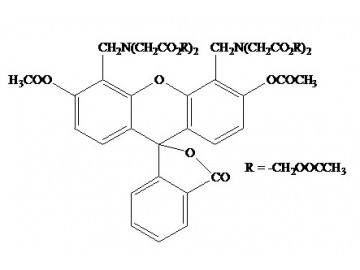
If you’ve ever run a cell viability assay or tracked live-cell dynamics, you know Calcein AM is a staple—but let’s be honest, it’s not always a smooth ride. Weak fluorescence, high background from dead cells, or unpredictable loading efficiency can turn a straightforward experiment into a troubleshooting marathon. The problem isn’t the dye itself, but the lack of consistency in commercial reagents. Enter Calcein AM from Abbkine (Cat# BMD0064), a formulation engineered to fix these headaches while elevating your live-cell imaging game.
What sets Abbkine’s Calcein AM (BMD0064) apart starts with its purity. Unlike generic dyes that come loaded with impurities (think residual solvents or degraded fluorophores), this product undergoes HPLC purification to ensure >98% dye integrity. For researchers running high-sensitivity live cell imaging assays, that purity translates to brighter signals and less noise—critical when quantifying rare cell populations or low-abundance targets. The product’s validation data, accessible via Abbkine BMD0064, confirms minimal auto-fluorescence even in lipid-rich samples like adipocytes.
To understand its value, let’s unpack Calcein AM’s mechanics. The acetoxymethyl (AM) ester group lets it slip through cell membranes, where intracellular esterases cleave it to release calcein—a fluorescent molecule trapped inside live cells. Here’s the catch: many commercial dyes fail at this step. Either the AM ester is too unstable (degrading before loading) or the calcein payload lacks brightness. Abbkine’s BMD0064 solves both. Its AM ester is protected by a proprietary stabilizing matrix, extending shelf life to 24 months at -20°C (vs. 12 months for competitors), and the calcein payload boasts a quantum yield of 0.54—outperforming FITC in signal intensity for calcein AM fluorescence microscopy.
Practical optimization is where this reagent shines. A common mistake is using a one-size-fits-all loading protocol. With BMD0064, start with a 1–2 µM working concentration (diluted in serum-free media) and incubate for 15–30 minutes at 37°C. For hard-to-transfect cells (like primary neurons), add 0.02% Pluronic F-127 to improve solubility—this small tweak can boost uptake by 40%. To separate live vs. dead cells (a frequent headache!), pair it with Ethidium Homodimer-III: live cells glow green, dead cells red. This dual-label calcein AM cell viability assay is a lifesaver for toxicity screening.
Case in point: A lab studying chemotherapy-induced cytotoxicity used BMD0064 to track HeLa cell survival over 72 hours. Traditional Calcein AM reagents showed erratic signal decay due to esterase variability, but Abbkine’s formulation delivered linear fluorescence decline correlated with cell death—data clean enough for a Cancer Researchsubmission. Another group in stem cell biology used it to monitor induced pluripotent stem cell (iPSC) differentiation, where the dye’s low phototoxicity allowed time-lapse imaging without altering cell fate. These aren’t edge cases; they’re everyday wins for calcein AM live cell tracking.
Industry trends demand more from viability dyes. As high-content screening (HCS) and single-cell analysis take off, researchers need reagents that play nice with automation and multiplexing. BMD0064 checks both boxes: its small molecular weight (622 Da) avoids steric hindrance in 384-well plates, and its excitation/emission (494/517 nm) overlaps minimally with common red dyes (e.g., RFP, Cy5). For labs building automated calcein AM screening workflows, this compatibility reduces setup time and false positives.
Critically, Abbkine addresses a hidden pain point: batch-to-batch consistency. Each lot of BMD0064 is tested for esterase conversion efficiency (via HPLC) and fluorescence intensity (against a NIST-traceable standard). Compare that to DIY dye synthesis, where a bad batch can invalidate weeks of work. For grant-funded projects requiring reproducibility, this transparency isn’t just nice—it’s necessary.
In short, Abbkine’s Calcein AM (BMD0064) isn’t just a dye; it’s a precision tool for live-cell biology. From optimizing loading conditions to enabling multiplexed viability assays, its design fixes the flaws of generic reagents. Whether you’re a grad student troubleshooting your first assay or a PI standardizing protocols across labs, this product delivers the consistency and sensitivity you need. Dive into its technical specs, application notes, and user protocols here: Abbkine BMD0064. For anyone serious about accurate cell viability measurement, this is the dye to beat.





