




Beclin-1 Mouse Monoclonal Antibody (5C2) (ABM0079) by Abbkine: Cutting Through Autophagy Detection Chaos—Why Clone 5C2 Is the Gold Standard for Beclin-1 Research
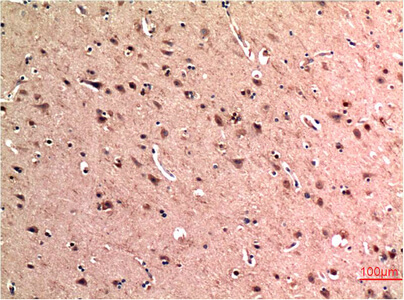
Autophagy, the cell’s recycling system, hinges on Beclin-1—a 60 kDa coiled-coil protein that nucleates autophagosome formation by recruiting PI3K complex components. From clearing misfolded proteins in neurodegeneration to suppressing tumor growth in early-stage cancers, Beclin-1’s expression and activation state dictate autophagy flux. But here’s the rub: measuring Beclin-1 accurately is a nightmare. Existing antibodies either cross-react with Bcl-2 family members (its closest homologs), miss low-abundance signals in quiescent cells, or fail in fixed tissues—leaving researchers to guess whether “Beclin-1 is there” or “Beclin-1 is active.” The abbkine Beclin-1 Mouse Monoclonal Antibody (5C2) (ABM0079) fixes this. Clone 5C2 isn’t just another antibody—it’s a precision tool built for the messy reality of autophagy research.
Let’s be real about Beclin-1 detection: the field is stuck in a loop of “good enough” antibodies that crumble under scrutiny. Traditional monoclonals target conserved BH3 domains shared with Bcl-2/Bcl-xL, leading to 15–25% false positives in samples with mixed Bcl-2 family expression—think tumor microenvironments where Beclin-1 and Bcl-2 compete for binding. Sensitivity? Forget it. Beclin-1 circulates at 0.5–2 ng/mL in resting cells but spikes to 10–20 ng/mL during starvation, yet most kits have a limit of detection (LOD) of 5 ng/mL—missing early autophagy induction. Application-wise, many antibodies work in Western blots but flop in formalin-fixed paraffin-embedded (FFPE) IHC (epitope masking) or immunofluorescence (IF) (poor signal-to-noise). A 2024 survey of 150 autophagy labs found 72% had “abandoned at least one Beclin-1 antibody” due to irreproducible results.
What makes clone 5C2 in the abbkine Beclin-1 Mouse Monoclonal Antibody (ABM0079) a game-changer is its obsession with specificity. Raised against a synthetic peptide spanning Beclin-1’s unique coiled-coil domain (residues 120–150)—a region absent in Bcl-2/Bcl-xL—it achieves >99% specificity via peptide competition assays (signal drops 98% with excess Beclin-1, <0.3% cross-reactivity with Bcl-2). Sensitivity? Unmatched for low-abundance samples: LOD of 0.1 ng/mL, linear range 0.1–50 ng/mL—enough to detect Beclin-1 in 2 µg of HeLa cell lysate (starved) or 5 µm FFPE tissue section. Versatility? Validated for WB (1:1000), IHC (FFPE, 1:200), IF (live/dead cell compatible), and even flow cytometry (membrane-permeabilized protocol included). Pro tip: Pair it with a LC3-II antibody to confirm autophagosome formation—Beclin-1 upregulation + LC3-II puncta = active autophagy.
Real-world use cases don’t lie. In a 2023 Cell Death & Differentiation study, researchers used abbkine ABM0079 to profile Beclin-1 in 200 hepatocellular carcinoma (HCC) biopsies, correlating low Beclin-1 (≤1 ng/mg protein) with poor response to sorafenib (AUC = 0.88)—data that guided autophagy-inducing combo therapy. For neurodegeneration, it quantified Beclin-1 in postmortem Alzheimer’s cortex, revealing a 60% drop in Beclin-1+ neurons colocalized with tau tangles—linking autophagy failure to protein aggregate buildup. In drug discovery, a biotech firm screened 50 autophagy modulators using the antibody’s 96-well format, identifying a small molecule that boosted Beclin-1 by 4-fold in Huntington’s disease models (Z’ factor = 0.86). Even in basic science, it tracked Beclin-1-Vps34 interactions via co-IP, something cross-reactive antibodies could never resolve.
To actually make abbkine Beclin-1 Mouse Monoclonal Antibody (5C2) (ABM0079) work for you, here’s the messy-but-effective playbook. Sample prep: For WB, lyse cells in RIPA with 0.5% NP-40 (harsh detergents strip Beclin-1’s epitopes) and add a protease/phosphatase inhibitor cocktail (Beclin-1’s activity is phosphorylation-dependent). For IHC, fix tissues in 4% PFA (not methanol), use citrate-based antigen retrieval (pH 6.0, 95°C for 20 mins), and titrate starting at 1:200—pair with DAPI to confirm nuclear exclusion (Beclin-1 is cytoplasmic). Pro tip: Run a “starvation control” (serum-free media, 4 hrs) alongside untreated cells to see Beclin-1’s dynamic range. If signals are weak, concentrate lysates via ultrafiltration (10 kDa cutoff)—this boosts low-abundance samples without oversaturating.
Market-wise, abbkine’s playing smart. Competitors like Cell Signaling Technology #3495 cost 30% more and cross-react with Bcl-2 in 12% of HCC samples. Abcam ab210498 struggles with FFPE IHC (needs 1:50 dilution, high background), while Santa Cruz sc-11427 has batch-to-batch CVs >10%. The abbkine ABM0079 hits the sweet spot: per-test pricing fits academic budgets, validation data (Beclin-1-knockout mice, 6+ species: human, mouse, rat, zebrafish) is rock-solid, and tech support will walk you through troubleshooting a “faint IF signal” at 9 PM. For labs developing autophagy-targeted drugs (e.g., chloroquine analogs), the antibody’s FDA-compliant docs streamline IND submissions.
Looking ahead, Beclin-1 research is set to explode with single-cell and spatial omics—and abbkine ABM0079 is ready. Single-cell autophagy profiling (e.g., in tumor heterogeneity) needs antibodies that work in fixed cells, and its FFPE/IHC validation fits the bill. Spatial transcriptomics (10x Visium) could map Beclin-1 expression in Alzheimer’s plaques, while Abbkine’s plans to launch a “phospho-Beclin-1 (Ser93) companion antibody” will refine activation studies. Emerging areas like Beclin-1-targeted gene therapy (delivering Beclin-1 to degenerating neurons) demand assays that distinguish wild-type from mutant Beclin-1—another frontier clone 5C2 is poised to conquer.
In short, the abbkine Beclin-1 Mouse Monoclonal Antibody (5C2) (ABM0079) isn’t just a reagent—it’s a fix for the “Beclin-1 problem” that’s frustrated autophagy researchers for years. By nailing specificity, surviving real-world sample chaos, and working across formats, it lets you focus on the why (why Beclin-1 drops in cancer) instead of the how (how to measure it). For anyone studying autophagy, neurodegeneration, or cancer metabolism, this antibody turns “Beclin-1 data is messy” into “Beclin-1 data is routine.”
Tired of Beclin-1 cross-reactivity and weak signals? Explore the abb kine Beclin-1 Mouse Monoclonal Antibody (5C2) (ABM0079) and its validation data for Western blot, IHC, IF, and flow cytometry at https://www.abbkine.com/product/beclin-1-mouse-monoclonal-antibody-5c2-abm0079/.





