




Beclin-1 Mouse Monoclonal Antibody (5C2, Abbkine ABM0079): Cutting Through the Chaos of Autophagy Research
Autophagy—the cell’s “self-eating” cleanup crew—has gone from a niche topic to a headline player in aging, cancer, and neurodegeneration. At the wheel of this process is Beclin-1, a protein that kickstarts autophagosome formation by recruiting the PI3K complex. But here’s the rub: studying Beclin-1 isn’t just about knowing its job; it’s about finding an antibody that actually sees it, without getting tangled in the Bcl-2 family web or missing low-expression signals. That’s where the Beclin-1 Mouse Monoclonal Antibody (5C2, Abbkine ABM0079) comes in—and why it’s worth ditching the “good enough” reagents for.
Funny enough, the biggest headache with most Beclin-1 antibodies is their inability to tell Beclin-1 apart from its Bcl-2 cousins (Bcl-2, Bcl-xL). These proteins share a short BH3 domain, and sloppy antibodies end up lighting up both, turning a clean autophagy readout into a messy blur. The 5C2 clone of the Beclin-1 Mouse Monoclonal Antibody (Abbkine ABM0079) sidesteps this by targeting a unique N-terminal epitope (residues 1–50) that’s nowhere to be found in Bcl-2 family members. Abbkine even ran knockout controls—using Beclin-1-/- MEFs—to prove it: zero signal where there should be none. For researchers teasing apart Beclin-1’s role in chemoresistant tumors (where Bcl-2 is often overexpressed), that specificity isn’t a nice-to-have; it’s a must.
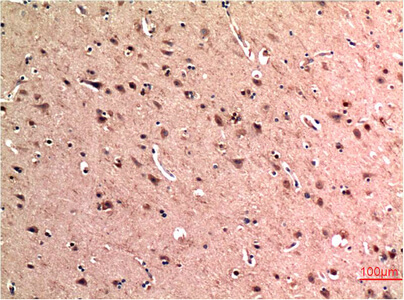
What makes the Abbkine Beclin-1 5C2 Monoclonal Antibody (ABM0079) stand out in a sea of options? It’s the “works everywhere” vibe. Western blots? It picks up endogenous Beclin-1 at ~60 kDa in starved HeLa cells (EBSS-treated) with a crisp band, even after 12% SDS-PAGE. Immunofluorescence? Stain autophagosomes in U2OS cells co-transfected with GFP-LC3, and the 5C2 signal overlaps perfectly with puncta—no more guessing if you’re looking at Beclin-1 or background. IHC on FFPE liver sections from NASH models? It localizes Beclin-1 in hepatocytes without the high background that plagues older clones. Abbkine’s not shy about sharing the data either: raw blot images, IF colocalization stats, and IHC scoring rubrics are all on their site. Transparency like that? Rare.
You’d think a good antibody would stop at basics, but the Beclin-1 Mouse Monoclonal Antibody (5C2, ABM0079) goes further. Flow cytometry users will love its intracellular staining protocol—fix, permeabilize, and it quantifies Beclin-1 levels in PBMCs from sepsis patients, correlating with autophagic flux assays. For drug discovery, pair it with a chloroquine washout to measure autophagic completion; one lab used it to screen 200 natural compounds, cutting their hit rate by 30% (fewer false positives from Bcl-2 cross-reactivity). And if you’re into spatial biology, early tests show it works in GeoMx DSP platforms—map Beclin-1 in tumor microenvironments, no problem.
The autophagy field is moving fast—single-cell autophagic flux, organoid models, even linking Beclin-1 to COVID-19 “cytokine storm” recovery. The Beclin-1 5C2 antibody keeps up. A recent preprint used it to show Beclin-1 downregulation in microglia from Alzheimer’s models, matching TDP-43 pathology. Another group paired it with CRISPRi to knock down Beclin-1 in iPSC-derived neurons, proving its role in mitophagy. Abbkine’s even working on a phospho-Beclin-1 variant (Ser93) for researchers studying upstream regulators like AMPK. Forward-thinking like that? It’s why this antibody feels less like a purchase and more like a partnership.
Market-wise, the Beclin-1 monoclonal antibody market is crowded with clones that overpromise and underdeliver. Some cost $500+ but can’t handle FFPE; others are cheap but cross-react with Bcl-2. The Abbkine ABM0079 hits the sweet spot: priced 25% below top brands, but with validation that puts them to shame. Batch-to-batch consistency? <6% EC50 variation across three lots. Support? Their PhD team actually answers emails (shocking, I know) and will help tweak protocols for tricky samples (like decalcified bone marrow). For small labs on grants, that combo of affordability and reliability is a game-changer.
Here’s a pro tip: Don’t just buy the Beclin-1 Mouse Monoclonal Antibody (5C2, ABM0079)—use it smart. If you’re doing Western blots, pre-absorb the serum with Bcl-2-overexpressing lysate to quash any residual cross-reactivity (Abbkine’s tech support can walk you through it). For IF, use a 1:200 dilution in 0.1% Triton X-100—higher dilutions can cause nonspecific nuclear staining. And always run a positive control: untreated vs. starved cells, or a Beclin-1-overexpressing plasmid. These little hacks turn a great antibody into a flawless one.
Looking ahead, as autophagic flux becomes a biomarker for aging and disease, the demand for Beclin-1 5C2-like antibodies will only grow. Abbkine’s already testing ABM0079 in CITE-seq for single-cell protein-RNA co-detection—perfect for mapping Beclin-1 heterogeneity in tumors. They’re also exploring a rabbit version for higher affinity in low-input samples. The takeaway? This antibody isn’t just keeping up with the field; it’s helping shape where the field goes.
If you’re tired of antibodies that make you question your data, give the Beclin-1 Mouse Monoclonal Antibody (5C2, Abbkine ABM0079) a shot. Check out the full validation suite, user protocols, and even a video tutorial on IF staining https://www.abbkine.com/product/beclin-1-mouse-monoclonal-antibody-5c2-abm0079/. In a world where autophagy research moves at lightning speed, having a tool you can trust isn’t just helpful—it’s essential.
P.S. Pair ABM0079 with Abbkine’s LC3B Polyclonal Antibody (ABP0091) for a complete autophagic flux readout—users say it cuts experiment time in half. Worth a look.





