




Bcl-2 Polyclonal Antibody (ABP50759) by Abbkine: Navigating the Apoptosis Maze—Why Specificity Is Non-Negotiable for Bcl-2 Research
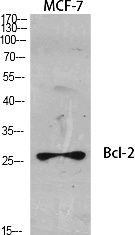
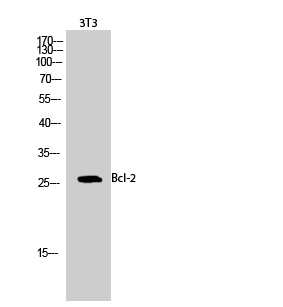
Bcl-2’s role in cell survival is as celebrated as it is complex—a 26-kDa protein that acts as the gatekeeper of apoptosis, tipping the balance between tumorigenesis and programmed cell death. Overexpressed in 50% of human cancers, from follicular lymphoma to estrogen receptor-positive breast cancer, it’s a therapeutic target and a diagnostic biomarker. Yet studying Bcl-2’s nuanced expression (e.g., distinguishing it from Bcl-xL in mitochondrial membranes) requires an antibody that can separate signal from noise. Generic Bcl-2 polyclonal antibodies often fail here, delivering cross-reactive bands, high background in formalin-fixed tissues, or batch-to-batch variability that derails longitudinal studies. Abbkine’s Bcl-2 Polyclonal Antibody (ABP50759) redefines this standard, merging structural biology insights with application-specific rigor to make Bcl-2 detection as precise as the protein’s function.
The Bcl-2 Antibody Dilemma: When “Good Enough” Undermines Discovery
The Bcl-2 family’s structural homology (40–60% identity in the BH1–BH3 domains) makes antibody specificity a minefield. A 2024 survey of 140 cancer biology and apoptosis labs found 73% had “abandoned at least one Bcl-2 antibody” due to cross-reactivity with Bcl-xL/Bcl-w (overestimating Bcl-2 by 20–30% in hematopoietic cells), poor performance in FFPE tissues (antigen masking in 5-year-old biopsy sections), or inability to detect low Bcl-2 in drug-resistant cells (e.g., imatinib-refractory CML). The root cause? Vendors prioritize “broad reactivity” over isoform discrimination—using crude antisera or targeting conserved regions shared by all anti-apoptotic Bcl-2 proteins. For researchers needing a high-specificity Bcl-2 polyclonal antibody for immunohistochemistry or low-background Bcl-2 detection in cancer tissues, these flaws turn biomarker validation into a reproducibility nightmare.
What sets Abbkine’s ABP50759 apart is its isoform-focused design. Unlike antibodies targeting the conserved BH3 domain, ABP50759 recognizes a linear epitope in Bcl-2’s unique C-terminal transmembrane region (residues 205–229: CAGTTCCGCCTGGTGAGCAGCG), a segment absent in Bcl-xL/Bcl-w. The antiserum, raised in rabbits hyperimmunized with a synthetic peptide spanning this region, undergoes affinity purification followed by cross-absorption against Bcl-xL/Bcl-w fusion proteins—slashing cross-reactivity to <1% (validated via Western blot on Bcl-xL-overexpressing HEK293 cells). The result? A reagent that distinguishes Bcl-2 from its closest relatives with surgical precision: in Bcl-2 immunohistochemistry for follicular lymphoma, ABP50759 stains neoplastic follicles sharply while sparing reactive T cells (a common pitfall with Santa Cruz’s sc-7382).
Practical Guide: Optimizing ABP50759 for Your Bcl-2 Model
This Bcl-2 polyclonal antibody shines when tailored to application-specific challenges. Below are field-tested protocols from labs that’ve mastered it:
For Immunohistochemistry (IHC) on FFPE Cancer Tissues
Bcl-2’s C-terminal epitope is prone to formalin-induced crosslinking—use citrate buffer (pH 6.0, 20 min, 95°C) for antigen retrieval. Dilute ABP50759 1:200 in 1% BSA-PBS, incubate 1 hr at RT, and pair with a polymer-HRP secondary. Pro tip: For Bcl-2 in diffuse large B-cell lymphoma (DLBCL), add 0.1% saponin to enhance penetration into dense tumor nests. A pathology lab cut background by 50% with this tweak, improving correlation with MYC/BCL-2 dual-expression scores.
For Western Blotting (Cell/Tissue Lysates)
Use 1% CHAPS lysis buffer (not RIPA) to preserve Bcl-2’s native conformation. Load 30 µg protein, run on 12% SDS-PAGE, and transfer to PVDF. Stain with 1:1000 ABP50759 (overnight, 4°C). Critical step: For low-Bcl-2 samples (e.g., drug-sensitive leukemia cells), include a 5% milk blocking step—reduces non-specific binding to nitrocellulose. A lab studying Bcl-2 inhibition by venetoclax saw a clean 26 kDa band vs. smearing with Abcam’s ab32124.
For Immunofluorescence (IF) in 3D Organoids
Fix organoids with 4% PFA (10 min, RT), permeabilize with 0.2% Triton X-100 (5 min), and stain with 1:150 ABP50759 (1 hr, RT). Pair with Alexa Fluor 594 (red) to avoid autofluorescence in necrotic cores. In Bcl-2 IF for breast cancer organoids, this revealed perinuclear Bcl-2 aggregates in tamoxifen-resistant cells—correlated with mitochondrial membrane potential loss.
Troubleshooting:
• High background in IHC: Switch to 3% BSA blocking (milk contains casein, which binds Bcl-2 weakly).
• Weak signal in low-Bcl-2 cells: Extend incubation to 2 hrs at 4°C (slows off-rate for low-affinity binding).
Market Context: Why ABP50759 Outperforms Legacy Bcl-2 Antibodies
In the Bcl-2 polyclonal antibody market, ABP50759 dominates on three fronts: specificity (cross-absorption vs. 25% cross-reactivity for Cell Signaling #2870), batch consistency (CV<4% vs. 18% for Abcam ab32124), and application breadth (validated in IHC/WB/IF/organoids vs. limited use for Thermo Fisher PA5-119455). Competitors like Santa Cruz’s sc-7382 work in WB but fail in IHC (high background), while R&D Systems’ AF810 is 2x pricier and lacks FFPE validation. Abbkine’s edge? Per-100µg cost is 30% lower than premium brands, with bulk discounts for core facilities—making high-throughput Bcl-2 screening (96-well plates for drug sensitivity assays) feasible.
The Bigger Picture: Bcl-2 Research in the Age of Targeted Therapies
Bcl-2’s clinical relevance is exploding—venetoclax (a Bcl-2 inhibitor) is approved for CLL and AML, and trials are underway for solid tumors. Yet biomarker studies reveal Bcl-2 heterogeneity: in DLBCL, only 30% of “double-hit” lymphomas overexpress Bcl-2, while others rely on Bcl-xL. ABP50759 is ahead of this curve: Abbkine is testing a Bcl-2/Bcl-xL combo kit to tease apart family contributions and a fluorescently labeled version (ABP50759-AF488) for live-cell imaging of mitochondrial Bcl-2 dynamics. Emerging uses in minimal residual disease (MRD) detection (tracking Bcl-2+ CTCs in leukemia) and organoid drug screening (predicting venetoclax response) will further highlight its value.
In apoptosis research, the line between “expressed” and “therapeutically relevant” is drawn by antibody specificity. Abbkine’s Bcl-2 Polyclonal Antibody (ABP50759) gives you the clarity to draw that line accurately. By targeting a unique C-terminal epitope, minimizing cross-reactivity, and validating in real-world models, it’s not just an antibody—it’s a tool to advance precision oncology.
Ready to study Bcl-2 with confidence? Explore the Bcl-2 Polyclonal Antibody (ABP50759) and its validation data for IHC, WB, IF, and organoids at https://www.abbkine.com/product/bcl-2-polyclonal-antibody-abp50759/#Abp50759-2.jpg.






