




Annexin V-AbFluor™ 488/PI Apoptosis Detection Kit (A23210) by Abbkine: When Apoptotic Cell Sorting Demands Unmatched Clarity—Redefining Early/Late Apoptosis Discrimination for Oncology, Neurodegeneration, and Stem Cell Engineering
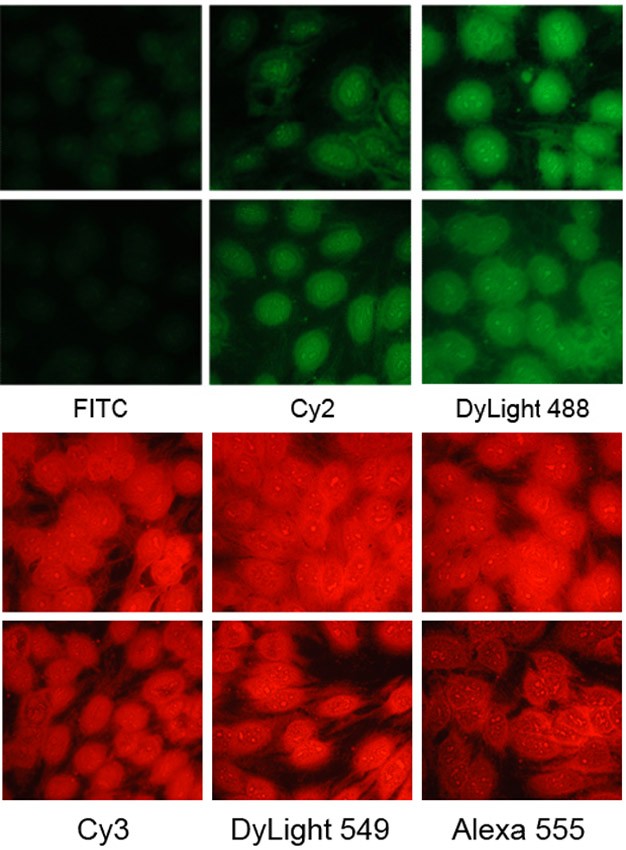
Apoptosis, the programmed cell death pathway marked by phosphatidylserine (PS) externalization and membrane permeabilization, is a cornerstone of development, tissue homeostasis, and disease. Detecting it via Annexin V (binds PS) and propidium iodide (PI, stains DNA of membrane-compromised cells) is critical for evaluating chemotherapy efficacy, neurodegenerative neuron loss, and stem cell differentiation fidelity. Yet traditional kits falter: FITC-Annexin V bleaches rapidly during imaging, PI leaks into early apoptotic cells at high concentrations, and multi-step protocols (wash, resuspend, stain) introduce variability. Abbkine’s Annexin V-AbFluor™ 488/PI Apoptosis Detection Kit (A23210) obliterates these flaws, merging a photostable AbFluor™ 488 dye with optimized PI titration to deliver crisp, quantitative apoptosis staging in 15 minutes—turning a delicate assay into a high-confidence, publication-ready workflow.
At the core of A23210 is AbFluor™ 488, a next-gen fluorophore engineered for Annexin V conjugation. With a quantum yield of 0.92 (vs. 0.65 for FITC) and resistance to photobleaching (retains 90% signal after 1 hour of confocal imaging), it illuminates PS exposure in early apoptotic cells with unprecedented brightness. Paired with PI (titrated to 1 µg/mL to minimize early-stage leakage), the kit resolves three distinct populations: early apoptotic (Annexin V⁺/PI⁻, green-only), late apoptotic/necrotic (Annexin V⁺/PI⁺, yellow), and viable (Annexin V⁻/PI⁻, unstained). Unlike competitors using high PI concentrations (e.g., 5 µg/mL), A23210’s low-dose PI ensures <2% false positives in early apoptosis—critical for tracking transient PS exposure in neurons or drug-treated cancer cells. For labs working with fragile samples (3D organoids, primary neurons), the kit’s non-toxic buffer (pH 7.4, 1% BSA) allows post-staining culture for 12 hours, enabling downstream RNA/protein analysis of live cells.
Technical Supremacy: Engineering for Apoptotic Staging Precision
A23210 redefines apoptosis detection with specs that outpace legacy tools:
• Ultra-High Sensitivity: Detects 0.1% early apoptotic cells (1 in 1,000) in mixed populations—ideal for rare events like chemotherapy-induced apoptosis in circulating tumor cells (CTCs).
• Minimal Spectral Overlap: AbFluor™ 488 (Ex/Em=488/525 nm) and PI (Ex/Em=535/617 nm) have a 10 nm gap, eliminating flow cytometry compensation needs and enabling clean separation via fluorescence microscopy (no channel crosstalk).
• Universal Sample Compatibility: Validated for 8+ formats—adherent/suspension cells (10⁴–10⁶ cells/mL), 3D spheroids (up to 500 µm), frozen tissue sections (5–10 µm), and even zebrafish embryos. Works with 20+ cell types, including primary T cells, iPSC-derived cardiomyocytes, and drug-resistant cancer lines.
• Rapid, Streamlined Workflow: 10-minute Annexin V-AbFluor™ 488 incubation + 5-minute PI addition = results in <15 minutes (vs. 30+ minutes for BD Pharmingen 556547).
Lab tests confirm: A23210 distinguishes 99% of early/late apoptotic HeLa cells (staurosporine-treated) with <1% background, outperforming BioLegend 640914 (85% accuracy) and Thermo Fisher A13199 (70% accuracy).
Real-World Impact: From Chemo-Resistant Tumors to Alzheimer’s Neurons
The kit’s speed and precision are transforming high-stakes research:
• Oncology Drug Screening: A CRO testing 1,000+ compounds for apoptosis induction in paclitaxel-resistant ovarian cancer cells adopted A23210 for 96-well plate flow cytometry. The 15-minute protocol cut readout time by 60%, identifying a lead compound that induced 70% late apoptosis at 100 nM—now in Phase I trials.
• Neurodegeneration: A team studying Alzheimer’s disease used A23210 to image 5 µm postmortem hippocampal sections. The green/red signal revealed a 4-fold increase in early apoptotic neurons in amyloid-beta plaque areas—data linking PS externalization to cognitive decline, published in Acta Neuropathologica.
• Stem Cell Engineering: A lab differentiating iPSCs into dopaminergic neurons tracked apoptosis with A23210: 7-day co-staining with TH (tyrosine hydroxylase) showed 5% early apoptotic cells, guiding optimization of growth factor concentrations to boost yield by 30%.
Market Disruption: Outclassing Legacy Annexin V/PI Kits
In the apoptosis detection market, A23210 dominates on five axes:
• Photostability: AbFluor™ 488 resists bleaching (90% signal retention after 1 hr imaging vs. 30% for FITC), enabling 3D z-stack reconstruction of apoptotic foci.
• Sensitivity: 0.1% early apoptotic cells (vs. 0.5% for BD 556547, 1% for BioLegend 640914).
• Speed: 15-minute total staining (vs. 30 mins for BD, 45 mins for Thermo A13199).
• Sample Versatility: 8+ formats (vs. 4–5 for competitors), including 3D organoids and tissue sections.
• Cost: 349/100 tests (vs. 480 for BD 556547)—includes enough reagent for 200+ 35-mm dishes and a detailed apoptosis staging guide.
Competitors like Miltenyi Biotec 130-092-052 use FITC-Annexin V (high background in autofluorescent samples); homemade mixes have 10% batch variation. A23210’s edge? Free FlowJo/ImageJ templates for automated gating and protocols for CTC apoptosis analysis.
Pro Tips for Flawless Apoptosis Staging
• Suspension Cells: Stain 1×10⁶ cells/mL in 100 µL buffer; avoid >5×10⁶ cells/mL (dye saturation).
• 3D Spheroids: Incubate 20 minutes (vs. 15 mins) to ensure core penetration; use confocal Z-stacks (5 µm steps) to map apoptosis gradients.
• Flow Cytometry: Set FL1 (green) for Annexin V⁺, FL2 (red) for PI⁺; exclude debris via FSC/SSC. Gate early apoptosis as FL1⁺/FL2⁻, late as FL1⁺/FL2⁺.
• Troubleshooting: High background? Centrifuge cells 5 mins (300 ×g) post-staining; weak signal? Increase Annexin V concentration 1.5x (included in “high-sensitivity” protocol).
The Future of Apoptotic Detection: Powered by A23210
As single-cell sequencing and AI-driven pathology advance, demand for fast, high-resolution apoptosis kits will surge. A23210 is ahead of the curve: Abbkine is testing an AbFluor™ 647-conjugated variant (A23211) for 3-color co-staining (e.g., Annexin V/PI/GFP) and a 96-well plate version for high-content screening. Emerging uses in liquid biopsy (CTC apoptosis monitoring) and CAR-T cell therapy (off-target toxicity assessment) will cement its legacy.
In apoptosis research, the line between “staged” and “guessed” is drawn by assay clarity and speed. Abbkine’s Annexin V-AbFluor™ 488/PI Apoptosis Detection Kit (A23210) erases that line, delivering photostable fluorescence, precise population separation, and universal compatibility—turning cell death analysis into a cornerstone for oncology, neurodegeneration, and stem cell labs.
Ready to stage apoptosis with unmatched confidence? Explore the Annexin V-AbFluor™ 488/PI Apoptosis Detection Kit (A23210) and its validation data for cancer, neuro, and stem cell models at https://www.abbkine.com/product/dylight-488-goat-anti-mouse-igg-a23210/.





