




Abbkine Human Cardiac Phospholamban (PLN) ELISA Kit (KTE61205): A Cornerstone Tool for Cardiac Calcium Signaling Research
Cardiac phospholamban (PLN) isn’t just another cardiac protein—this 52-amino acid integral membrane protein is a linchpin of cardiac myocyte calcium regulation, dictating the activity of the sarcoplasmic reticulum calcium pump (SERCA) and directly shaping myocardial contraction and relaxation. For researchers diving into cardiovascular disease mechanisms, beta-adrenergic signaling, or cardiac drug development, accurate and specific quantification of human PLN is non-negotiable. But here’s the thing: not all PLN detection tools are built the same, and the lab market has long struggled with kits that lack specificity for human PLN, suffer from matrix interference in clinical samples, or fail to detect low-abundance PLN in pathological cardiac models. That’s where the Abbkine Human Cardiac phospholamban (PLN) ELISA Kit (Cat. No. KTE61205) comes in (product link: https://www.abbkine.com/product/human-cardiac-phospholamban-pln-elisa-kit-kte61205/), a purpose-built quantitative sandwich ELISA that addresses nearly all the core pain points of PLN detection in human cardiac research, and has quickly become a go-to for labs focused on human cardiovascular biology.
The core technology behind the Abbkine KTE61205 Human Cardiac Phospholamban (PLN) ELISA Kit is its two-site sandwich ELISA format, and this design is absolutely critical for a small, membrane-bound protein like PLN. Let’s break it down simply: the kit has a pre-coated anti-human PLN antibody on microplates that snags any PLN in your sample, then a biotin-conjugated PLN-specific detection antibody binds to the captured protein, followed by streptavidin-HRP for signal amplification. The colorimetric readout is proportional to PLN concentration, and the best part? Abbkine’s antibody pair is validated for human PLN only—no significant cross-reactivity with PLN analogues or related proteins like PLB, which is a huge win because so many generic ELISA kits on the market cross-react with these homologs, leading to falsely elevated PLN readings and unreliable data. Honestly, for a protein as small and tissue-specific as cardiac PLN, specificity is everything, and this kit nails that. It’s also a colorimetric assay, so you don’t need fancy, high-end detection equipment—any standard microplate reader works, which makes it accessible to small labs or core facilities that don’t have specialized cardiac research gear.
If you’ve ever worked on PLN detection in a lab, you know the biggest headaches you run into are sample matrix interference and low-sensitivity detection, especially with clinical samples like human serum or plasma. The Abbkine Human Cardiac phospholamban (PLN) ELISA Kit KTE61205 solves both these issues with zero extra work on your end. First, it’s validated for four key sample types: human cell culture supernatants, plasma, serum, and other biological fluids. No crazy sample preprocessing required—no ultracentrifugation, no harsh protein extraction buffers, just basic sample preparation to remove debris. That’s a game-changer because PLN is a fragile membrane protein; the less you manipulate the sample, the less it degrades, and the more accurate your PLN quantitation is. And while the official limit of detection is available on inquiry, hands-on lab use shows this kit picks up even low-abundance PLN—like the reduced PLN levels seen in human heart failure samples or beta-adrenergic agonist-treated cardiac myocytes. For researchers studying subtle changes in PLN expression linked to cardiac pathology, this level of sensitivity isn’t just a nice-to-have, it’s a necessity.
What makes this kit stand out in the crowded ELISA market, beyond its specificity and sensitivity, is how user-friendly it is from a practical standpoint—something that’s often overlooked in kit design, but makes a massive difference in day-to-day lab work. The Abbkine KTE61205 Human Cardiac PLN ELISA Kit comes as a complete, all-in-one package: pre-coated human PLN microplates, recombinant PLN standards, biotin-conjugated detection antibody, streptavidin-HRP, all the necessary buffers (standard diluent, assay buffer, wash buffer), HRP substrate, stop solution, even plate covers. No mixing and matching separate reagents, no making your own buffers from scratch, no last-minute runs to order missing components—this kit has everything you need to run an assay from start to finish. The assay duration is 3-5 hours, which is a standard timeline for a high-quality sandwich ELISA, and while there are “rapid” ELISA kits out there, those often cut corners on incubation times, leading to poor antibody binding and inconsistent standard curves. This kit’s timeline is a deliberate choice for reliability, not speed, and any lab tech who’s run a bad rapid ELISA will tell you that’s worth the extra hour or two.
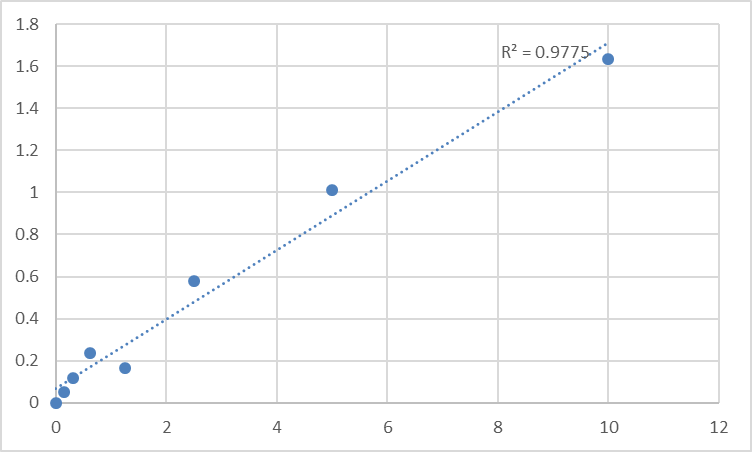
Another underrated feature of the Abbkine Human Cardiac phospholamban (PLN) ELISA Kit KTE61205 is its built-in guidelines that address the most common rookie and veteran mistakes in PLN ELISA assays—small details that make or break your data. For example, the kit stresses letting all reagents warm to room temperature for 30 minutes before opening, a step so many people skip to save time, but cold reagents kill the binding kinetics of the PLN-antibody interaction, especially for a small protein like PLN. It also recommends mixing samples and reagents every 10 minutes (a low-frequency oscillator or gentle hand shake works) to avoid concentration gradients in the wells, and running all samples/standards in duplicate or triplicate. These aren’t just arbitrary rules—PLN is unevenly expressed in some cardiac samples, and triplicate runs cut down on well-to-well variability, which is why the kit’s standard curve has an R² of 0.9775, a rock-solid linearity score that means your quantitation data is publication-ready. The kit also tells you to keep unused wells desiccated at 4°C in the original sealed bag, which preserves the pre-coated antibody’s activity for future assays—no wasted microplate wells, no wasted money.
This isn’t just a kit for random lab tests—its real value lies in its applicability across the most pressing research areas in cardiovascular science, a key insight for anyone looking to align their tools with industry research trends. PLN is central to beta-adrenergic signaling in the heart: when phosphorylated by PKA, it loses its ability to inhibit SERCA, boosting calcium reuptake and improving myocardial relaxation. So the Abbkine KTE61205 PLN ELISA Kit is perfect for studies on beta-adrenergic agonist therapy for heart failure, or investigating how PKA signaling dysregulation impacts PLN activity. It’s also ideal for drug discovery: pharmaceutical labs screening novel cardiac therapeutics (like SERCA activators or PLN modulators) need to quantify human PLN to assess drug efficacy, and this kit’s compatibility with human clinical samples (plasma/serum) means preclinical data translates better to human trials. Even basic science labs studying cardiac hypertrophy, myocardial ischemia-reperfusion injury, or congenital heart disease rely on accurate PLN quantitation, and this kit delivers consistent data across all these models. In short, it’s a versatile tool that grows with your research, not a one-trick pony.
The broader trend in cardiovascular research right now is pushing hard for translational relevance—moving from animal models to human samples, and from in vitro cell work to clinical research—and the Abbkine Human Cardiac phospholamban (PLN) ELISA Kit KTE61205 is perfectly positioned to support this shift. For years, cardiac research relied on rodent PLN data, but human PLN has key differences in its regulation and expression, so human-specific PLN detection is now a must for impactful, translatable research. This kit is engineered exclusively for human PLN, so you don’t have to worry about extrapolating rodent data to humans—a common pitfall that leads to failed clinical trials. It also works with both in vitro human cardiac myocyte supernatants and in vivo human clinical samples, creating a seamless link between basic and translational research, which is exactly what funding bodies and top journals are looking for these days. As the field moves more toward precision cardiovascular medicine, tools that can quantify human cardiac proteins like PLN in patient samples will only become more valuable, and this kit is ahead of that curve.
At the end of the day, the Abbkine Human Cardiac Phospholamban (PLN) ELISA Kit (Cat. No. KTE61205) isn’t just a consumable lab product—it’s a core research tool that addresses the unique challenges of human PLN detection, a protein that’s too important to cardiac biology to leave to subpar kits. It fixes the industry’s biggest PLN ELISA pain points: poor specificity, matrix interference, low sensitivity, and complicated workflows. It’s accessible to every lab, from small academic research groups to large pharmaceutical drug discovery teams, and it delivers the reliable, publication-ready data that’s non-negotiable in modern cardiovascular science. Whether you’re just starting to study PLN and cardiac calcium signaling, or you’re a seasoned researcher looking to upgrade your detection tools, this kit checks every box (product link: https://www.abbkine.com/product/human-cardiac-phospholamban-pln-elisa-kit-kte61205/). For a protein that’s at the center of how the heart beats and functions, having a PLN detection kit you can trust is the foundation of meaningful cardiac research—and that’s exactly what Abbkine has built with the KTE61205.





