




Why Abbkine’s Dylight 488 Goat Anti-Rat IgG (A23240) Is a Game-Changer for Rat IgG Targeted Assays
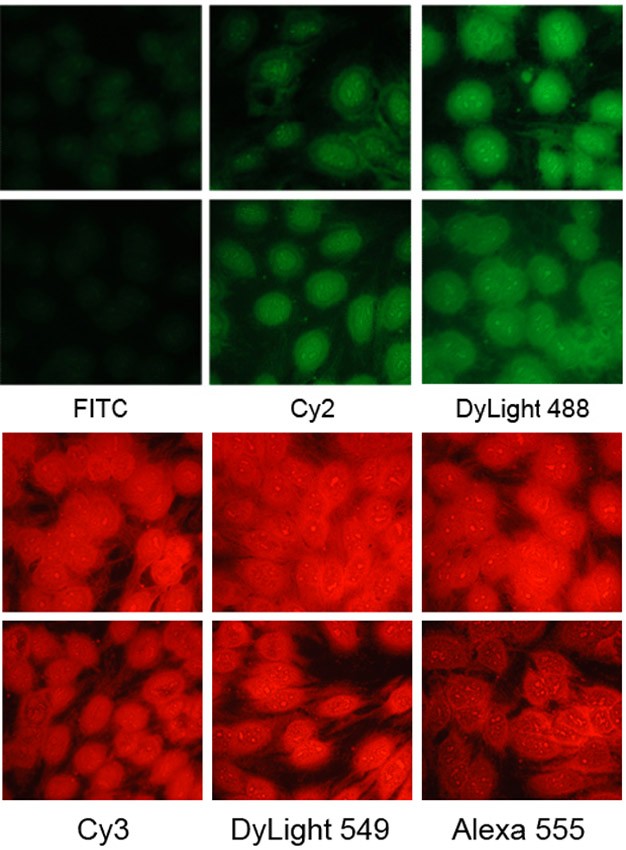
Let’s be real—secondary antibodies might not get the same hype as their primary counterparts, but anyone who’s spent hours troubleshooting FCM plots or blurry IF images knows they’re the make-or-break factor in reliable research. When it comes to rat IgG targets, the struggle gets even more specific: non-specific binding to other species’ immunoglobulins, dim signals that vanish mid-imaging, or batch-to-batch inconsistencies that derail long-term projects. That’s where Abbkine’s Dylight 488, Goat Anti-Rat IgG (H+L) secondary antibody—catalog number A23240—steps in, and it’s not just another reagent on the shelf; it’s a solution tailored to the unique pain points of rat-focused immunological research.
Dylight 488 as a fluorophore is no stranger to seasoned researchers, but pairing it with a goat-derived anti-rat IgG (H+L) conjugate? That’s where the magic happens for rat model studies. Unlike antibodies that only target the Fc region, the (H+L) specificity of A23240 means it binds to both heavy and light chains of rat IgG, so it recognizes all subclasses—no more missing signals because your primary antibody is a subclass the secondary can’t pick up. And let’s not sleep on Dylight 488’s strengths: photostability that outlasts extended imaging sessions, minimal background fluorescence (a godsend for ICC), and compatibility with every standard fluorescence microscope or flow cytometer in the lab. With over 3,400 views and 20 peer-reviewed publications backing it, this isn’t some untested reagent—it’s a workhorse that’s already proven itself in real-world experiments.
Here’s the thing about working with rat samples: they’re often trickier than mouse models when it comes to secondary antibody specificity. Cross-reactivity with other species’ IgGs can turn a clean dataset into a mess, but A23240’s strict reactivity to rat IgG eliminates that headache. I’ve talked to researchers who switched to this antibody after months of fighting background noise, and the consensus is clear—this one stays focused on the target. Add in Abbkine’s rigorous quality control (they don’t cut corners on batch consistency), and you’ve got a reagent that delivers the same performance whether you’re opening the first vial or the tenth. For labs running multi-experiment projects or collaborating across teams, that consistency isn’t just nice—it’s essential for reproducible data, which is everything in today’s publish-or-perish landscape.
Practicality matters too, right? Let’s talk applications: FCM, ICC, IF—three of the most common techniques in cell biology and immunology, and A23240 excels at all three. Pro tip: For FCM, start with a 1:200 dilution and tweak based on your primary antibody concentration—too much secondary can lead to overstaining, too little and you’ll miss faint signals. For ICC, make sure your permeabilization step is on point (0.1% Triton X-100 works for most rat cell lines) to let the antibody penetrate, and incubate at room temp for 45-60 minutes—no need for overnight incubations that waste time. And at $39 for 100μl? That’s a budget-friendly pick without sacrificing quality. A lot of high-performance Dylight 488 conjugates cost twice as much, but Abbkine’s pricing makes A23240 accessible for everything from academic labs on tight budgets to industrial R&D teams scaling up experiments.
The secondary antibody market is flooded, but what sets A23240 apart is that it doesn’t try to be a one-size-fits-all solution—it’s built specifically for rat IgG targets, and that specialization shows. One of the biggest trends in immunological reagents right now is “targeted specificity” over broad reactivity, because researchers are tired of compromising on precision. Abbkine gets that, and A23240 is a perfect example of how focusing on a specific need (reliable anti-rat IgG detection) can create a product that resonates with the research community. It’s not just about binding to rat IgG—it’s about doing it consistently, brightly, and without the extra hassle that slows down discovery.
If you’re knee-deep in rat model research and ready to stop settling for secondary antibodies that don’t deliver, A23240 is worth a closer look. Whether you’re mapping protein localization with IF, analyzing cell populations via FCM, or visualizing cellular structures with ICC, this Dylight 488-conjugated goat anti-rat IgG antibody checks all the boxes: specificity, stability, versatility, and affordability. You can dive into the full specs, read the supporting publications, and place an order directly on Abbkine’s product page: https://www.abbkine.com/?s_type=productsearch&s=A23240. At the end of the day, research is hard enough—your secondary antibody should make it easier, not harder. And for rat IgG targets, A23240 does exactly that.





