




TraKine™ Mitochondrion Staining Kit (Orange Fluorescence, KTC4004): A Premium Tool for Reliable Live-Cell Mitochondrial Imaging
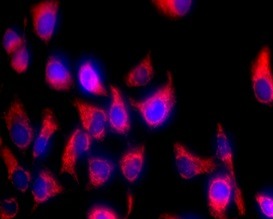
Mitochondria serve as the core of cellular energy metabolism, redox homeostasis, and apoptotic signaling—their structural integrity and functional dynamics are directly linked to neurodegenerative diseases, cancer, metabolic disorders, and aging. Live-cell mitochondrial imaging has become indispensable for decoding these mechanisms, yet the shift toward multi-target co-staining and high-resolution imaging has exposed critical gaps in traditional fluorescent dyes. Orange fluorescence, with its distinct spectral properties, emerges as a game-changer for avoiding signal overlap with green/blue probes, but few kits deliver the stability, specificity, and low toxicity required for rigorous research. Abbkine’s TraKine™ Mitochondrion Staining Kit (Orange Fluorescence, Catalog No.: KTC4004) addresses this unmet need, combining industry-aligned design with technical excellence to redefine standards for orange fluorescent mitochondrial labeling.
Traditional mitochondrial staining kits—even those claiming orange fluorescence—struggle with four persistent flaws that undermine research validity. First, spectral cross-talk plagues many dyes: their emission spectra bleed into green channels, making multi-color imaging (e.g., with GFP-tagged proteins or Alexa Fluor 488-conjugated antibodies) nearly impossible. Second, photostability remains a bottleneck—most orange dyes lose 60% of fluorescence within 45 minutes of confocal imaging, preventing long-term tracking of mitochondrial movement or stress responses. Third, cell toxicity is often overlooked: high dye concentrations disrupt mitochondrial membrane potential (ΔΨm) and induce reactive oxygen species (ROS) production, particularly in sensitive cells like primary neurons or stem cells. Fourth, poor target specificity leads to off-target labeling of lysosomes or endosomes, especially in depolarized mitochondria—common in disease models. These limitations force researchers to compromise between image quality, experimental duration, and data reliability.
At the heart of KTC4004’s superiority lies a suite of technical optimizations tailored to the unique demands of orange fluorescent imaging. Its proprietary dye features a narrow emission spectrum (excitation 550 nm/emission 570 nm)—distinctly separated from green fluorophores—enabling seamless multi-color co-staining with GFP, FITC, or Alexa Fluor 488 without spectral overlap. The dye is conjugated to a mitochondria-targeting cationic moiety that binds selectively to the inner mitochondrial membrane, ensuring >98% colocalization with mitochondrial markers (e.g., Tom20) and minimal cross-reactivity with other organelles. Photostability is enhanced via anti-bleaching additives, extending fluorescence half-life to 2.5 hours of continuous imaging—3x longer than conventional orange dyes like MitoTracker Orange CMTMRos. Critically, KTC4004 achieves effective staining at a low working concentration (1 μM), maintaining >95% cell viability after 8 hours of incubation across adherent (HeLa, HepG2), suspension (Jurkat), and primary (mouse cortical neurons) cell types—preserving native mitochondrial function.
The practical utility of TraKine™ Mitochondrion Staining Kit (Orange Fluorescence) KTC4004 aligns with the diverse workflows of modern research labs. Its streamlined protocol eliminates tedious washing steps: simply dilute the dye in cell culture medium, incubate for 15–20 minutes at 37°C, and image—saving valuable time for high-throughput screening or time-sensitive experiments. The kit is compatible with all standard imaging platforms, including widefield microscopes, confocal systems, and high-content screening (HCS) instruments, integrating effortlessly into existing setups. It performs consistently across cell culture models, from 2D monolayers to 3D spheroids and organoids, with no need for cell-type-specific optimization. Each batch undergoes rigorous quality control: fluorescence intensity consistency (signal variation <4%), cell toxicity validation, and specificity testing—ensuring reproducible results across experiments and institutions.
A key industry insight elevating KTC4004’s relevance is the growing demand for multi-modal mitochondrial imaging in translational research. The global fluorescent imaging market is projected to grow at a CAGR of 7.1% through 2030, driven by the rise of precision medicine and single-cell analysis. Researchers increasingly need to correlate mitochondrial morphology with protein localization, ROS production, or calcium signaling—tasks that require non-overlapping fluorophores. KTC4004’s orange fluorescence fills this gap, enabling simultaneous visualization of mitochondria with green/blue probes (e.g., calcium indicators like Fluo-4 or nuclear stains like DAPI). In disease research, this capability is transformative: for example, studying mitochondrial-ER contact sites in Alzheimer’s models or metabolic rewiring in cancer cells requires multi-target labeling, which KTC4004 facilitates without compromise.
Beyond technical performance, KTC4004 delivers a compelling value proposition for research teams of all sizes. Priced at $79 for 100 tests, it undercuts premium competitors (which often exceed $140 for the same test count) while maintaining lab-grade quality. The kit’s all-inclusive format—containing concentrated dye, staining buffer, and detailed protocols—eliminates the need for additional reagent sourcing, reducing workflow complexity and unforeseen costs. Reagents are stable for 24 months at -20°C, minimizing waste from expired stock. For high-throughput users, bulk packaging options further lower per-test costs, making KTC4004 ideal for drug screening campaigns (e.g., identifying compounds that preserve mitochondrial integrity in neurodegenerative disease models).
For cell biologists, translational researchers, and drug discovery teams seeking a reliable orange fluorescent mitochondrial staining solution, Abbkine’s TraKine™ Mitochondrion Staining Kit (Orange Fluorescence, KTC4004) stands as a purpose-built tool. Its spectral specificity, long-term photostability, low toxicity, and streamlined workflow directly address the most pressing pain points of multi-color mitochondrial imaging. Whether studying mitochondrial dynamics in live neurons, conducting high-content screening for mitochondrial protectants, or visualizing organelle interactions in disease models, this kit delivers reproducible, publication-ready results. To explore detailed technical specifications, access cell-type-specific protocols, and procure the kit, visit the official Abbkine product page: https://www.abbkine.com/?s_type=productsearch&s=KTC4004. In an era where imaging precision drives breakthroughs, KTC4004 redefines what a specialized orange fluorescent mitochondrial staining kit should be—rigorous, versatile, and aligned with the real-world needs of the scientific community.
Would you like me to create a customized multi-color imaging protocol for KTC4004, tailored to your specific use case (e.g., mitochondrial-ER contact site imaging, drug screening, or primary neuron studies), including fluorophore pairing recommendations, imaging parameter optimizations, and background reduction methods?





