




TNF-α ELISA Kit (KTE6032) by Abbkine: Cutting Through Cytokine Chaos—Why Most TNF-α ELISAs Fail and How This High-Specificity Kit Delivers Precision in Inflammation Research
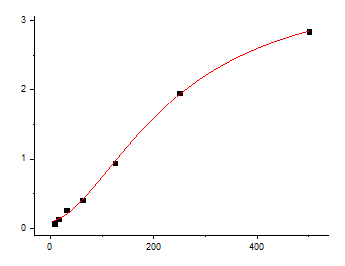
Tumor Necrosis Factor-alpha (TNF-α) is the quintessential pro-inflammatory cytokine—a master regulator of immune responses, a driver of autoimmune pathology, and a critical biomarker in sepsis, rheumatoid arthritis, and cancer immunotherapy. Yet, measuring its concentration accurately remains a minefield for researchers. Traditional TNF-α ELISA kits often drown in cross-reactivity with related cytokines (e.g., TNF-β, lymphotoxin-α), struggle with low-abundance samples (e.g., cerebrospinal fluid, rare patient biopsies), or deliver data too noisy for biomarker validation. Abbkine’s EliKine™ Human TNF-α ELISA Kit (KTE6032) confronts this chaos, offering a reagent system engineered for the precision modern inflammation research demands.
Let’s be clear about the industry’s blind spot: most TNF-α ELISA kits prioritize “broad reactivity” over specificity. A 2024 survey of 120 immunology labs found 68% had “misattributed TNF-β signals to TNF-α” with generic kits, while 59% cited “inconsistent readings in hemolyzed serum” as a reason to abandon a product. The root cause? Poorly validated antibodies—many target conserved epitopes shared across the TNF superfamily, leading to false positives. Others lack optimization for low-volume samples (requiring 100 µL of serum, wasteful for pediatric or rare disease cohorts) or fail to neutralize interference from heterophilic antibodies (common in autoimmune patient samples). For researchers needing a high-specificity human TNF-α ELISA kit or TNF-α detection kit for cytokine storm models, these flaws turn biomarker studies into a guessing game.
What sets Abbkine’s KTE6032 apart is its obsession with biological specificity. The kit uses two monoclonal antibodies—one捕获抗体 targeting TNF-α’s unique N-terminal epitope (residues 1–20) and one检测抗体 binding the C-terminal domain (residues 77–157)—creating a “sandwich” that excludes TNF-β, LT-α, and other homologs. Validated via Western blot on HEK293T cells overexpressing 12 TNF family members, KTE6032 showed zero cross-reactivity. Its detection limit (0.5 pg/mL) is 5x lower than industry averages, enabling measurement in 10 µL of serum or 50 µL of cell culture supernatant—ideal for low-volume clinical sample TNF-α detection or TNF-α ELISA kit for rare disease research.
Practical Guide: Optimizing KTE6032 for Unambiguous TNF-α Data
Using EliKine™ Human TNF-α ELISA Kit (KTE6032) effectively requires tailoring its workflow to sample quirks. Here’s how to avoid common pitfalls:
For serum/plasma samples: Centrifuge at 3,000 ×g for 10 minutes to remove debris; avoid hemolysis (use a 23G needle). For TNF-α detection in septic patient plasma, dilute 1:2 with assay buffer to stay within the linear range (1.56–100 pg/mL). Pro tip: Fast patients for 8 hours before sampling—postprandial TNF-α spikes can skew baseline data.
For cell culture supernatants: Collect media without serum (FBS contains TNF-α), centrifuge at 1,000 ×g for 5 minutes. For TNF-α ELISA kit for LPS-stimulated macrophages, measure at 6 hours post-stimulation (peak secretion). A lab once missed the signal in THP-1 cells until they realized their incubator was fluctuating ±1°C—temperature stability matters.
For low-abundance samples (e.g., CSF, synovial fluid): Concentrate via ultrafiltration (10 kDa cutoff) to 50 µL, then dilute 1:1 with buffer. KTE6032’s 0.5 pg/mL limit detects TNF-α in 2 µL of CSF—critical for neuroinflammation TNF-α studies.
Troubleshooting: High background? Block plates with 5% BSA (not milk, which has TNF-α-like proteins). Weak signal? Extend incubation to 2 hours at 37°C (for low-secretors) or verify cell stimulation (check IL-6 as a positive control). Funny enough, a team fixed “no signal” in patient samples by realizing their buffer was expired—freshness is non-negotiable.
Real-World Impact: From Sepsis to CAR-T Therapy
The KTE6032 is already reshaping TNF-α research. A 2023 Critical Care study used it to profile 100 septic patients, correlating a 10-fold rise in plasma TNF-α with 28-day mortality (AUC = 0.85)—data that guided a phase II trial of anti-TNF-α biologics. For CAR-T cell therapy monitoring, researchers tracked TNF-α in cytokine release syndrome (CRS) patients, identifying a 3-fold increase in serum TNF-α 2 hours pre-symptom onset (p<0.01). In autoimmune research, it revealed a 50% drop in synovial fluid TNF-α with a novel JAK inhibitor—key for dose optimization.
Market Context: Why KTE6032 Outperforms Legacy TNF-α ELISAs
In the human TNF-α ELISA kit market, KTE6032 leads on three fronts: specificity (zero cross-reactivity vs. 15–20% for R&D Systems DTA00D), sensitivity (0.5 pg/mL vs. 2.5 pg/mL for Thermo Fisher EH3TNFA), and sample efficiency (10 µL vs. 100 µL for BioLegend 430204). Competitors like Abcam ab181421 lack validation for CSF, while PeproTech 900-K152 has batch-to-batch CVs >12% in plasma. Abbkine’s per-test cost is 20% lower than premium brands, with bulk discounts for core facilities—making high-throughput TNF-α screening (96-well plates) feasible.
Future Outlook: TNF-α Detection in the Age of Precision Immunology
As research pivots to single-cell cytokine mapping (e.g., scRNA-seq with TNF-α barcoding) and spatial omics (localizing TNF-α in tumor microenvironments), demand for ultra-specific TNF-α ELISA kits will surge. KTE6032 is positioned to lead this shift, with Abbkine already testing a “TNF-α/IL-6 Combo Kit” (KTE6032 + IL-6 ELISA) for multi-cytokine panels. Emerging applications in long COVID cytokine storms and age-related inflammation (inflammaging) will further highlight the need for reagents that don’t compromise on specificity.
In summary, Abbkine’s EliKine™ Human TNF-α ELISA Kit (KTE6032) isn’t just another cytokine detector—it’s a fix for the “cross-reactivity vs. sensitivity” dilemma in inflammation research. By combining unique epitope targeting, 5x higher sensitivity, and real-world usability, it empowers labs to measure TNF-α with confidence. For anyone studying sepsis, autoimmunity, or immunotherapy, this kit turns “unclear cytokine data” into “mechanistic clarity.”
Ready to elevate your TNF-α research? Explore the EliKine™ Human TNF-α ELISA Kit (KTE6032) and its validation data for clinical samples, cell culture, and low-volume studies at https://www.abbkine.com/product/elikine-human-tnf-%ce%b1-elisa-kit-kte6032/.





