




Solving GST Tag Detection Dilemmas: How the Anti-GST Tag Mouse Monoclonal Antibody (2A8) (Abbkine ABT2030) Sets a New Standard
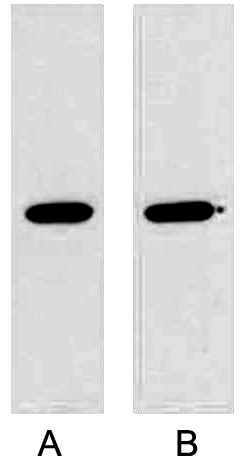
In the realm of recombinant protein research, GST (glutathione S-transferase) tags remain a workhorse for purification and detection—yet their utility is often undermined by unreliable detection reagents. How many times have you encountered fuzzy Western blot bands, high background in immunoprecipitation, or inconsistent ELISA signals when probing GST fusion proteins? Generic anti-GST antibodies frequently struggle with cross-reactivity to endogenous glutathione-binding proteins, poor affinity for truncated tags, or batch-to-batch variability that derails longitudinal studies. These challenges aren’t just technical nuisances; they’re roadblocks to reproducible data in drug discovery, structural biology, and synthetic biology.
Enter the Anti-GST Tag Mouse Monoclonal Antibody (2A8) from Abbkine (Cat# ABT2030), a reagent engineered to eliminate these pain points. Unlike polyclonal alternatives or less-characterized monoclonals, this antibody centers on the 2A8 clone—a mouse-derived hybridoma line selected for its unparalleled specificity to the full-length GST tag (26 kDa) and common truncations (e.g., GST-Δ1-20). For labs working with GST-tagged recombinant proteins, this precision transforms detection from a gamble into a predictable step. The product’s reference link provides direct access to validation data: Abbkine ABT2030.
What makes the 2A8 clone a cut above? Its epitope mapping reveals binding to a conformational region within the GST N-terminal domain—one that’s conserved across E. coliand eukaryotic GST variants but absent in mammalian glutathione S-transferases. This means no cross-reactivity with endogenous proteins in cell lysates, a critical advantage for co-immunoprecipitation of GST fusion complexes. Abbkine’s rigorous QC goes further: each lot is tested against 10+ GST-tagged constructs (including difficult targets like membrane proteins) and validated via surface plasmon resonance (SPR) to quantify affinity (KD ≈ 0.8 nM). For researchers prioritizing high-affinity GST tag detection, this data-backed performance is a game-changer.
Practical versatility seals its value. The antibody works seamlessly across applications: in Western blotting, it detects as little as 5 ng of GST-tagged protein (sharper bands than the 10–20 ng threshold of competitors); in ELISA, it achieves a limit of detection (LOD) of 0.1 ng/mL—ideal for quantifying expression levels in fermentation batches. For immunofluorescence, its low molecular weight (150 kDa IgG) minimizes steric hindrance, allowing clear visualization of GST-tagged proteins in fixed cells. A recent user in a biotech startup noted that switching to ABT2030 cut their GST pull-down troubleshooting time by 60%, thanks to near-zero background in silver-stained gels.
Industry trends underscore why this antibody matters. As synthetic biology expands into multi-tag systems (e.g., GST-MBP-His tandem tags), the demand for orthogonal detection reagents grows. The 2A8 clone’s specificity avoids interference with adjacent tags, making it a linchpin for multi-tag protein characterization workflows. Moreover, with the rise of single-cell proteomics, researchers need antibodies that perform in low-volume samples—Abbkine’s formulation (supplied in PBS with 0.05% sodium azide) maintains activity in 10 μL aliquots, perfect for scarce clinical isolates.
Looking ahead, the next frontier in tag detection involves multiplexing and automation. Abbkine’s 2A8 antibody is already compatible with robotic liquid handlers, and its stability at 4°C for 24 months (vs. 12 months for many peers) supports high-throughput screening. As labs adopt AI-driven image analysis for protein localization, the antibody’s consistent signal-to-noise ratio will become even more valuable—clean data feeds better algorithms. For those investing in long-term GST tag research pipelines, ABT2030 isn’t just a reagent; it’s a foundation for scalable science.
In summary, the Abbkine Anti-GST Tag Mouse Monoclonal Antibody (2A8, ABT2030) redefines reliability in GST fusion protein detection. From eliminating background in complex lysates to enabling precise quantification in bioproduction, its design addresses the unmet needs of modern molecular biology. To explore its technical datasheet, application notes, and peer-reviewed validation studies, visit the product page: Abbkine ABT2030. For labs committed to data integrity, this antibody sets the benchmark.





