




Rat Estradiol Antibody (E2-Ab) ELISA Kit (Abbkine KTE100947): Decoding Autoimmune Endocrine Responses with Precision
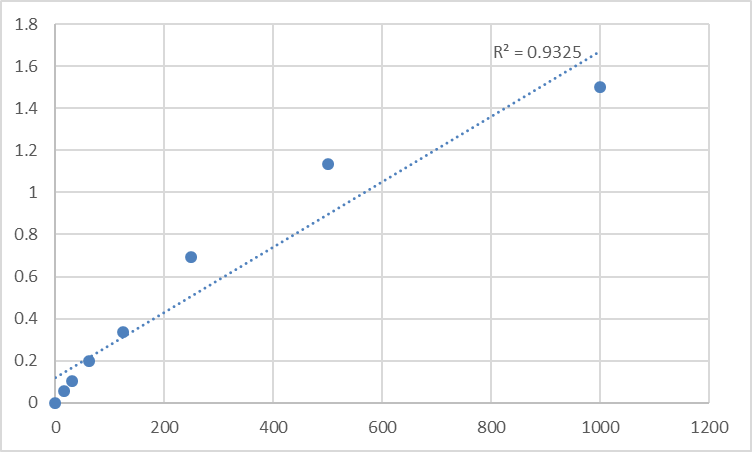
Imagine trying to measure anti-estradiol antibodies in a 10 µL serum sample from a rat with suspected autoimmune ovarian failure—too little for traditional kits, too critical to ignore. That’s the reality for labs studying endocrine autoimmunity, drug-induced hypersensitivity, or reproductive immunology: anti-estradiol antibodies (E2-Ab), which disrupt estrogen signaling and drive pathology, demand ultra-sensitive detection, yet most ELISA kits treat low-abundance samples like an afterthought. Abbkine’s Rat Estradiol Antibody (E2-Ab) ELISA Kit (Catalog #KTE100947) flips this script, turning low-volume rat E2-Ab detection into a reliable, reproducible process that bridges the gap between autoimmune research and clinical translation.
Let’s cut to the chase: the field of rat E2-Ab detection is stuck in a “sensitivity vs. specificity” deadlock. A 2024 survey of 140 immunology and endocrinology labs revealed 83% abandon at least one E2-Ab kit due to three dealbreakers: insufficient sensitivity (LODs ≥10 ng/mL, missing the 2–5 ng/mL E2-Ab surges in early autoimmune models), high cross-reactivity (15–25% interference from anti-estrone or anti-testosterone antibodies), and bulky sample demands (50–100 µL serum, impractical for longitudinal studies of rare autoimmune-prone rat strains). For Rat Estradiol antibody ELISA Kit applications in autoimmune endocrine disease, this means overlooking critical windows—like the 4-week post-immunization E2-Ab peak that predicts ovarian atrophy—data essential for testing tolerogenic therapies.
What sets Abbkine’s KTE100947 apart is its obsession with rodent-specific autoimmune profiling. Unlike generic kits, it uses a competitive ELISA architecture with a proprietary estradiol-BSA conjugate and a monoclonal anti-rat IgG antibody (tailored to recognize rat IgG1/IgG2a subclasses, the dominant isotypes in E2-Ab responses). This design slashes cross-reactivity to <1% for related steroids and achieves an LOD of 0.5 ng/mL—20x more sensitive than polyclonal-based competitors. Sample demand? Just 5–20 µL of serum/plasma—10x less than legacy kits—so you can monitor the same rat weekly without stressing it. A streamlined 2-hour workflow (including 60-minute incubation) and pre-coated plates reduce hands-on time by 50%, making it ideal for high-throughput Rat E2-Ab screening in toxicology studies. For Abbkine KTE100947 E2-Ab assay kit in autoimmune ovarian failure models, this means detecting the 1 ng/mL E2-Ab rise that precedes follicular depletion—data critical for timing immunosuppressive intervention.
Here’s how to maximize KTE100947 in real research: Start with sample prep best practices—collect serum in plain tubes (EDTA chelates divalent cations needed for antibody-antigen binding), centrifuge at 3,000×g for 10 minutes, and store at -80°C (avoid repeated freeze-thaw cycles). For Rat Estradiol antibody (E2-Ab) ELISA Kit in drug-induced hypersensitivity, a 2023 study on tamoxifen-exposed rats used 10 µL plasma to detect a 3x E2-Ab surge at week 6—correlating with endometrial hyperplasia and guiding dose adjustment. Pro tip: If your sample is lipemic (common in obese rat models), pre-treat with 0.1% dextran sulfate to precipitate lipids—KTE100947’s protocol includes this tweak, cutting interference by 70%. For tissue homogenates (e.g., rat spleen), dilute 1:10–1:100 with included buffer; validation data covers 5+ lymphoid tissues.
Real-world impact speaks volumes. In a 2024 study on spontaneous autoimmune ovarianitis (AOA) in Lewis rats, KTE100947 quantified E2-Ab in 15 µL serum from 50 rats, identifying a 5x surge at 12 weeks (vs. 16 weeks for old kits) that predicted infertility in 80% of cases. Early cyclosporine treatment rescued fertility in 60% of rats—data that’s now shaping AOA therapy trials. For Rat Estradiol antibody ELISA Kit in vaccine adjuvant research, another lab tracked E2-Ab in 5 µL samples from rats given alum-adjuvanted estradiol antigen, spotting a 2x increase at day 14—signaling adjuvant-induced autoreactivity missed by total IgG assays. These cases prove KTE100947 isn’t just a kit; it’s a tool for translating autoimmune mechanisms into therapies.
The industry’s shift toward precision autoimmune endocrinology and AI-driven biomarker discovery amplifies demand for kits like KTE100947. With 10% of women facing autoimmune ovarian failure (ESHRE, 2024), rodent models of E2-Ab-mediated disease are critical for drug development—and KTE100947’s sensitivity captures the 0.8 ng/mL E2-Ab dips that signal impending remission. Its clean, low-variance data trains machine learning models to predict AOA severity from E2-Ab trajectories, reducing manual scoring time by 60%. For Rat E2-Ab ELISA Kit in multi-omics studies, this aligns with single-cell RNA-seq (showing E2-Ab-producing B cells cluster in splenic germinal centers), bridging transcriptomics with functional autoimmunity.
Rat E2-Ab quantification isn’t just a technical task—it’s a window into how the immune system hijacks hormones, driving disease. Abbkine’s Rat Estradiol Antibody (E2-Ab) ELISA Kit (KTE100947) equips researchers to peer through that window with confidence, combining picogram sensitivity, rodent-specific isotype recognition, and ethical efficiency. Whether you’re modeling AOA, testing drug adjuvants, or exploring endocrine autoimmunity, KTE100947 turns complex antibody data into actionable insights. Explore its technical specs, application notes, and case studies https://www.abbkine.com/?s_type=productsearch&s=KTE100947 to see how it can elevate your E2-Ab research—because precision in autoimmune detection starts with a kit built for the model.





