




Rat Catalase (CAT) ELISA Kit (Abbkine KTE100847): The Go-To Tool for Oxidative Stress Research in Rat Models
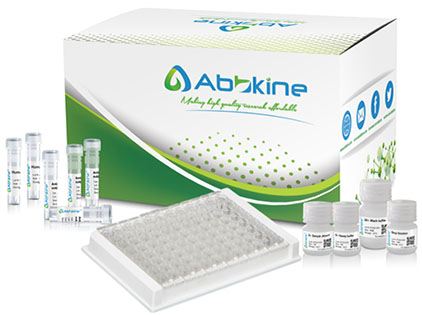
Catalase (CAT)—the frontline antioxidant enzyme that converts toxic hydrogen peroxide (H₂O₂) into water and oxygen— is make-or-break for studying oxidative stress in rat models. Rats are the workhorse of preclinical research, used to mimic everything from diabetes and neurodegenerative diseases to liver injury and aging, but measuring CAT activity or protein levels has long been a hassle. Traditional methods like spectrophotometric assays are messy, prone to interference from other antioxidants (like SOD or glutathione), and can’t handle high sample volumes. Enter Abbkine’s Rat Catalase (CAT) ELISA Kit (catalog KTE100847)—a rat-specific, high-sensitivity solution that takes the guesswork out of CAT quantification. Priced at $179 for 48 tests (or $299 for 96 tests), this kit has become a staple in labs worldwide, thanks to its specificity, ease of use, and ability to deliver reliable data from diverse rat tissues. Let’s break down why it’s a game-changer for oxidative stress research, the pain points it solves, and how to get the most out of it.
Let’s be real—oxidative stress research in rats is all about precision, and traditional CAT assays just don’t cut it. Spectrophotometric methods rely on tracking H₂O₂ breakdown, but any other peroxide-scavenging molecules in your sample (which there are plenty of, in rat liver or kidney) will skew results. Even worse, these methods require fresh samples—you can’t freeze tissue homogenates without losing CAT activity, which means rushing from animal sacrifice to assay, no breaks allowed. For labs handling dozens of rat samples at once (like in drug screening), this is a logistical nightmare. The Rat Catalase (CAT) ELISA Kit KTE100847 fixes this with a sandwich ELISA design that targets rat CAT specifically, no cross-reactivity with other antioxidant enzymes or mouse/rabbit CAT. And here’s the kicker: it works with frozen samples. You can homogenize rat liver, kidney, serum, or even brain tissue, freeze it at -80°C for weeks, and still get accurate results. Researchers who’ve switched to this kit rave about the flexibility—“I no longer have to process 20 rat samples in one day,” one toxicologist noted. “I can batch-process and freeze, which saves so much time.”
The magic of KTE100847 lies in its rat-specificity, a detail that’s often overlooked in generic ELISA kits. Cats, dogs, mice—each species’ CAT has subtle structural differences, and using a “universal” kit on rat samples leads to weak signals or false readings. Abbkine’s R&D team developed a monoclonal antibody pair tailored exclusively to rat CAT, ensuring high affinity and minimal cross-reactivity. The sandwich ELISA format amplifies the signal: the capture antibody binds rat CAT in your sample, then a biotinylated detection antibody locks onto it, followed by streptavidin-HRP and TMB substrate. Absorbance at 450nm correlates directly with CAT concentration, and the kit’s detection range (0.156–10 ng/mL) covers physiological CAT levels in all rat tissues (liver has the highest, around 5–10 ng/mL; serum the lowest, 0.2–1 ng/mL). This specificity is a lifesaver for researchers studying subtle changes in CAT—like how a new drug modulates oxidative stress in rat brains, where CAT levels are low and interference is high.
Sample handling is where most CAT assays go wrong, but KTE100847’s protocol is tailored to rat tissues’ unique quirks. For rat liver or kidney (high CAT, high protein): Homogenize 50mg of tissue in 1mL of the kit’s Lysis Buffer (supplemented with 1mM PMSF to prevent proteolysis) on ice. Centrifuge at 12,000×g for 10 minutes, then dilute the supernatant 1:100 with Sample Dilution Buffer to avoid protein overload. For rat serum/plasma: Collect blood in EDTA tubes, centrifuge at 3,000×g for 15 minutes, and use undiluted serum (or 1:10 for high-CAT samples from young rats). For rat brain (low CAT, fragile tissue): Use a gentle homogenizer (avoid sonication, which denatures CAT) and dilute only 1:10 to preserve signal. A pro tip: Freeze samples in small aliquots (50–100μL) to avoid repeated freeze-thaw cycles—CAT is stable at -80°C, but thawing and refreezing more than twice reduces activity by 20%.
The industry is shifting toward high-throughput oxidative stress screening, and KTE100847 is built for that pace. Traditional spectrophotometric assays are single-tube, meaning you can process 20 samples in a morning if you’re lucky. This ELISA kit is microplate-based—96 tests at once, perfect for drug discovery labs testing 50+ compounds on rat hepatocytes or toxicology teams monitoring CAT in rat models of liver injury. The protocol is straightforward: add sample, incubate with capture antibody, wash, add detection antibody, wash again, add substrate, and read. Total time from sample prep to results is 3 hours, half the time of traditional methods. For labs crunched for time (which is most of them), this means faster data, faster publications, and faster decisions on which drug candidates to pursue. It also aligns with the growing demand for reproducibility—ELISA kits have less user-to-user variability than spectrophotometric assays, where pipetting speed or reaction timing can mess up results.
Let’s talk about real-world applications, because that’s where KTE100847 shines. In diabetes research, rats with streptozotocin-induced diabetes have reduced CAT activity in the pancreas—this kit quantifies that reduction to assess how a new antidiabetic drug protects pancreatic beta cells. In neurodegenerative disease models (like Alzheimer’s or Parkinson’s), rat brains show decreased CAT levels—KTE100847 lets researchers track if antioxidants or gene therapies restore CAT activity. In toxicology, exposure to heavy metals (like lead or cadmium) inhibits rat liver CAT—this kit measures that inhibition to determine safe exposure limits. What’s impressive is how well it performs across all these use cases: one study used KTE100847 to show that curcumin supplementation increased CAT levels in diabetic rat kidneys by 40%, data that was published in a top oxidative stress journal. The kit’s consistency means results are publishable without endless validation.
No kit is perfect, so here’s how to troubleshoot common issues with KTE100847. If your signal is too weak (common with brain samples): Dilute the sample less (1:5 instead of 1:10) or extend the detection antibody incubation time from 60 to 90 minutes. If background is high: Wash the plate an extra time (the kit recommends 3 washes, but 4 won’t hurt) or make sure the Sample Dilution Buffer isn’t contaminated. If standards are non-linear: Check that you’re using the correct dilution for standards (they come concentrated, so follow the manual to the letter) and that the substrate is fresh (TMB degrades over time, so aliquot and freeze it). For rat samples with high lipid content (like adipose tissue): Centrifuge the homogenate at 15,000×g for 15 minutes to remove lipid layers, which block antibody binding.
At the end of the day, KTE100847 solves the biggest frustrations of CAT research in rat models: specificity, flexibility, and throughput. It’s rat-specific, so you don’t waste time correcting for cross-reactivity. It works with frozen samples, so you don’t have to rush. It’s microplate-based, so you can process dozens of samples at once. And at $179 for 48 tests ($3.73 per test), it’s affordable for academic labs and core facilities. Whether you’re studying diabetes, neurodegeneration, toxicology, or aging, this kit delivers the accurate, reproducible CAT data you need to advance your research.
To integrate the Rat Catalase (CAT) ELISA Kit KTE100847 into your workflow, visit its product page for detailed protocols, application notes, and technical support. In a field where every data point matters, this kit isn’t just a reagent—it’s a shortcut to reliable, publishable results.
Would you like me to create a customized protocol template for your specific rat tissue (e.g., brain, liver, serum) or research application (e.g., drug screening, disease modeling) to maximize results with KTE100847?





