




Quantify Apoptotic Activity with Precision: Abbkine KTA3022 Caspase-3 Assay Kit (Colorimetric) – A Definitive Tool for Apoptosis Research
Apoptosis, or programmed cell death, is a phylogenetically conserved biological process essential for embryonic development, tissue homeostasis, immune system regulation, and the elimination of genetically damaged, infected, or abnormal cells. Dysregulation of this tightly controlled pathway is intricately linked to the pathogenesis of numerous human diseases: excessive apoptosis contributes to neurodegenerative disorders (e.g., Alzheimer’s, Parkinson’s), ischemic injuries, and autoimmune conditions, while defective apoptotic signaling drives uncontrolled cell proliferation in cancer and viral infections. As a key executioner caspase, Caspase-3 occupies a central role in the apoptotic cascade—activated downstream of both intrinsic (mitochondrial) and extrinsic (death receptor-mediated) pathways, and cleaving over 100 cellular substrates to drive the hallmark morphological (chromatin condensation, membrane blebbing) and biochemical changes associated with programmed cell death. Its activation thus serves as a definitive, quantitative biomarker for assessing apoptotic activity, making sensitive and specific detection of Caspase-3 function critical for mechanistic research and translational applications. Addressing this critical need, Abbkine’s Caspase-3 Assay Kit (Colorimetric) (Product Code: KTA3022) emerges as a rigorously optimized reagent system, designed to deliver specific, sensitive, and reproducible measurement of Caspase-3 activity for researchers in cell biology, oncology, neuroscience, immunology, and translational medicine.
The assay principle of Abbkine KTA3022 is grounded in the stringent enzymatic specificity of Caspase-3, which selectively cleaves peptide substrates at the Asp-Glu-Val-Asp (DEVD) tetrapeptide motif—a conserved recognition sequence exclusive to executioner caspases (Caspase-3, Caspase-7) and distinct from the initiator caspase motifs (e.g., LEHD for Caspase-9, IETD for Caspase-8). The kit incorporates a proprietary chromogenic substrate (typically DEVD-pNA) where the DEVD tetrapeptide is covalently linked to p-nitroaniline (pNA), a soluble chromophore. Upon cleavage by active Caspase-3, the pNA moiety is released, generating a yellow-colored solution with a characteristic absorbance maximum at 405 nm (with a reference wavelength of 630 nm to correct for background interference). The intensity of this absorbance is directly proportional to the concentration of active Caspase-3 present in the sample, enabling precise quantitative analysis via standard microplate readers—eliminating the need for specialized fluorescent/luminescent detectors or hazardous radioactive reagents. Notably, the kit’s substrate is engineered to minimize cross-reactivity with initiator caspases or non-caspase proteases (e.g., trypsin, elastase), ensuring exceptional assay specificity and accurate quantification of Caspase-3-mediated apoptotic signaling, even in complex biological samples.
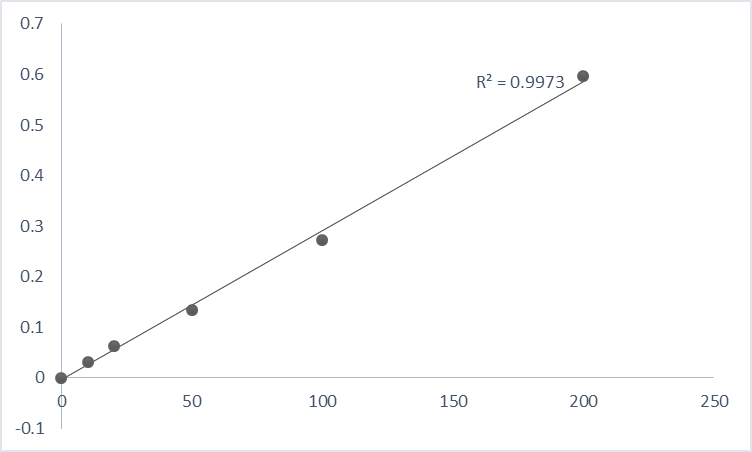
A distinguishing technical advantage of Abbkine KTA3022 lies in its optimized balance of performance, usability, and experimental versatility. The kit features a streamlined protocol with minimal sample preparation requirements: samples (cell lysates, tissue homogenates, or purified Caspase-3) are simply mixed with the reaction buffer and chromogenic substrate, followed by incubation at 37°C for 1–4 hours—no complex extraction or purification steps are needed. This flexibility makes it suitable for a broad range of applications, including in vitro drug screening (assessing the pro-apoptotic effects of small molecules, biologics, or nanotherapeutics), mechanistic studies of apoptotic pathways (e.g., evaluating the impact of gene knockouts or siRNA-mediated silencing), and preclinical evaluation of anti-cancer therapeutics (monitoring caspase activation in tumor cell lines or patient-derived organoids). The 20-test (20T) format is particularly well-suited for pilot studies, targeted hypothesis-driven experiments, or small-scale validation assays, while the ready-to-use reaction components (pre-formulated buffer, substrate, and positive control) reduce hands-on time and minimize experimental variability introduced by manual reagent preparation. The assay’s linear dynamic range (typically spanning 0.1–10 U/mL of Caspase-3 activity) ensures accurate quantification across a broad spectrum—from basal levels in healthy cells to elevated activity in apoptotic populations—enabling detection of subtle changes in apoptotic signaling that may be critical for understanding disease mechanisms or therapeutic efficacy.
As a reputable provider of high-performance life science reagents, Abbkine adheres to stringent quality control protocols throughout the manufacturing and validation of KTA3022. Each production batch undergoes comprehensive testing to verify key performance parameters: substrate cleavage efficiency (ensuring maximal signal generation), assay specificity (confirming minimal cross-reactivity with non-target proteases and initiator caspases), sensitivity (lower limit of detection for Caspase-3 activity, typically ≤0.05 U/mL), and batch-to-batch consistency in signal-to-noise ratio and reaction kinetics. Critical components, such as the DEVD-conjugated chromogenic substrate and optimized reaction buffer (formulated to maintain pH stability and caspase activity), are lyophilized or stored at -20°C to preserve stability over extended periods (up to 12 months when stored per instructions). This unwavering commitment to quality ensures that researchers can rely on the kit to deliver reproducible, publication-ready data, supporting rigorous experimental design, statistical validation, and robust data interpretation.
Priced at $69 for 20 tests, Abbkine KTA3022 offers exceptional cost-effectiveness without compromising technical performance—a key advantage for research laboratories operating within budget constraints, whether academic institutions relying on grant funding or pharmaceutical R&D teams managing high-volume screening programs. This competitive pricing structure enables widespread access to a high-quality Caspase-3 assay tool, facilitating impactful apoptosis research without excessive resource allocation. For detailed product specifications, recommended assay protocols (including sample preparation guidelines, optimal incubation times for different sample types, and data analysis frameworks to calculate relative caspase activity), compatibility information with specific cell lines or tissue samples, and troubleshooting resources for common experimental challenges (e.g., high background, low signal), please refer to the official product page: https://www.abbkine.com/?s_type=productsearch&s=KTA3022. The page also provides access to technical support and frequently asked questions to assist researchers in maximizing assay performance.
In summary, Abbkine KTA3022 Caspase-3 Assay Kit (Colorimetric) represents a sophisticated yet accessible solution for the quantitative assessment of apoptotic activity. Its reliance on the DEVD-specific cleavage mechanism ensures unparalleled assay specificity, while the colorimetric detection system offers operational simplicity and compatibility with standard laboratory equipment. The kit’s versatility across sample types and applications, reproducible performance, and cost-effectiveness make it an indispensable tool for researchers seeking to elucidate the role of Caspase-3 in health and disease, accelerate drug discovery pipelines, and advance our understanding of apoptotic signaling pathways. By enabling precise, quantitative measurement of Caspase-3 activity, this reagent supports the generation of reliable, impactful data that drives scientific progress in key areas of life science research—from fundamental biology to the development of novel therapeutics for apoptosis-related diseases.





