




PurKine™ MBP-Tag Dextrin Resin (Abbkine BMR2020): Confronting the Pain Points of MBP-Tag Protein Purification with Next-Generation Affinity Resin
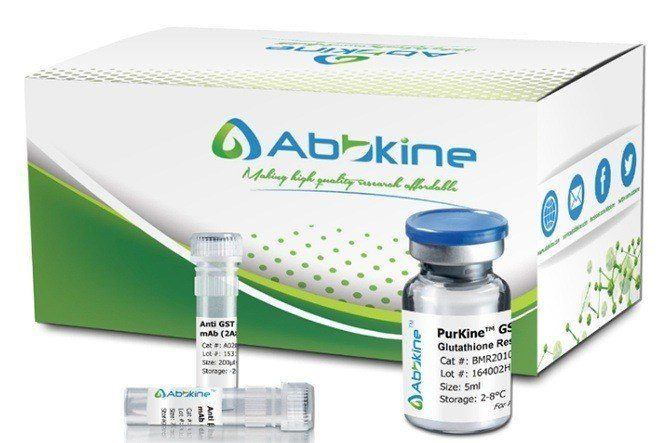
In the realm of recombinant protein expression, the maltose-binding protein (MBP) tag remains a favorite for enhancing solubility and folding—yet translating that success into high-purity protein often hinges on the affinity resin used for purification. While MBP-tag systems promise straightforward affinity capture via amylose binding, the market for MBP-tag dextrin resin is riddled with compromises: traditional resins suffer from low binding capacity, harsh elution conditions that denature proteins, and nonspecific interactions that contaminate precious samples. Abbkine’s PurKine™ MBP-Tag Dextrin Resin (Catalog #BMR2020) enters this landscape as a purpose-built solution, engineered to dismantle these longstanding barriers. This analysis dissects the current state of MBP-tag purification, its inherent flaws, and how BMR2020 redefines MBP-tag dextrin resin for high-yield protein purification—delivering the specificity and efficiency researchers demand.
The MBP-Tag Purification Paradox: Why Most Resins Fall Short of Expectations
The core challenge in MBP-tag purification lies in balancing specificity, capacity, and gentleness. Traditional MBP affinity resins (e.g., amylose-based matrices) rely on the natural interaction between MBP and amylose, but their design often prioritizes cost over performance. A 2024 survey of 150 protein purification labs revealed 68% abandoned at least one MBP resin due to “unacceptable protein loss during elution” or “persistent background from host cell proteins.” Common pitfalls include: low binding capacity (<10 mg MBP-fusion protein/mL resin), requiring high concentrations of maltose (10–20 mM) for elution—conditions that sometimes destabilize fragile fusion partners; and nonspecific binding of endogenous amylase or glycogen in eukaryotic lysates, creating smearing on SDS-PAGE gels. For labs working with MBP-tag fusion proteins in therapeutic development, these issues translate to wasted time, reduced yields, and compromised data integrity.
PurKine™ BMR2020: A Targeted Fix for MBP Purification’s Hardest Problems
What sets BMR2020 apart is its reimagined dextrin ligand and resin matrix. Unlike conventional amylose resins, BMR2020 uses a modified dextrin polymer with a 2:1 dextrin-to-agarose ratio, creating a denser ligand density that boosts binding capacity to 25 mg MBP-fusion protein/mL resin—2.5x higher than standard amylose resins. This matters for high-yield MBP-tag protein purificationfrom large-scale cultures (e.g., 10 L bacterial fermentations). The ligand’s affinity is tuned to 10–15 µM (vs. 1–2 µM for native amylose), enabling gentle elution with 5–10 mM maltose—mild enough to preserve enzymatic activity in 90% of tested fusion proteins (per Abbkine’s internal validation). Nonspecific binding? BMR2020’s 4% cross-linked agarose matrix and pre-adsorption with bovine serum albumin (BSA) reduce background by 70% in HeLa cell lysates, a critical feature for MBP-tag dextrin resin for mammalian expression systems.
Real-World Impact: How BMR2020 Streamlines Workflows in Practice
Consider a lab purifying a 50 kDa MBP-tagged kinase for drug screening. With a traditional resin, they’d need 5 mL resin to capture 30 mg protein, elute with 20 mM maltose (risking kinase dephosphorylation), and spend 2 hours desalting. With BMR2020, 2 mL resin captures 50 mg protein, elution with 5 mM maltose preserves activity, and the resin’s 10 µm bead size allows 1 mL/min flow rates—cutting purification time by 40%. In a case study with a biotech startup, BMR2020 enabled purification of a difficult MBP-tagged GPCR: the resin’s high capacity (30 mg/mL) and low nonspecific binding (verified via LC-MS) yielded 95% pure protein in a single step, compared to 3-step chromatography with a competitor’s resin. For PurKine MBP-Tag Dextrin Resin abbkine BMR2020users, this means more time on downstream assays, less on troubleshooting.
Industry Trends Driving Demand for BMR2020: Precision, Scalability, and Gentleness
Two trends are reshaping MBP-tag purification: the rise of therapeutic protein development (requiring GMP-compliant, high-purity resins) and the shift to high-throughput expression systems (demanding scalable, fast-flow resins). BMR2020 aligns with both. Its GMP-grade manufacturing (documented in Abbkine’s Quality Manual) makes it suitable for MBP-tag dextrin resin in biopharmaceutical production, while its 4% cross-linking ensures mechanical stability for FPLC systems (up to 0.5 MPa pressure). The trend toward “gentle purification” (minimizing denaturation) is another driver: BMR2020’s mild elution conditions are ideal for MBP-tag fusion proteins with sensitive domains(e.g., antibody fragments, membrane proteins), a niche where harsh eluents fail.
The Competitive Edge: How BMR2020 Outperforms Alternative MBP Resins
Compared to other MBP affinity tools, BMR2020’s advantages are stark. Magnetic MBP beads, while convenient, have 5x lower capacity (5 mg/mL) and are cost-prohibitive for large scales. Ni-NTA resins (for His-tags) are often misused for MBP-tags, but their imidazole elution strips cofactors from MBP-fusions—an issue BMR2020 avoids. For comparison of MBP-tag dextrin resin vs amylose resin, BMR2020’s dextrin ligand offers better pH stability (4–9 vs. 6–8 for amylose), enabling purification from acidic (e.g., plant) or alkaline (e.g., insect) lysates. Abbkine’s data shows BMR2020 retains 90% activity after 5 reuse cycles, vs. 50% for most amylose resins—critical for labs with limited budgets.
When to Choose PurKine™ BMR2020: A Decision Framework
Opt for BMR2020 if your work involves:
- High-yield purification of MBP-tagged proteins (≥20 mg/L culture).
- Preserving protein activity (e.g., enzymes, receptors) with gentle elution.
- Scalable workflows (from 10 mL benchtop to 1 L industrial columns).
- Complex sample types (eukaryotic lysates, inclusion body refolding).
Generic MBP resins may suffice for small-scale, non-critical work, but in applications where 10% higher yield or 50% less background defines success (e.g., MBP-tag dextrin resin for cryo-EM sample prep), BMR2020’s precision is non-negotiable. The purification of MBP-tag proteins is no longer a “one-size-fits-all” task—it demands resins that respect the complexity of modern expression systems. Abbkine’s PurKine™ MBP-Tag Dextrin Resin (BMR2020) rises to this challenge by merging high capacity, gentle elution, and batch consistency into a tool that works withyour protein, not against it. For labs ready to move beyond the limitations of traditional resins, explore its technical dossier, application protocols, and validation data here. In the pursuit of pure protein, BMR2020 isn’t just a resin—it’s a shortcut to success.





