| Product name | PKA Iα reg Polyclonal Antibody |
| Immunogen | Synthesized peptide derived from the C-terminal region of human PKA Iα reg at AA range: 240-320 |
| Host | Rabbit |
| Reactivity | Human,Mouse,Rat |
| Applications | WB,IHC,IF,ELISA |
| Applications notes | Optimal working dilutions should be determined experimentally by the investigator. Suggested starting dilutions are as follows: WB 1:500-1:2000;IHC 1:100-1:300;IF 1:200-1:1000;ELISA 1:20000;Not yet tested in other applications. |
| Clonality | Polyclonal |
| Preparation method | The antibody was affinity-purified from rabbit antiserum by affinity-chromatography using epitope-specific immunogen. |
| Alternative | PRKAR1A; PKR1; PRKAR1; TSE1; cAMP-dependent protein kinase type I-alpha regulatory subunit; Tissue-specific extinguisher 1; TSE1 |
| Formulation | Liquid solution |
| Concentration | 1 mg/ml |
| Molecular weight | 43kD |
| Storage buffer | Liquid in PBS containing 50% glycerol, 0.5% BSA and 0.02% sodium azide. |
| Storage instructions | Stable for one year at -20°C from date of shipment. For maximum recovery of product, centrifuge the original vial after thawing and prior to removing the cap. Aliquot to avoid repeated freezing and thawing. |
| Shipping | Gel pack with blue ice. |
| Precautions | The product listed herein is for research use only and is not intended for use in human or clinical diagnosis. Suggested applications of our products are not recommendations to use our products in violation of any patent or as a license. We cannot be responsible for patent infringements or other violations that may occur with the use of this product. |
| Background | cAMP is a signaling molecule important for a variety of cellular functions. cAMP exerts its effects by activating the cAMP-dependent protein kinase, which transduces the signal through phosphorylation of different target proteins. The inactive kinase holoenzyme is a tetramer composed of two regulatory and two catalytic subunits. cAMP causes the dissociation of the inactive holoenzyme into a dimer of regulatory subunits bound to four cAMP and two free monomeric catalytic subunits. Four different regulatory subunits and three catalytic subunits have been identified in humans. PRKAR1A encodes one of the regulatory subunits. Protein kinase cAMP-dependent type I regulatory subunit alpha was found to be a tissue-specific extinguisher that down-regulates the expression of seven liver genes in hepatoma x fibroblast hybrids. Mutations in PRKAR1A cause Carney complex (CNC). PRKAR1A can fuse to the RET protooncogene by gene rearrangement and form the thyroid tumor-specific chimeric oncogene known as PTC2. A nonconventional nuclear localization sequence (NLS) has been found for protein kinase cAMP-dependent type I regulatory subunit alpha which suggests a role in DNA replication via the protein serving as a nuclear transport protein for the second subunit of the Replication Factor C (RFC40). Several alternatively spliced transcript variants encoding two different isoforms have been observed. |
| Gene ID | 5573 |
| Alternative | PRKAR1A; PKR1; PRKAR1; TSE1; cAMP-dependent protein kinase type I-alpha regulatory subunit; Tissue-specific extinguisher 1; TSE1 |
| Others | PKA Iα reg Polyclonal Antibody detects endogenous levels of PKA Iα reg protein. |
| Accession | P10644 |
| Observed Band(KD) | 43 |
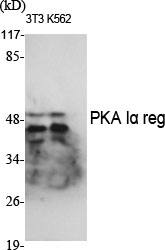
Fig.1. Western Blot analysis of various cells using PKA Iα reg Polyclonal Antibody.
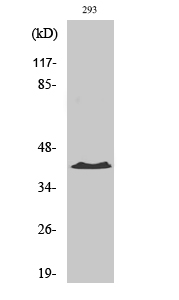
Fig.2. Western Blot analysis of 293 cells using PKA Iα reg Polyclonal Antibody.
You must be logged in to post a review.











Reviews
There are no reviews yet.