| Product name | NCAM-L1 Polyclonal Antibody |
| Immunogen | Synthesized peptide derived from human NCAM-L1 around the non-phosphorylation site of S1181 |
| Host | Rabbit |
| Reactivity | Human,Mouse,Rat |
| Applications | WB,IHC,IF,ELISA |
| Applications notes | Optimal working dilutions should be determined experimentally by the investigator. Suggested starting dilutions are as follows: WB 1:500-1:2000;IHC 1:100-1:300;IF 1:200-1:1000;ELISA 1:20000;Not yet tested in other applications. |
| Clonality | Polyclonal |
| Preparation method | The antibody was affinity-purified from rabbit antiserum by affinity-chromatography using epitope-specific immunogen. |
| Alternative | L1CAM; CAML1; MIC5; Neural cell adhesion molecule L1; N-CAM-L1; NCAM-L1; CD antigen CD171 |
| Formulation | Liquid solution |
| Concentration | 1 mg/ml |
| Molecular weight | 180kD |
| Storage buffer | Liquid in PBS containing 50% glycerol, 0.5% BSA and 0.02% sodium azide. |
| Storage instructions | Stable for one year at -20°C from date of shipment. For maximum recovery of product, centrifuge the original vial after thawing and prior to removing the cap. Aliquot to avoid repeated freezing and thawing. |
| Shipping | Gel pack with blue ice. |
| Precautions | The product listed herein is for research use only and is not intended for use in human or clinical diagnosis. Suggested applications of our products are not recommendations to use our products in violation of any patent or as a license. We cannot be responsible for patent infringements or other violations that may occur with the use of this product. |
| Background | Neural cell adhesion molecule L1 encoded by L1CAM is an axonal glycoprotein belonging to the immunoglobulin supergene family. The ectodomain, consisting of several immunoglobulin-like domains and fibronectin-like repeats (type III), is linked via a single transmembrane sequence to a conserved cytoplasmic domain. This cell adhesion molecule plays an important role in nervous system development, including neuronal migration and differentiation. Mutations in the gene cause X-linked neurological syndromes known as CRASH (corpus callosum hypoplasia, retardation, aphasia, spastic paraplegia and hydrocephalus). Alternative splicing of this gene results in multiple transcript variants, some of which include an alternate exon that is considered to be specific to neurons. |
| Gene ID | 3897 |
| Alternative | L1CAM; CAML1; MIC5; Neural cell adhesion molecule L1; N-CAM-L1; NCAM-L1; CD antigen CD171 |
| Others | NCAM-L1 Polyclonal Antibody detects endogenous levels of NCAM-L1 protein. |
| Accession | P32004 |
| Observed Band(KD) | 180 |
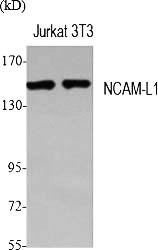
Fig.1. Western Blot analysis of various cells using NCAM-L1 Polyclonal Antibody.
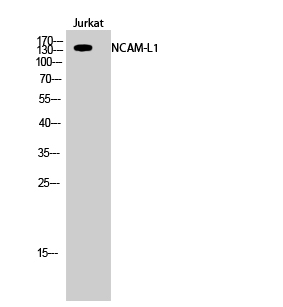
Fig.2. Western Blot analysis of Jurkat cells using NCAM-L1 Polyclonal Antibody.
You must be logged in to post a review.











Reviews
There are no reviews yet.