| Product name | MLL Polyclonal Antibody |
| Immunogen | Synthesized peptide derived from part region of human MLL protein at amino acid sequence of 3850-3900 |
| Host | Rabbit |
| Reactivity | Human,Mouse,Rat |
| Applications | WB,IHC,IF,ELISA |
| Applications notes | Optimal working dilutions should be determined experimentally by the investigator. Suggested starting dilutions are as follows: WB 1:500-1:2000;IHC 1:100-1:300;ELISA 1:10000;IF 1:50-200 |
| Clonality | Polyclonal |
| Preparation method | The antibody was affinity-purified from rabbit antiserum by affinity-chromatography using epitope-specific immunogen. |
| Alternative | Histone-lysine N-methyltransferase MLL; ALL-1; CXXC-type zinc finger protein 7; Lysine N-methyltransferase 2A; KMT2A; Trithorax-like protein; Zinc finger protein HRX |
| Formulation | Liquid solution |
| Concentration | 1 mg/ml |
| Storage buffer | Liquid in PBS containing 50% glycerol, 0.5% BSA and 0.02% sodium azide. |
| Storage instructions | Stable for one year at -20°C from date of shipment. For maximum recovery of product, centrifuge the original vial after thawing and prior to removing the cap. Aliquot to avoid repeated freezing and thawing. |
| Shipping | Gel pack with blue ice. |
| Precautions | The product listed herein is for research use only and is not intended for use in human or clinical diagnosis. Suggested applications of our products are not recommendations to use our products in violation of any patent or as a license. We cannot be responsible for patent infringements or other violations that may occur with the use of this product. |
| Background | Histone methyltransferase that plays an essential role in early development and hematopoiesis. Catalytic subunit of the MLL1/MLL complex, a multiprotein complex that mediates both methylation of Lys-4 of histone H3 (H3K4me) complex and acetylation of Lys-16 of histone H4 (H4K16ac). In the MLL1/MLL complex, it specifically mediates H3K4me, a specific tag for epigenetic transcriptional activation. Has weak methyltransferase activity by itself, and requires other component of the MLL1/MLL complex to obtain full methyltransferase activity. Has no activity toward histone H3 phosphorylated on Thr-3, less activity toward H3 dimethylated on Arg-8 or Lys-9, while it has higher activity toward H3 acetylated on 'Lys-9'. Required for transcriptional activation of HOXA9. Promotes PPP1R15A-induced apoptosis. Plays a critical role in the control of circadian gene expression and is essential for the transcriptional activation mediated by the CLOCK-ARNTL/BMAL1 heterodimer. Establishes a permissive chromatin state for circadian transcription by mediating a rhythmic methylation of 'Lys-4' of histone H3 (H3K4me) and this histone modification directs the circadian acetylation at H3K9 and H3K14 allowing the recruitment of CLOCK-ARNTL/BMAL1 to chromatin (By similarity). |
| Gene ID | 4297 |
| Alternative | Histone-lysine N-methyltransferase MLL; ALL-1; CXXC-type zinc finger protein 7; Lysine N-methyltransferase 2A; KMT2A; Trithorax-like protein; Zinc finger protein HRX |
| Others | The antibody detects endogenous levels of MLL |
| Accession | Q03164 |
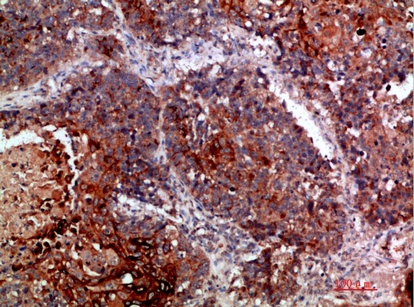
Fig.1. Immunohistochemical analysis of paraffin-embedded human-lung-cancer, antibody was diluted at 1:200.
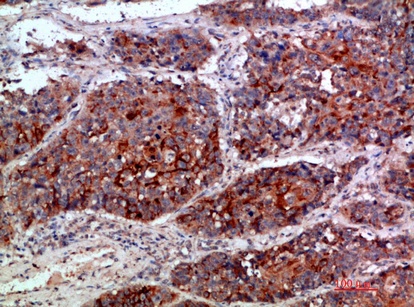
Fig.2. Immunohistochemical analysis of paraffin-embedded human-lung-cancer, antibody was diluted at 1:200.
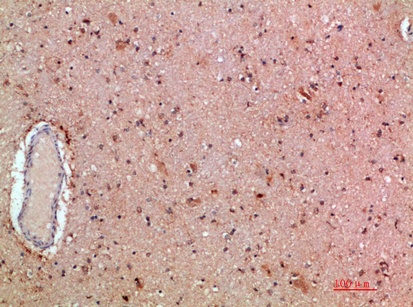
Fig.3. Immunohistochemical analysis of paraffin-embedded human-brain, antibody was diluted at 1:200.
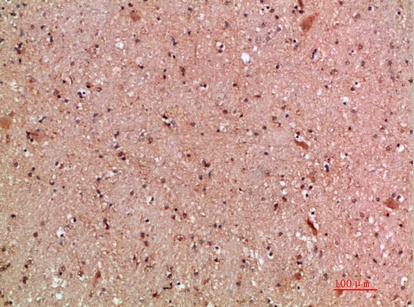
Fig.4. Immunohistochemical analysis of paraffin-embedded human-brain, antibody was diluted at 1:200.
You must be logged in to post a review.











Reviews
There are no reviews yet.