| Product name | gp91-phox Polyclonal Antibody |
| Immunogen | Synthesized peptide derived from the Internal region of human gp91-phox |
| Host | Rabbit |
| Reactivity | Human,Mouse |
| Applications | WB,IHC,IF,ELISA |
| Applications notes | Optimal working dilutions should be determined experimentally by the investigator. Suggested starting dilutions are as follows: WB 1:500-1:2000;IHC: 1:100-1:300;ELISA 1:20000;IF 1:50-200 |
| Clonality | Polyclonal |
| Preparation method | The antibody was affinity-purified from rabbit antiserum by affinity-chromatography using epitope-specific immunogen. |
| Alternative | CYBB; NOX2; Cytochrome b-245 heavy chain; CGD91-phox; Cytochrome b(558) subunit beta; Cytochrome b558 subunit beta; Heme-binding membrane glycoprotein gp91phox; NADPH oxidase 2Neutrophil cytochrome b 91 kDa polypeptide; Superoxide-generating NADPH oxidase heavy chain subunit; gp91-1; gp91-phox; p22 phagocyte B-cytochrome |
| Formulation | Liquid solution |
| Concentration | 1 mg/ml |
| Molecular weight | 70kD |
| Storage buffer | Liquid in PBS containing 50% glycerol, 0.5% BSA and 0.02% sodium azide. |
| Storage instructions | Stable for one year at -20°C from date of shipment. For maximum recovery of product, centrifuge the original vial after thawing and prior to removing the cap. Aliquot to avoid repeated freezing and thawing. |
| Shipping | Gel pack with blue ice. |
| Precautions | The product listed herein is for research use only and is not intended for use in human or clinical diagnosis. Suggested applications of our products are not recommendations to use our products in violation of any patent or as a license. We cannot be responsible for patent infringements or other violations that may occur with the use of this product. |
| Background | Cytochrome b (-245) is composed of cytochrome b alpha (CYBA) and beta (CYBB) chain. It has been proposed as a primary component of the microbicidal oxidase system of phagocytes. CYBB deficiency is one of five described biochemical defects associated with chronic granulomatous disease (CGD). In this disorder, there is decreased activity of phagocyte NADPH oxidase; neutrophils are able to phagocytize bacteria but cannot kill them in the phagocytic vacuoles. The cause of the killing defect is an inability to increase the cell's respiration and consequent failure to deliver activated oxygen into the phagocytic vacuole. |
| Gene ID | 1536 |
| Alternative | CYBB; NOX2; Cytochrome b-245 heavy chain; CGD91-phox; Cytochrome b(558) subunit beta; Cytochrome b558 subunit beta; Heme-binding membrane glycoprotein gp91phox; NADPH oxidase 2Neutrophil cytochrome b 91 kDa polypeptide; Superoxide-generating NADPH oxidase heavy chain subunit; gp91-1; gp91-phox; p22 phagocyte B-cytochrome |
| Others | gp91-phox Polyclonal Antibody detects endogenous levels of gp91-phox protein. |
| Accession | P04839 |
| Observed Band(KD) | 70 |
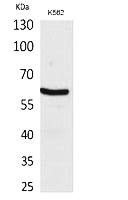
Fig.1. Western Blot analysis of K562 cells using gp91-phox Polyclonal Antibody. Antibody was diluted at 1:2000. Secondary antibody (catalog#: A21020) was diluted at 1:20000.
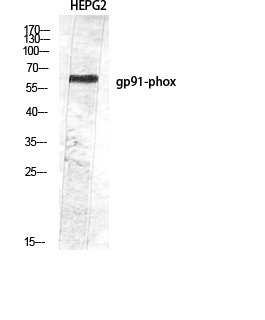
Fig.2. Western Blot analysis of HepG2 using gp91-phox Polyclonal Antibody diluted at 1:2000. Secondary antibody (catalog#: A21020) was diluted at 1:20000.
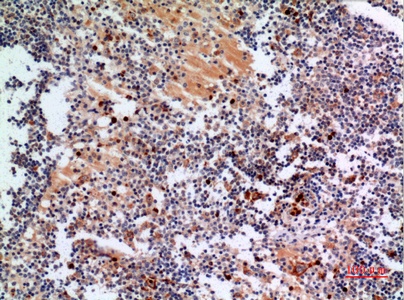
Fig.3. Immunohistochemical analysis of paraffin-embedded human-lymph-gland, antibody was diluted at 1:100.
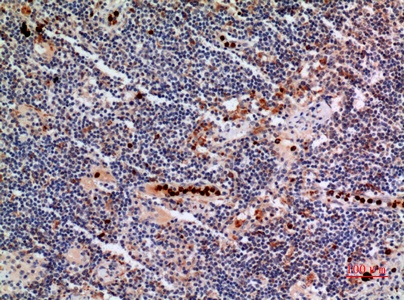
Fig.4. Immunohistochemical analysis of paraffin-embedded human-lymph-gland, antibody was diluted at 1:100.
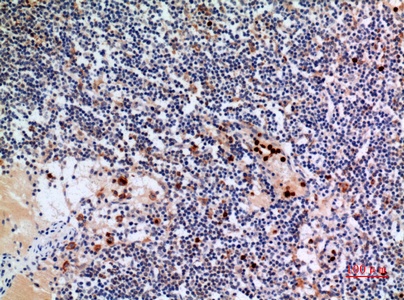
Fig.5. Immunohistochemical analysis of paraffin-embedded human-lymph-gland, antibody was diluted at 1:100.
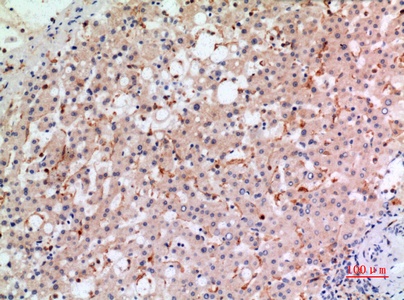
Fig.6. Immunohistochemical analysis of paraffin-embedded human-liver, antibody was diluted at 1:100.
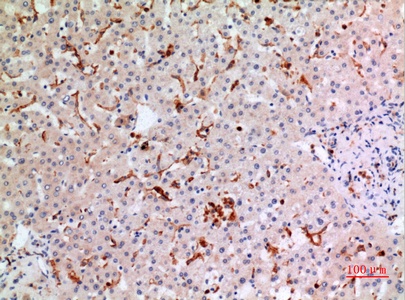
Fig.7. Immunohistochemical analysis of paraffin-embedded human-liver, antibody was diluted at 1:100.
You must be logged in to post a review.











Reviews
There are no reviews yet.