| Product name | CKR-1 Polyclonal Antibody |
| Immunogen | Synthesized peptide derived from part region of human CKR-1 protein at amino acid sequence of 151-200 |
| Host | Rabbit |
| Reactivity | Human,Mouse |
| Applications | IHC,IF,ELISA |
| Applications notes | Optimal working dilutions should be determined experimentally by the investigator. Suggested starting dilutions are as follows: IHC 1:50-200;ELISA 1:10000-20000;IF 1:50-200 |
| Clonality | Polyclonal |
| Preparation method | The antibody was affinity-purified from rabbit antiserum by affinity-chromatography using epitope-specific immunogen. |
| Alternative | C-C chemokine receptor type 1; C-C CKR-1; CC-CKR-1; CCR-1; CCR1; HM145; LD78 receptor; Macrophage inflammatory protein 1-alpha receptor; MIP-1alpha-R; RANTES-R; CD antigen CD191 |
| Formulation | Liquid solution |
| Concentration | 1 mg/ml |
| Storage buffer | Liquid in PBS containing 50% glycerol, 0.5% BSA and 0.02% sodium azide. |
| Storage instructions | Stable for one year at -20°C from date of shipment. For maximum recovery of product, centrifuge the original vial after thawing and prior to removing the cap. Aliquot to avoid repeated freezing and thawing. |
| Shipping | Gel pack with blue ice. |
| Precautions | The product listed herein is for research use only and is not intended for use in human or clinical diagnosis. Suggested applications of our products are not recommendations to use our products in violation of any patent or as a license. We cannot be responsible for patent infringements or other violations that may occur with the use of this product. |
| Background | CCR1 encodes a member of the beta chemokine receptor family, which is predicted to be a seven transmembrane protein similar to G protein-coupled receptors. The ligands of this receptor include macrophage inflammatory protein 1 alpha (MIP-1 alpha), regulated on activation normal T expressed and secreted protein (RANTES), monocyte chemoattractant protein 3 (MCP-3), and myeloid progenitor inhibitory factor-1 (MPIF-1). Chemokines and their receptors mediated signal transduction are critical for the recruitment of effector immune cells to the site of inflammation. Knockout studies of the mouse homolog suggested the roles of CCR1 in host protection from inflammatory response, and susceptibility to virus and parasite. CCR1 and other chemokine receptor genes, including CCR2, CCRL2, CCR3, CCR5 and CCXCR1, are found to form a gene cluster on chromosome 3p. |
| Gene ID | 1230 |
| Alternative | C-C chemokine receptor type 1; C-C CKR-1; CC-CKR-1; CCR-1; CCR1; HM145; LD78 receptor; Macrophage inflammatory protein 1-alpha receptor; MIP-1alpha-R; RANTES-R; CD antigen CD191 |
| Others | The antibody detects endogenous levels of CKR-1 |
| Accession | P32246 |
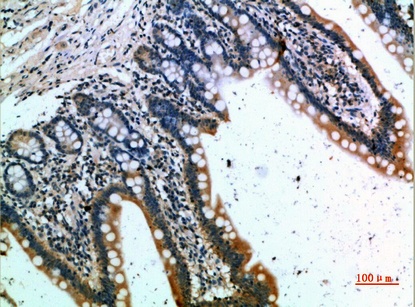
Fig.1. Immunohistochemical analysis of paraffin-embedded human-small-intestine, antibody was diluted at 1:200.
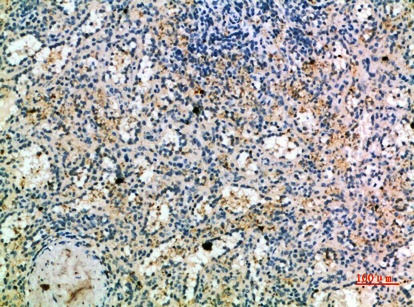
Fig.2. Immunohistochemical analysis of paraffin-embedded human-spleen, antibody was diluted at 1:200.
You must be logged in to post a review.











Reviews
There are no reviews yet.