| Product name | Bax Mouse Monoclonal Antibody (6F11) |
| Immunogen | Synthetic Peptide of Bax at AA range of 30-110 |
| Host | Mouse |
| Reactivity | Human, |
| Applications | WB,IF,ELISA |
| Applications notes | Optimal working dilutions should be determined experimentally by the investigator. Suggested starting dilutions are as follows: WB 1:500-2000;IF 1:100-500;ELISA 1:1000-5000 |
| Clonality | Monoclonal |
| Preparation method | Protein G |
| Alternative | BAX |
| Formulation | Liquid solution |
| Concentration | 1 mg/ml |
| Molecular weight | 21kD |
| Storage buffer | PBS, 50% glycerol, 0.05% Proclin 300, 0.05%BSA |
| Storage instructions | Stable for one year at -20°C from date of shipment. For maximum recovery of product, centrifuge the original vial after thawing and prior to removing the cap. Aliquot to avoid repeated freezing and thawing. |
| Shipping | Gel pack with blue ice. |
| Precautions | The product listed herein is for research use only and is not intended for use in human or clinical diagnosis. Suggested applications of our products are not recommendations to use our products in violation of any patent or as a license. We cannot be responsible for patent infringements or other violations that may occur with the use of this product. |
| Background | The protein encoded by BAX (BCL2 associated X, apoptosis regulator) belongs to the BCL2 protein family. BCL2 family members form hetero- or homodimers and act as anti- or pro-apoptotic regulators that are involved in a wide variety of cellular activities. This protein forms a heterodimer with BCL2, and functions as an apoptotic activator. This protein is reported to interact with, and increase the opening of, the mitochondrial voltage-dependent anion channel (VDAC), which leads to the loss in membrane potential and the release of cytochrome c. The expression of this gene is regulated by the tumor suppressor P53 and has been shown to be involved in P53-mediated apoptosis. Multiple alternatively spliced transcript variants, which encode different isoforms, have been reported for BAX. |
| Gene ID | 581 |
| Alternative | BAX |
| Others | Bax protein detects endogenous levels of BAX. |
| Accession | Q07812 |

Fig.1. Immunohistochemical analysis of paraffin-embedded human tonsil tissue. 1, Bax Mouse Monoclonal Antibody (6F11) was diluted at 1:200 (4°C, overnight). 2, Sodium citrate pH 6.0 was used for antibody retrieval (>98°C, 20min). 3, secondary antibody was diluted at 1:200 (room temperature, 30min). Negative control was used by secondary antibody only.

Fig.2. Immunohistochemical analysis of paraffin-embedded rat spleen tissue. 1, Bax Mouse Monoclonal Antibody (6F11) was diluted at 1:200 (4°C, overnight). 2, Sodium citrate pH 6.0 was used for antibody retrieval (>98°C, 20min). 3, secondary antibody was diluted at 1:200 (room temperature, 30min). Negative control was used by secondary antibody only.
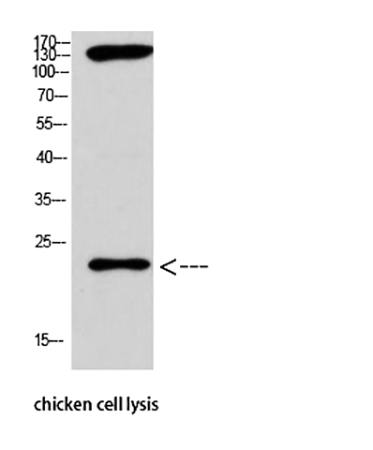
Fig.3. Western Blot analysis of chicken cell lysis using Antibody diluted at 1:1000.
Author:Yan, Meiling, et al. Publication name:Biomedicine & Pharmacotherapy IF:8
Author:J Kang, S Kim, Y Lee, J Oh, Y Yoon Publication name:Food Sci Anim Resour IF:3
You must be logged in to post a review.











Reviews
There are no reviews yet.