| Product name | AR (Acetyl Lys633) Polyclonal Antibody |
| Immunogen | Synthesized peptide derived from part region of human AR (Acetyl Lys633) protein at amino acid sequence of 633 |
| Host | Rabbit |
| Reactivity | Human:K633,Mouse:K613,Rat:K616 |
| Applications | WB,ELISA |
| Applications notes | Optimal working dilutions should be determined experimentally by the investigator. Suggested starting dilutions are as follows: WB 1:500-2000;ELISA 1:10000-20000 |
| Clonality | Polyclonal |
| Preparation method | The antibody was affinity-purified from rabbit antiserum by affinity-chromatography using epitope-specific immunogen. |
| Alternative | Androgen receptor; Dihydrotestosterone receptor; Nuclear receptor subfamily 3 group C member 4 |
| Formulation | Liquid solution |
| Concentration | 1 mg/ml |
| Molecular weight | 100kD |
| Storage buffer | Liquid in PBS containing 50% glycerol, 0.5% BSA and 0.02% sodium azide. |
| Storage instructions | Stable for one year at -20°C from date of shipment. For maximum recovery of product, centrifuge the original vial after thawing and prior to removing the cap. Aliquot to avoid repeated freezing and thawing. |
| Shipping | Gel pack with blue ice. |
| Precautions | The product listed herein is for research use only and is not intended for use in human or clinical diagnosis. Suggested applications of our products are not recommendations to use our products in violation of any patent or as a license. We cannot be responsible for patent infringements or other violations that may occur with the use of this product. |
| Background | The androgen receptor gene is more than 90 kb long and codes for a protein that has 3 major functional domains: the N-terminal domain, DNA-binding domain, and androgen-binding domain. The protein functions as a steroid-hormone activated transcription factor. Upon binding the hormone ligand, the receptor dissociates from accessory proteins, translocates into the nucleus, dimerizes, and then stimulates transcription of androgen responsive genes. AR contains 2 polymorphic trinucleotide repeat segments that encode polyglutamine and polyglycine tracts in the N-terminal transactivation domain of its protein. Expansion of the polyglutamine tract from the normal 9-34 repeats to the pathogenic 38-62 repeats causes spinal bulbar muscular atrophy (SBMA, also known as Kennedy's disease). Mutations in this gene are also associated with complete androgen insensitivity (CAIS). Alternative splicing results in multiple transcript variants encoding different isoforms. |
| Gene ID | 367 |
| Alternative | Androgen receptor; Dihydrotestosterone receptor; Nuclear receptor subfamily 3 group C member 4 |
| Others | The antibody detects endogenous levels of AR when Acetyl occurs at Lys633(human) or Lys613(mouse/rat) |
| Accession | P10275 |
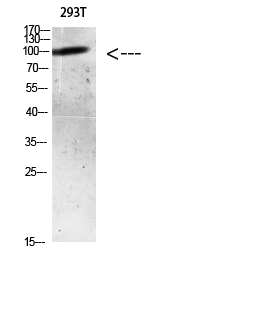
Fig.1. Western blot analysis of Mouse-lung lysate, antibody was diluted at 1:500. HRP, Goat Anti-Rabbit IgG (Cat #: A21020) secondary antibody was diluted at 1:20000.
You must be logged in to post a review.











Reviews
There are no reviews yet.