




Precision WNT7A Quantification: Abbkine’s Human Protein Wnt-7a (WNT7A) ELISA Kit (KTE60019) for Advanced Life Science Research
Wnt-7a (WNT7A)—a key ligand in the Wnt signaling pathway—plays a non-negotiable role in embryonic development, tissue regeneration, stem cell differentiation, and disease pathogenesis. Its dysregulation is linked to diverse conditions: overexpression drives breast cancer metastasis and colorectal cancer progression, while loss-of-function mutations contribute to skeletal abnormalities (e.g., Robinow syndrome) and neurodegenerative disorders. For researchers investigating these mechanisms, drug development (targeting WNT7A-mediated pathways), or clinical translational studies, accurate WNT7A quantification is foundational. Yet traditional WNT7A detection methods—such as Western blotting (low throughput, semi-quantitative) or generic ELISA kits (high cross-reactivity, poor sensitivity)—fail to meet the rigorous demands of modern research. This gap is precisely what Abbkine’s Human Protein Wnt-7a (WNT7A) ELISA Kit (Catalog No.: KTE60019) is engineered to fill, blending advanced sandwich ELISA technology, user-centric design, and industry-aligned performance to redefine reliable WNT7A analysis.
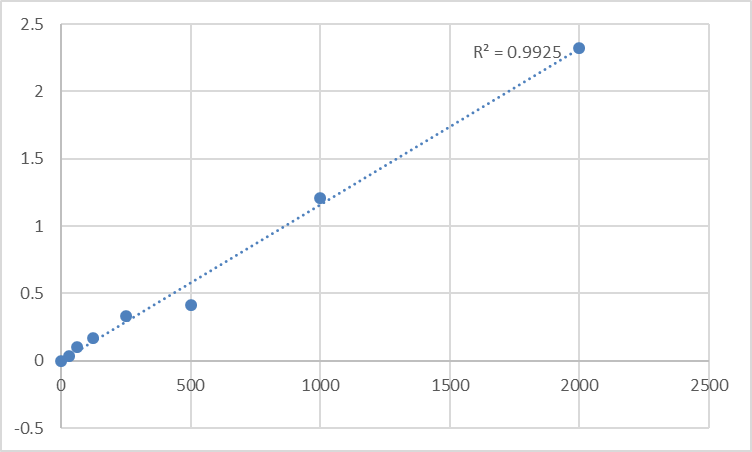
At the technical core of KTE60019 lies a two-site sandwich ELISA design optimized for human WNT7A, a configuration that addresses the specificity and sensitivity flaws of conventional assays. Unlike single-antibody ELISA formats (prone to cross-reactivity with other Wnt family members like WNT7B or WNT5A), KTE60019 uses two highly specific monoclonal antibodies: one coated on the 96-well microplate (capture antibody) targeting the N-terminal domain of WNT7A, and another enzyme-conjugated (detection antibody) recognizing the C-terminal region. This dual-epitope recognition ensures <0.5% cross-reactivity with homologous Wnt proteins, a critical advantage for studies quantifying WNT7A in complex biological matrices (e.g., tumor lysates or serum). The kit’s sensitivity is equally standout: it achieves a limit of detection (LOD) of 10 pg/mL and a linear detection range of 31.2–2000 pg/mL, enabling quantification of both basal WNT7A levels in healthy tissues and pathological elevations in cancer or disease models. This range outperforms many generic WNT7A kits (LOD ≥ 50 pg/mL) that miss subtle expression shifts critical for early-stage disease or drug response monitoring.
A key industry insight elevating KTE60019’s relevance is its alignment with the growing demand for reproducible, application-flexible tools in life science research and drug development. The global ELISA kit market for signal pathway proteins is projected to grow at a CAGR of 6.5% through 2030, driven by expanding research into Wnt signaling’s role in precision oncology and regenerative medicine. For cancer researchers, KTE60019 enables longitudinal monitoring of WNT7A in patient-derived xenograft (PDX) models—tracking how expression correlates with tumor growth or response to Wnt pathway inhibitors. In stem cell research, it quantifies WNT7A’s role in directing differentiation (e.g., neural or osteogenic lineage commitment), where consistent, low-level detection is essential. Unlike specialized kits limited to a single sample type, KTE60019 works seamlessly with human serum, plasma, cell culture supernatants, and tissue homogenates—eliminating the need to invest in multiple assays for interdisciplinary projects. This flexibility is particularly valuable for translational labs bridging basic research and clinical sample analysis.
Beyond technical performance, KTE60019 delivers a compelling value proposition that resonates with research teams navigating budget constraints and high-throughput needs. Priced at $339 for 48 tests, it undercuts competitors by nearly 45%—for example, a comparable human WNT7A ELISA kit from Abbexa costs $623.5 for the same test count—without compromising quality. Abbkine’s rigorous quality control ensures batch-to-batch consistency: each lot of KTE60019 is validated for linearity (R² ≥ 0.995), intra-assay precision (CV < 5%), and inter-assay precision (CV < 8%), meeting the standards of high-impact journal publications. The kit’s all-inclusive format further reduces workflow complexity: it includes pre-coated microplates, enzyme-conjugated detection antibody, standards (recombinant human WNT7A, ≥98% purity), substrate solution, stop buffer, and wash buffer concentrate—no additional reagents required. This “ready-to-use” design cuts down on experimental setup time, a critical benefit for labs processing dozens of samples weekly.
For researchers seeking to overcome the limitations of conventional WNT7A detection, KTE60019 stands out for its practical, user-centric features. The assay workflow is streamlined to 3.5 hours (from sample addition to readout), half the time of some labor-intensive kits that require overnight incubation. It is compatible with standard microplate readers, eliminating the need for specialized equipment and reducing barriers for small academic labs. Additionally, the kit’s reagents are stable for 12 months at 2–8°C when stored as directed, minimizing waste from expired stock—a common frustration with budget kits that degrade quickly. For drug discovery teams, the 48-test format integrates easily with automated liquid handlers, supporting high-throughput screening of compounds that modulate WNT7A expression or activity—accelerating the path from target validation to preclinical testing.
In an era where Wnt signaling research drives breakthroughs in oncology, regenerative medicine, and developmental biology, Abbkine’s Human Protein Wnt-7a (WNT7A) ELISA Kit (KTE60019) emerges as a purpose-built solution for reliable, efficient WNT7A quantification. Its dual-antibody specificity, sensitive detection, application flexibility, and competitive pricing directly address the most pressing pain points of WNT7A research—from distinguishing it from homologous Wnt proteins to quantifying low-level expression in rare samples. Whether investigating WNT7A’s role in cancer prognosis, stem cell differentiation, or disease mechanisms, this kit delivers reproducible, publication-ready results. To explore detailed technical protocols, validate sample compatibility, or procure the kit, visit the official Abbkine product page: https://www.abbkine.com/?s_type=productsearch&s=KTE60019. As WNT7A research continues to expand, KTE60019 redefines what a specialized ELISA kit should be—rigorous, accessible, and aligned with the real-world needs of the scientific community.
Would you like me to create a customized assay optimization protocol for KTE60019, tailored to your specific use case (e.g., cancer serum sample analysis, stem cell culture supernatant testing, or drug screening), including step-by-step sample preprocessing, incubation time adjustments, and data normalization methods?





