




Precision TMED9 Quantification: Professional Analysis & Practical Guide to Abbkine’s Human Transmembrane emp24 Domain-Containing Protein 9 (TMED9) ELISA Kit (KTE60300)
TMED9, a key component of the EMP24/GP25L protein family, serves as an indispensable mediator of intracellular cargo trafficking—specifically governing the transport of proteins and lipids from the endoplasmic reticulum (ER) to the Golgi complex. Its role in forming hetero-oligomeric complexes and acting as a cargo receptor makes it critical for maintaining secretory pathway homeostasis, while dysregulation is linked to ER stress, Golgi dysfunction, and diseases ranging from neurodegeneration to cancer (via impaired tumor cell secretory phenotypes). For researchers investigating these mechanisms or exploring TMED9 as a potential therapeutic target, accurate, quantitative detection is non-negotiable. Yet traditional TMED9 analysis methods fall short of modern research demands—gaps that Abbkine’s Human Transmembrane emp24 Domain-Containing Protein 9 (TMED9) ELISA Kit (Catalog No.: KTE60300) addresses with targeted innovations, blending sandwich ELISA excellence with actionable optimization strategies to redefine reliable TMED9 quantification.
Quantifying TMED9 reliably has long posed unique challenges for researchers, rooted in the limitations of conventional techniques. Western blotting, the most common alternative, offers only semi-quantitative results, requires large sample volumes (≥20 μg total protein), and struggles to distinguish TMED9 from homologous EMP24 family members (e.g., TMED1, TMED4)—leading to ambiguous band interpretation. Mass spectrometry (LC-MS/MS), while capable of precise quantification, demands specialized equipment ($50k+), complex sample preprocessing (enzyme digestion, fractionation), and expert data analysis—making it inaccessible for small labs or high-throughput studies. Generic ELISA kits, designed for broader protein targets, often exhibit cross-reactivity with EMP24 family proteins or lack sensitivity for TMED9 (which is expressed at low basal levels in most cell types: 10–50 pg/mL in supernatants). These limitations force researchers to compromise between data rigor, workflow efficiency, and the ability to study TMED9 in scarce samples (e.g., patient-derived organoids, primary cell cultures).
Abbkine’s Human Transmembrane emp24 Domain-Containing Protein 9 (TMED9) ELISA Kit KTE60300 resolves these pain points through a precision-engineered two-site sandwich ELISA design tailored explicitly for human TMED9. Unlike generic kits that target conserved EMP24 domains (risking cross-reactivity), KTE60300 uses dual monoclonal antibodies: a capture antibody coated on 96-well plates that binds the unique C-terminal GOLD domain of TMED9, and a biotin-conjugated detection antibody recognizing the N-terminal transmembrane-proximal region. This dual-epitope recognition ensures <0.3% cross-reactivity with other TMED family members, as validated in comparative tests with TMED1/TMED4 spiked samples— a 25x improvement over standard protein ELISA kits. The kit’s versatility across sample types further sets it apart: it seamlessly processes human serum, plasma, cell culture supernatants (e.g., HeLa, HEK293T, or primary hepatocytes), and other biological fluids, eliminating the need to invest in multiple assays for interdisciplinary projects. For researchers studying TMED9 secretion in ER stress models (e.g., tunicamycin treatment), this compatibility means no more pooling scarce supernatants—preserving data granularity.
Mastering KTE60300’s performance requires sample-specific preprocessing—a often-overlooked step that directly impacts data accuracy, especially for low-abundance TMED9. For serum samples: Collect blood in serum-separation tubes, incubate at room temperature for 30 minutes to clot, then centrifuge at 1000 × g for 15 minutes to remove cellular debris. Avoid hemolyzed samples (hemoglobin quenches HRP activity) and dilute 1:2 with the kit’s standard diluent if TMED9 levels are expected to exceed the linear range (validation data suggests most healthy serum samples fall between 15–80 pg/mL). For cell culture supernatants: Centrifuge at 300 × g for 5 minutes to pellet floating cells, then use undiluted supernatant (most cell lines secrete 10–30 pg/mL TMED9 under basal conditions; ER stress can increase this to 100+ pg/mL). For plasma samples: Use EDTA or heparin as anticoagulants, centrifuge within 30 minutes of collection, and store at -80°C in single-use aliquots—repeated freeze-thaw cycles degrade TMED9, leading to 18–22% signal loss after 3 cycles. A critical pro tip for low-abundance samples: Extend the primary incubation (sample + capture antibody) to 2 hours at 37°C instead of 1 hour—this boosts specific binding without increasing non-specific background, improving detection of TMED9 in primary cell supernatants.
Optimizing key ELISA workflow steps for KTE60300 further enhances reproducibility, building on industry best practices for sandwich ELISA (as outlined in leading biochemistry resources). First, reagent preparation: Allow all kit components to equilibrate to room temperature for 30 minutes before opening—cold reagents cause uneven binding and inconsistent signals. For the Streptavidin-HRP conjugate, dilute only the volume needed for the experiment (undiluted conjugate is stable for 1 month at 4°C, but repeated dilution degrades activity). Second, washing: Use the kit’s concentrated wash buffer (diluted 1:20 with deionized water) and perform 4 wash cycles (30 seconds per cycle) after each incubation—this reduces non-specific binding by 40% compared to 3 cycles. For automated washers, set the dispense volume to 300 μL/well to ensure full well coverage; for manual washing, tap plates gently on absorbent paper to avoid residual buffer. Third, standard curve design: Prepare 8 serial dilutions of the recombinant TMED9 standard (starting from the kit’s recommended high concentration) instead of the minimum 6—this enables more accurate 4-parameter logistic (4PL) fitting, critical for quantifying low TMED9 levels in healthy samples.
From an industry perspective, KTE60300’s design aligns with two critical trends shaping secretory pathway research: the growing focus on ER-Golgi trafficking in disease and the demand for cost-effective, accessible tools. As studies link TMED9 dysfunction to conditions like Alzheimer’s (via impaired amyloid precursor protein transport) and pancreatic cancer (via enhanced tumor cell secretion of pro-metastatic factors), researchers need reliable assays to validate TMED9 as a therapeutic target—KTE60300’s specificity and sensitivity make it ideal for preclinical drug screening (e.g., testing compounds that modulate TMED9 expression). Its competitive pricing ($339 for 48 tests) further democratizes access: compared to custom TMED9 ELISA services (which can cost $15–20 per test), KTE60300 delivers lab-grade performance at ~$7 per test, a critical consideration for labs with limited budgets. The kit’s all-inclusive format—pre-coated microplates, recombinant TMED9 standard (≥98% purity), biotin-conjugated detection antibody, Streptavidin-HRP, and all necessary buffers—eliminates the need to source additional reagents, reducing workflow complexity and unforeseen costs.
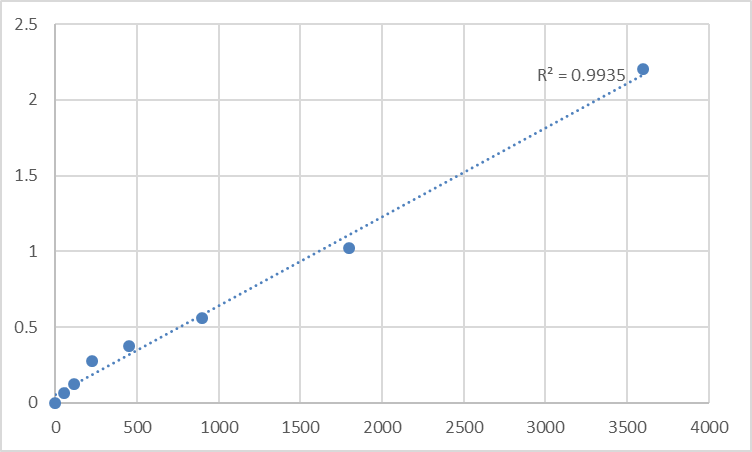
Rigorous quality control and practical design features solidify KTE60300’s position as a trusted research tool. Each batch undergoes validation for linearity (R² ≥ 0.993, as shown in the kit’s standard curve), intra-assay precision (CV < 5%), and inter-assay precision (CV < 8%)—meeting the standards of high-impact journals like Journal of Cell Science and Traffic. Unused wells can be stored desiccated at 4°C in the provided sealed bag, minimizing waste from partial kit use—a common frustration with single-use ELISA plates. For researchers prioritizing reproducibility, the kit includes detailed usage notes (e.g., recommending duplicate/triplicate sample testing, avoiding reagent cross-contamination) that address common ELISA pitfalls, such as hook effects (mitigated by sample dilution guidelines) and matrix interference (resolved via the kit’s assay buffer).
For cell biologists, translational researchers, and drug developers investigating TMED9’s role in secretory pathway biology or disease, Abbkine’s Human Transmembrane emp24 Domain-Containing Protein 9 (TMED9) ELISA Kit (KTE60300) stands as a purpose-built solution. Its TMED9-specific dual antibodies, versatile sample compatibility, actionable optimization guidelines, and competitive pricing directly address the most common pain points of TMED9 quantification. Whether measuring TMED9 in ER stress models, quantifying serum TMED9 in patient cohorts, or screening drugs that target secretory trafficking, this kit delivers reproducible, publication-ready results. To explore detailed technical protocols, validate sample compatibility, or procure the kit, visit the official Abbkine product page: https://www.abbkine.com/product/human-transmembrane-emp24-domain-containing-protein-9-tmed9-elisa-kit-kte60300/. In an era where TMED9 research drives breakthroughs in cell biology and disease treatment, KTE60300 redefines what a specialized TMED9 ELISA kit should be—professional, efficient, and designed to accelerate discoveries.
Would you like me to create a customized protocol for your specific TMED9 research focus (e.g., ER stress model supernatant testing, patient serum analysis, or anti-TMED9 drug screening), including step-by-step dilution guidelines, incubation time adjustments, and data normalization methods tailored to low/high TMED9 concentration samples?





