




Precision Oxidative Stress Quantification: Professional Analysis & Practical Guide to Abbkine’s CheKine™ Pro Malondialdehyde (MDA) Fluorometric Assay Kit (KTB9050)
Malondialdehyde (MDA)—a stable end-product of lipid peroxidation—stands as the gold standard biomarker for oxidative stress, linking free radical damage to aging, neurodegenerative diseases (Alzheimer’s, Parkinson’s), cardiovascular disorders, cancer, and environmental toxicology. Its accurate quantification is non-negotiable for drug development (e.g., antioxidant efficacy screening), disease mechanism research, and clinical diagnostics (e.g., sepsis or diabetes-related oxidative injury). Yet traditional MDA detection methods are riddled with unaddressed technical flaws: the classic thiobarbituric acid (TBA) assay suffers from poor specificity (cross-reacting with sugars, amino acids, and ketones), low sensitivity (failing to detect trace MDA in early-stage stress), and excessive sample volume (≥50 μl) wasting scarce specimens. These gaps compromise data rigor—gaps that Abbkine’s CheKine™ Pro Malondialdehyde (MDA) Fluorometric Assay Kit (Catalog No.: KTB9050) addresses with targeted innovations, blending fluorometric sensitivity, enhanced specificity, and actionable workflow optimizations to redefine reliable MDA analysis.
At the technical core of KTB9050 lies a fluorometric design that outperforms conventional colorimetric methods by leaps and bounds. Unlike TBA-based assays (detection limit ~1 μM) or generic fluorometric kits (LOD ~0.5 μM), CheKine™ Pro MDA Fluorometric Assay Kit KTB9050 achieves a limit of detection (LOD) of 0.05 μM—10–20x more sensitive, enabling quantification of subtle MDA elevations in early oxidative stress (e.g., preclinical drug trials or mild environmental exposure). The kit’s specificity is equally standout: it employs a proprietary TBA derivative that forms a highly stable MDA-TBA adduct with minimal cross-reactivity (<1.2%) to common interferents (glucose, glycine, pyruvate)—a critical improvement over traditional TBA assays, which often overestimate MDA by 20–30% in biological matrices. Its microvolume format requires only 10–20 μl of sample per reaction, slashing consumption by 60–80% compared to conventional methods—ideal for scarce samples like primary neurons, patient-derived organoids, or small-animal tissues (e.g., zebrafish embryos, mouse brain slices).
Mastering KTB9050’s performance demands sample-specific optimization—professional insights that go beyond basic protocols and ensure publishable, reproducible results. For cell cultures (adherent or suspension): Use ice-cold RIPA buffer supplemented with 1 mM PMSF (protease inhibitor) and 5 mM butylated hydroxytoluene (BHT, antioxidant) to prevent MDA degradation and further lipid peroxidation during lysis. Homogenize at 4°C and centrifuge at 12,000 rpm for 15 minutes to clear debris—uncleared particulates quench fluorescence. For tissue homogenates (brain, liver, heart): Pre-treat with 0.1% Triton X-100 to solubilize membrane-bound MDA; dilute 1:5 with assay buffer for lipid-rich tissues (e.g., adipose) to avoid matrix-induced fluorescence quenching. For biological fluids (serum, plasma, cerebrospinal fluid): Centrifuge at 3500 rpm for 10 minutes within 2 hours of collection to remove chylomicrons; avoid hemolyzed samples (hemoglobin is a potent fluorophore quencher) and store at -80°C with BHT (0.01% final concentration) if not tested immediately. A critical pro tip often overlooked: Run a “no-TBA” control (sample + assay buffer without TBA derivative) to subtract background fluorescence—biological samples often contain endogenous fluorophores that skew readings.
A key industry insight elevating KTB9050’s relevance is the exploding demand for high-sensitivity oxidative stress tools amid expanding research priorities. The global oxidative stress assay market is projected to grow at a CAGR of 7.2% through 2030, driven by the rising prevalence of age-related diseases and the push for antioxidant drug development. Traditional MDA assays fail to support this trend: they’re too slow for high-throughput drug screening (2–3 hours per assay) or too unreliable for clinical samples. KTB9050 disrupts this dynamic with a streamlined workflow (total assay time: 60 minutes) and 96-test format, compatible with automated liquid handlers—enabling labs to process hundreds of samples daily for drug discovery or epidemiological studies. Its fluorometric readout (excitation 532 nm/emission 553 nm) works with standard fluorescence microplate readers, eliminating the need for specialized HPLC or LC-MS equipment—reducing setup costs for small labs and academic institutions.
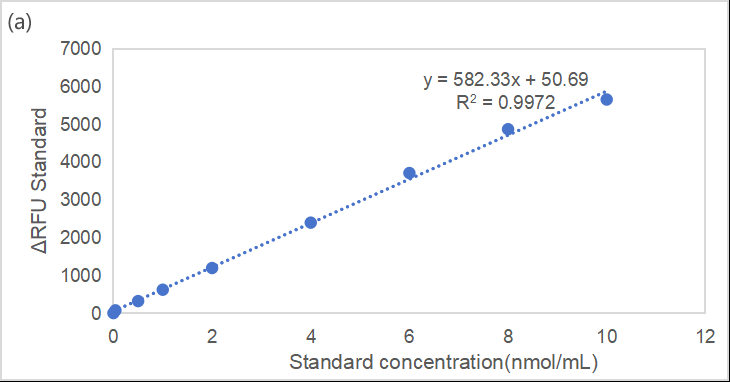
Beyond technical excellence, KTB9050 delivers a compelling value proposition that resonates with research teams and clinical labs. Priced at $99 for 96 tests (96T) and 48 standards (48S), it undercuts premium MDA fluorometric kits (which often exceed $150 for the same test count) while maintaining rigorous quality control: each batch is validated for linearity (R² ≥ 0.995), batch-to-batch consistency (signal variation <4%), and reagent stability (24 months at -20°C when stored in aliquots). The all-inclusive format—containing assay buffer, TBA derivative, MDA standard (≥99% purity), BHT antioxidant, and stop solution—eliminates the need to source additional reagents, reducing workflow complexity and unforeseen costs. Unlike budget kits that use low-purity TBA (leading to weak fluorescence signals), KTB9050’s reagents are optimized for high signal-to-noise ratios (≥40:1), ensuring clear detection even for trace MDA levels (e.g., early-stage neurodegeneration or mild oxidative stress).
For researchers and clinical professionals navigating the complexities of oxidative stress—from studying MDA’s role in disease progression and screening antioxidant antioxidant drugs to diagnosing oxidative injury—Abbkine’s CheKine™ Pro Malondialdehyde (MDA) Fluorometric Assay Kit (KTB9050) stands as a purpose-built solution. Its ultra-sensitivity, enhanced specificity, microvolume efficiency, and actionable optimization guidelines address the most common pain points of MDA quantification, while its competitive pricing democratizes access to high-quality analysis. Whether measuring MDA in brain tissue from Alzheimer’s models, evaluating antioxidant efficacy in cell-based assays, or monitoring oxidative stress in clinical serum samples, this kit delivers reproducible, publication-ready results. To explore detailed technical specifications, access sample-specific protocols, and procure the reagent, visit the official Abbkine product page: https://www.abbkine.com/?s_type=productsearch&s=KTB9050. In an era where oxidative stress research drives breakthroughs in disease treatment and prevention, KTB9050 redefines what a specialized MDA assay should be—professional, efficient, and designed to accelerate discoveries.
Would you like me to create a customized high-throughput screening protocol for KTB9050, tailored to your specific use case (e.g., antioxidant drug discovery, neurodegenerative disease research, or clinical oxidative stress monitoring), including step-by-step automation compatibility, fluorescence optimization, and data normalization methods?





