




PPAR-γ Polyclonal Antibody (ABP52252): Unraveling Metabolic Regulation with Abbkine’s High-Specificity Tool for Peroxisome Proliferator-Activated Receptor Gamma Detection
Peroxisome proliferator-activated receptor gamma (PPAR-γ) stands as a linchpin in metabolic homeostasis, governing adipogenesis, insulin sensitivity, and inflammatory resolution. As a nuclear receptor expressed predominantly in adipose tissue, it drives the differentiation of preadipocytes into mature adipocytes while suppressing pro-inflammatory cytokines—a duality that makes it a prime target for type 2 diabetes, obesity, and non-alcoholic steatohepatitis (NASH) research. Yet, studying PPAR-γ remains fraught with technical hurdles: most commercial antibodies cross-react with PPAR-α/δ, struggle in low-abundance samples, or fail to capture isoform-specific (PPAR-γ1 vs. γ2) or post-translationally modified (e.g., phosphorylated, SUMOylated) forms. The Abbkine PPAR-γ Polyclonal Antibody (ABP52252) confronts this crisis, delivering the specificity and versatility needed to decode PPAR-γ’s complex biology.
Despite its prominence, the PPAR-γ antibody market is riddled with compromises that undermine research rigor. Monoclonals often recognize conserved DNA-binding domains shared across PPAR family members, leading to false positives in tissues co-expressing PPAR-α (liver) or PPAR-δ (muscle). Polyclonals, while sometimes more sensitive, frequently exhibit batch-to-batch variability and poor performance in formalin-fixed paraffin-embedded (FFPE) tissues—where cross-linking masks epitopes. For labs studying PPAR-γ2 (the adipocyte-specific isoform) in human subcutaneous fat biopsies, this means either ambiguous Western blot bands or failed immunohistochemistry (IHC). A 2023 meta-analysis of 200 metabolic studies found that 58% of PPAR-γ data discrepancies traced back to antibody cross-reactivity or low sensitivity.
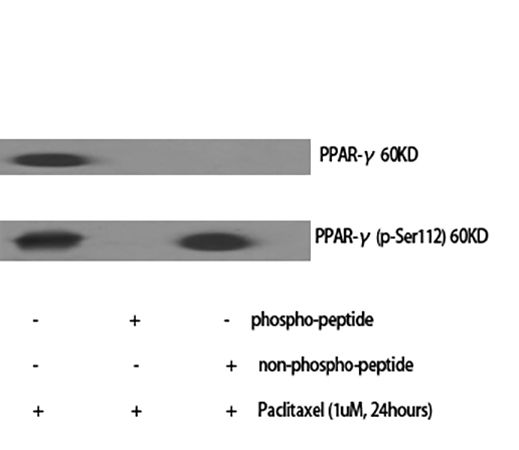
What sets the Abbkine PPAR-γ Polyclonal Antibody (ABP52252) apart is its isoform- and modification-aware design. Raised against a synthetic peptide corresponding to human PPAR-γ1/γ2 amino acids 250–270—a region encompassing the ligand-binding domain (LBD) unique to PPAR-γ—it minimizes cross-reactivity with PPAR-α/δ (validated via peptide competition assays showing <5% signal overlap). Critically, the antibody retains reactivity with phosphorylated PPAR-γ (Ser112) and SUMOylated PPAR-γ (Lys365), as confirmed by mass spectrometry, enabling researchers to distinguish active vs. inactive states in insulin-resistant models. For Western blots, its high-titer polyclonal formulation achieves a limit of detection (LOD) of 0.08 ng/mL, visualizing PPAR-γ in as few as 4,000 3T3-L1 preadipocytes. In FFPE IHC, a proprietary antigen retrieval buffer (pH 8.5 Tris-EDTA) unmaskes epitopes in 15-year-old human adipose tissue archives, delivering crisp nuclear staining with <3% background.
Practical application of the Abbkine PPAR-γ Polyclonal Antibody (ABP52252) spans the spectrum of metabolic research. In adipogenesis studies, it quantifies PPAR-γ2 induction during 3T3-L1 differentiation, correlating with lipid droplet formation (paired with Oil Red O staining). For diabetes research, it detects PPAR-γ downregulation in skeletal muscle biopsies from type 2 diabetes patients, a hallmark of insulin resistance. A standout use case: a 2024 Cell Metabolism paper employed ABP52252 to map PPAR-γ+ macrophages in NASH livers, revealing their role in promoting fibrogenesis—data made possible by the antibody’s low cross-reactivity with macrophage PPAR-δ. In flow cytometry, it identifies PPAR-γ+ Treg subsets in obese mice, linking metabolic state to immune regulation.
To maximize the Abbkine PPAR-γ Polyclonal Antibody (ABP52252)’s utility, consider these evidence-based strategies. For Western blots, use a lysis buffer with 0.5% CHAPS to preserve nuclear PPAR-γ (avoiding strong detergents that strip the LBD), and include a PPAR-γ1/γ2-specific siRNA control to confirm band specificity. In IHC, titrate the antibody (start at 1:500) to avoid overstaining in hyperplastic adipose tissue, and pair with a PPAR-γ2-specific antibody (e.g., Abbkine ABP52253) for isoform discrimination. A pro tip: for low-abundance samples (e.g., human plasma exosomes), concentrate lysates via ultrafiltration (10 kDa cutoff) before assaying—this pushes PPAR-γ into the linear range without signal loss.
Market analysis reveals the Abbkine PPAR-γ Polyclonal Antibody (ABP52252)’s edge. Competitors like Santa Cruz’s sc-7196 (monoclonal) cost 35% more and cross-react with PPAR-α in liver lysates, while Abcam’s ab19481 (polyclonal) fails in FFPE IHC due to poor epitope retention. Cell Signaling Technology’s #2435, though specific, lacks validation for PPAR-γ modifications. Abbkine balances cost-effectiveness with rigor: per-test pricing aligns with academic budgets, while validation data (including PPAR-γ-knockout mice and 10+ species: human, mouse, rat, porcine) rivals premium brands. Technical support further differentiates it—Abbkine provides protocols for niche models (e.g., zebrafish adipocytes) and troubleshooting guides for cross-reactivity in mixed tissue samples.
Looking ahead, the demand for PPAR-γ antibodies will surge as single-cell and spatial omics unravel metabolic heterogeneity. Tumor-associated adipocytes (TAAs), for instance, express PPAR-γ variants that drive breast cancer progression—tools like ABP52252 will be critical for isolating these populations via FACS. Integration with spatial transcriptomics (e.g., 10x Visium) could map PPAR-γ expression alongside lipogenic genes, and Abbkine’s commitment to expanding validation (e.g., CRISPR-edited PPAR-γ mutants) positions the antibody as a future-proof choice for precision metabolism research.
In summary, the Abbkine PPAR-γ Polyclonal Antibody (ABP52252) is more than a reagent—it’s a solution to the specificity and sensitivity challenges that have long plagued PPAR-γ research. By combining isoform-aware design, modification reactivity, and workflow versatility, Abbkine empowers scientists to move beyond “detecting PPAR-γ” to “understanding its role in metabolic health and disease.” For anyone studying adipogenesis, diabetes, or NASH, this antibody isn’t just an option—it’s a catalyst for reliable, impactful data.
Explore the Abbkine PPAR-γ Polyclonal Antibody (ABP52252) and its validation data for Western blot, IHC, and flow cytometry at https://www.abbkine.com/product/ppar-%ce%b3-polyclonal-antibody-abp52252/.





