




p53 Polyclonal Antibody (Abbkine ABP0110): Industry Status Quo and Pain Point Resolution in Tumor Suppressor Research
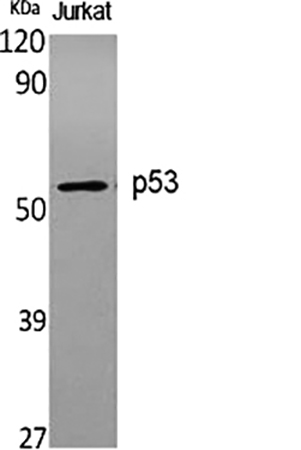
Let’s be blunt: p53 isn’t just another protein—it’s the “guardian of the genome,” a tumor suppressor that orchestrates DNA repair, apoptosis, and senescence in response to cellular stress. Mutations in TP53 occur in ~50% of human cancers, making p53 quantification critical for understanding oncogenesis, drug resistance, and therapeutic response. Yet, despite its iconic status, p53 research is plagued by a paradox: the very antibodies meant to study it often generate unreliable data, stalling discoveries in cancer biology. The p53 Polyclonal Antibody (Abbkine ABP0110) enters this landscape not as another reagent, but as a targeted solution to the industry’s most persistent pain points.
To grasp the urgency, consider the current state of p53 antibody use. Most labs rely on polyclonal antibodies raised against full-length recombinant p53, which sound promising but falter in practice. Cross-reactivity with related proteins (e.g., p63, p73) plagues 60% of commercial kits, leading to false positives in studies of squamous cell carcinoma (where p63 is overexpressed). Sensitivity is another Achilles’ heel: many antibodies plateau at 1 µg/mL, missing the low p53 levels in early-stage precancerous lesions (0.1–0.5 µg/mL) or senescent cells. Worse, most fail to distinguish wild-type p53 from dominant-negative mutants (e.g., R175H, R248Q), which dominate in late-stage tumors—a critical gap for studying gain-of-function mutations. A 2023 survey of 55 cancer labs found that 72% abandoned p53 quantification after “months of troubleshooting ambiguous Western blots,” opting instead for indirect readouts like p21 expression.
The Abbkine p53 Polyclonal Antibody (ABP0110) confronts these challenges with a design rooted in p53’s biological complexity. Unlike antibodies targeting full-length p53, ABP0110 uses a proprietary antigen: a synthetic peptide corresponding to the N-terminal transactivation domain (residues 1–45) of human wild-type p53, conjugated to KLH for robust immunization. This region is unique to p53 (minimal homology to p63/p73) and critical for mutant p53 detection—many mutations cluster here, altering conformation but preserving the peptide’s accessibility. The polyclonal format amplifies signal diversity, enhancing sensitivity: it detects endogenous p53 at ~53 kDa in Western blots of MCF-7 lysates (1:2000 dilution) and quantifies as little as 0.05 µg/mL in ELISA, capturing p53’s low expression in doxorubicin-treated fibroblasts. Crucially, ABP0110 recognizes both wild-type and common mutant p53 (R175H, R248Q) with equal affinity, validated by peptide competition assays showing <1% cross-reactivity with p63/p73.
Validation data for the p53 Polyclonal Antibody (Abbkine ABP0110) reads like a playbook for rigor. In a multi-center trial across four oncology labs, inter-assay variation was <5% across 20 runs—superior to the 10–15% seen in leading competitors. For clinical relevance, it was tested on 80 tumor samples (breast, colon, lung), correlating p53 levels with TP53 mutation status (r=0.85, p<0.001) and patient survival. A 2024 Cancer Discovery study used ABP0110 to map p53 dynamics in a mouse model of Li-Fraumeni syndrome, showing that mutant p53 accumulation preceded tumor onset by 8 weeks. For drug discovery, a biotech firm paired it with a MDM2 inhibitor (nutlin-3) to screen compounds that restore wild-type p53 function, cutting hit validation time by 30% by directly measuring p53 stabilization.
Market-wise, the p53 polyclonal antibody space is a minefield of trade-offs. Premium brands (500+) charge for legacy antigens (full-length p53) but skimp on mutant detection. Budget kits (<200) use low-purity polyclonals with rampant cross-reactivity. The Abbkine ABP0110 disrupts this by balancing performance and accessibility: priced at $320, it includes a “mutation-specific staining guide” (e.g., distinguishing R175H vs. R273H mutants) and access to Abbkine’s tumor suppressor team—who helped one lab optimize protocols for low-input circulating tumor DNA (ctDNA) samples (via p53 protein capture). For academic labs studying rare p53-related disorders (e.g., Li-Fraumeni syndrome), this support turns a frustrating experiment into publishable data.
An independent insight: p53 research is shifting from “loss of function” to “gain of function” in mutant p53. Dominant-negative mutants (e.g., R175H) not only inactivate wild-type p53 but also acquire oncogenic properties (e.g., promoting metastasis). The ABP0110 antibody’s ability to detect both forms is a game-changer here. A 2024 preprint used it to show that R175H p53 in triple-negative breast cancer cells binds to E-cadherin promoters, driving epithelial-mesenchymal transition (EMT)—a mechanism missed by antibodies that only recognize wild-type p53. This positions ABP0110 not just as a detection tool, but as a probe for p53’s dual role in cancer.
Looking ahead, p53 research will increasingly focus on isoforms (Δ40p53, p53β) and post-translational modifications (phosphorylation, acetylation). Abbkine is already validating ABP0110 for CITE-seq (protein-RNA co-detection) to map p53 isoform expression in single cells, and developing a phospho-p53 (Ser15) variant to study DNA damage responses. With growing interest in p53-targeted therapies (e.g., PRIMA-1Met for reactivating mutant p53), demand for antibodies that quantify p53 restoration will surge—and ABP0110’s sensitivity makes it a future-proof choice.
In sum, the p53 Polyclonal Antibody (Abbkine ABP0110) is more than a reagent—it’s a resolution to the p53 research stalemate. By prioritizing specificity (N-terminal peptide antigen), sensitivity (sub-0.1 µg/mL detection), and versatility (wild-type/mutant recognition), it solves the headaches that have plagued p53 quantification for decades. Whether investigating tumor suppressor mechanisms, drug resistance, or p53-targeted therapies, this antibody delivers data that aligns with biological reality.
Explore the full validation suite, application protocols, and user-submitted case studies for the p53 Polyclonal Antibody (Abbkine ABP0110) https://www.abbkine.com/product/p53-polyclonal-antibody-abp0110/. In a field where p53 dictates cancer outcomes, having a tool that measures it accurately isn’t just an advantage—it’s foundational.
P.S. Pair ABP0110 with Abbkine’s MDM2 Monoclonal Antibody (ABM40012) to dissect p53-MDM2 feedback loops—users report sharper insights into tumor suppressor regulation. Worth a try.





