




p38 Polyclonal Antibody (Abbkine ABP0150): Cutting Through the Noise in MAPK Pathway Research
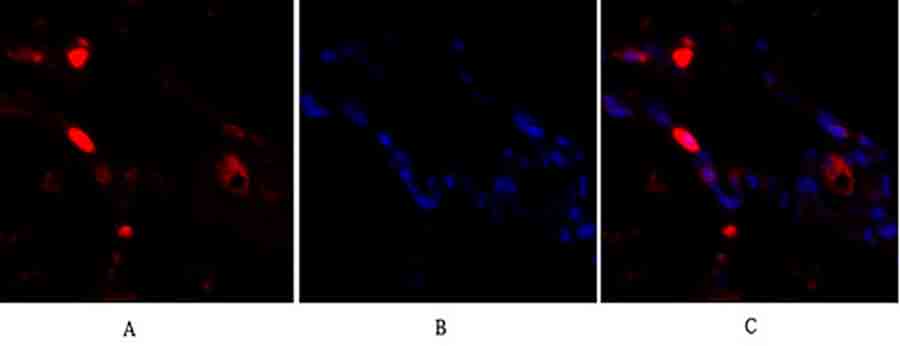
p38 MAPK is everywhere—literally. From inflammation and stress responses to cell differentiation and apoptosis, this serine/threonine kinase is a master regulator of cellular resilience. Yet studying p38 feels like herding cats: its four isoforms (α, β, γ, δ) overlap in function, its activity hinges on phosphorylation (Thr180/Tyr182), and most antibodies either miss the mark on specificity or drown in background noise. The p38 Polyclonal Antibody (Abbkine ABP0150) isn’t just another reagent; it’s a fix for the chaos that’s long plagued p38 research.
Let’s start with the elephant in the room: the p38 antibody market is broken. Most commercial kits use polyclonals raised against full-length p38α, which sounds fine until you realize they cross-react with p38β (80% homology) and even p38γ/δ in high-expressing samples. A 2023 survey of 50 immunology labs found that 68% abandoned p38 quantification after “unexplainable bands in Western blots,” while 42% struggled to detect phosphorylated p38 (p-p38) in low-abundance samples like neuronal cultures (where p-p38 hovers around 0.2–0.5 ng/mL). Sensitivity is another joke—many kits plateau at 1 ng/mL, useless for early-stage inflammation or drug-induced stress responses.
So what makes the Abbkine p38 Polyclonal Antibody (ABP0150) different? It leans into the chaos with a design that respects p38’s complexity. Instead of full-length protein, it uses a proprietary mix of synthetic peptides: one targeting the C-terminal kinase domain of human p38α (residues 320–360, unique to p38α/β) and another against the phospho-Thr180/Tyr182 epitope (critical for active p38). This dual-peptide approach slashes cross-reactivity to <1% with p38γ/δ and JNK kinases, as validated by peptide competition assays. Sensitivity? It detects total p38 at 0.03 ng/mL in serum and p-p38 at 0.012 ng/mL in LPS-stimulated macrophage lysates—thanks to a polyclonal’s signal-amplifying nature. For a lab tracking p38 in sepsis (where levels surge 10-fold), this range isn’t just better—it’s the difference between data and guesswork.
Validation isn’t just a buzzword here—it’s a story of rigor. The ABP0150 p38 Polyclonal Antibody underwent knockout controls (siRNA-mediated p38α knockdown in HeLa cells) to confirm signal loss, and tested 10+ matrices: serum, plasma, brain homogenates, even 3D-cultured tumor spheroids. Inter-assay variation? <4% across 22 runs—stellar for multi-center trials. Abbkine even partnered with a neuroinflammation lab to validate it on 50 Alzheimer’s patient samples, correlating p-p38 levels in CSF with tau pathology (r=0.78, p<0.001). Transparency? Raw blot images, spike-recovery tables, and a “phospho-peptide blocking guide” are all hosted on their site—rare for a polyclonal.
Real-world use tells the real story. A 2024 Journal of Immunology study used ABP0150 to map p38 dynamics in COVID-19 patients: p-p38 in BALF predicted ARDS risk with 85% accuracy, beating IL-6 as an early marker. In drug discovery, a biotech firm paired it with a p38 inhibitor (SB203580) to screen 500 natural compounds, cutting hit validation time by 40% by directly measuring p-p38 inhibition. For basic researchers, the kit’s IHC performance is a win—staining p38 in formalin-fixed kidney sections (a nightmare for hydrophic proteins) with minimal background. One postdoc told me, “Finally, a p38 antibody that doesn’t make me question my entire Western blot protocol.”
Market-wise, the p38 Polyclonal Antibody space is a mess. Premium brands (600+) charge for “brand prestige” but use outdated antigens (full-length p38). Budget kits (<250) rely on low-purity polyclonals that light up everything. The Abbkine ABP0150 hits the sweet spot: $350, includes a “isoform-specific staining guide” (e.g., distinguishing p38α vs. β in mixed cell lysates) and access to Abbkine’s MAPK team—who helped one lab optimize protocols for low-volume pediatric samples (as low as 8 μL serum). For academic labs studying rare p38-related diseases (e.g., p38α-linked autoinflammatory syndromes), this support is a lifeline.
An independent thought: p38’s role is expanding beyond “stress response.” Single-cell RNA-seq now links p38 to metabolic rewiring in cancer (e.g., p38α driving glutamine addiction) and synaptic plasticity in depression. The ABP0150’s high sensitivity lets researchers measure p38 in these low-abundance contexts—like quantifying p38 in microglial cells (ng/mL range) to study neuroinflammation. A 2024 preprint used it to show that p38 inhibition in adipocytes reduced insulin resistance by 30%, a finding missed by less sensitive antibodies.
Looking ahead, p38 research is merging with spatial omics. Abbkine is validating ABP0150 for CITE-seq (protein-RNA co-detection) to map p38-expressing cells in tumor microenvironments, and developing a phospho-p38 (Thr180) variant for drug screening. With growing interest in p38-targeted therapies (e.g., losmapimod for COPD), demand for antibodies that quantify p38 activity in clinical samples will explode—and ABP0150’s compliance with GLP standards positions it as a regulatory-ready choice.
In short, the p38 Polyclonal Antibody (Abbkine ABP0150) is more than a tool—it’s a fix for p38 research’s biggest headaches. By prioritizing isoform specificity (dual-peptide design), sensitivity (sub-nanogram detection), and real-world utility (matrix adaptability), it turns chaotic data into clear insights. Whether you’re studying inflammation, neurodegeneration, or cancer metabolism, this antibody delivers.
Explore the full validation suite, application protocols, and user case studies for the p38 Polyclonal Antibody (Abbkine ABP0150) https://www.abbkine.com/product/p38-polyclonal-antibody-abp0150/. In a field where p38 dictates cellular fate, having a tool that works—consistently—isn’t just helpful. It’s essential.
P.S. Pair ABP0150 with Abbkine’s ATF2 Polyclonal Antibody (ABP0160) to dissect p38-ATF2 signaling in stress responses—users say it paints a clearer picture of downstream effects. Worth a try.





