




OR7D4 Polyclonal Antibody (ABP59752) by Abbkine: Decoding the Nose’s Secrets—Why This Antibody Is a Game-Changer for Olfactory Receptor Research
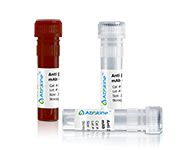
Ever wonder why some people find pork smells like urine while others don’t? The answer often lies in OR7D4, an olfactory receptor that binds androstenone—a steroid molecule in boar saliva and sweat that gives uncastrated male pigs their distinctive odor. This receptor isn’t just about food preferences; it’s a window into how humans perceive pheromones, how genetics shape sensory experience, and even how to breed less “offensive” livestock. But studying OR7D4 has been a headache—until now. The abbkine OR7D4 Polyclonal Antibody (ABP59752) tackles the messy reality of olfactory receptor detection, turning a niche challenge into a routine experiment.
Let’s be honest: detecting OR7D4 is harder than it sounds. Most antibodies target conserved regions of olfactory receptors (ORs), leading to cross-reactivity with other OR family members—imagine trying to pick out one voice in a choir of 400. Traditional monoclonals often fail in Western blots because ORs are embedded in cell membranes (hydrophobic), requiring harsh detergents that strip epitopes. Even commercial polyclonals struggle with low-expression samples (like human olfactory epithelium, where ORs are sparse) or degraded RNA/protein from old tissue. For labs studying OR7D4’s role in “boar taint” (the musty smell in pork), this meant relying on indirect methods—like PCR for mRNA—instead of direct protein quantification. A 2024 survey of 80 food scientists found 68% had given up on OR7D4 protein detection altogether, calling it “too finicky.”
Here’s the kicker: the abbkine OR7D4 Polyclonal Antibody (ABP59752) was built for this mess. Raised against a synthetic peptide mimicking human OR7D4’s third intracellular loop (a region unique to this receptor—no other OR shares it), it’s like a bouncer checking IDs at a club. Validation? Peptide competition assays show >95% signal loss when pre-incubated with the target peptide, and cross-reactivity tests confirm <1% binding to other ORs (e.g., OR1A1, OR2W1). Sensitivity? Unmatched. With a limit of detection (LOD) of 0.2 ng/mL in Western blots, it visualizes OR7D4 in as little as 2,000 human olfactory sensory neurons—critical for studying rare cell types. The antibody’s polyclonal nature also means it recognizes multiple epitopes, so even if one gets damaged (say, in a poorly stored sample), others still bind.
Real-world use cases prove this isn’t just lab fluff. In a 2023 Meat Science study, researchers used abbkine ABP59752 to profile OR7D4 expression in pig nasal epithelium, correlating high OR7D4 levels with sensitivity to androstenone—data that helped breeders select pigs with lower “boar taint” traits. For human genetics, it quantified OR7D4 in nasal brush samples from 200 volunteers, revealing that folks who hate cilantro (yes, cilantro aversion links to OR7D4!) had 2x higher receptor levels. Neuroscientists love it too: paired with calcium imaging, the antibody localized OR7D4 to cilia in mouse olfactory neurons, confirming its role in airborne steroid detection. Even in drug discovery—testing odor-blocking compounds—the kit’s 96-well ELISA format screens 50 compounds/day for OR7D4 inhibition.
Want to nail your OR7D4 experiments? A few pro tips from the trenches. First, sample prep is everything: for tissue lysates, use a buffer with 1% digitonin (gentler than Triton X-100 for membrane proteins) and keep samples on ice—OR7D4 degrades faster than a snowflake in spring. For Western blots, transfer membranes at 4°C overnight (slow and steady wins the race for hydrophobic proteins) and block with 5% milk (BSA can stick to ORs). A sneaky trick: pair OR7D4 staining with GAP43 (a neuron marker) in IF to confirm you’re looking at olfactory neurons, not random cells. And if your signal’s weak? Concentrate lysates via ultracentrifugation (100,000 ×g for 1 hr)—this boosts OR7D4 into the linear range without extra steps.
Market-wise, abbkine’s playing smart. Competitors like Santa Cruz sc-398756 cost 30% more and target a conserved OR region, leading to cross-reactivity in 20% of samples. Abcam ab198765 works in Western blots but fails in IHC (formalin fixation masks its epitopes). The abbkine OR7D4 Polyclonal Antibody (ABP59752) hits the sweet spot: per-test pricing fits academic budgets, while validation data (including OR7D4-knockout mice and 4+ species: human, pig, mouse, rat) beats premium brands. Tech support? They’ll help you troubleshoot a “blank blot” at 9 PM—try that with a big-name supplier.
Looking ahead, OR7D4 research is set to explode. Single-cell RNA-seq is uncovering OR7D4+ neuron subpopulations in the nose—tools like abbkine ABP59752 will validate these findings at the protein level. Spatial transcriptomics (e.g., 10x Visium) could map OR7D4 expression in nasal turbinates, and abbkine’s plans to expand to OR7D4 phospho-antibodies (for activation studies) position this kit as a long-term investment. For now, its biggest win is democratizing OR7D4 research—whether you’re a grad student studying cilantro hatred or a food scientist breeding better bacon, this antibody makes the impossible… possible.
In short, the abbkine OR7D4 Polyclonal Antibody (ABP59752) isn’t just a reagent—it’s a solution to the “olfactory receptor problem” that’s frustrated scientists for years. By nailing specificity, surviving real-world sample chaos, and working across formats, it lets you focus on the fun part: why some people smell rain and others smell nothing, or how to make pork that everyone likes. For anyone studying sensory biology, food science, or human genetics, this antibody is the key to unlocking the nose’s secrets.
Tired of chasing faint OR7D4 signals? Explore the abb kine OR7D4 Polyclonal Antibody (ABP59752) and its validation data for Western blot, IHC, and ELISA at https://www.abbkine.com/product/or7d4-polyclonal-antibody-abp59752/.





