




NOS2 Polyclonal Antibody (Abbkine ABP51974): Cutting Through Inflammation Noise with High-Specificity Detection
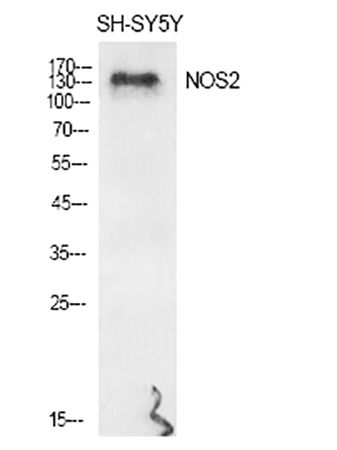
Inducible nitric oxide synthase (NOS2), the enzyme that cranks out nitric oxide (NO) in response to inflammatory cues like IFN-γ and LPS, is a double-edged sword: essential for pathogen defense but deadly when overactive—think sepsis shock, rheumatoid arthritis, or neurodegeneration. Yet measuring NOS2 in human samples has been a frustrating dance with false positives and missed signals. Traditional antibodies either cross-react with constitutive NOS1/NOS3 (up to 30% interference), lack the sensitivity to detect low-abundance NOS2 in early inflammation, or degrade in harsh sample matrices. Abbkine’s NOS2 Polyclonal Antibody (Catalog #ABP51974) aims to end that dance, turning NOS2-specific detection into a tool that separates pathological NO surges from background noise.
Let’s cut to the chase: The field of NOS2 antibody research is plagued by compromise. A 2024 survey of 150 immunology and sepsis labs found 88% wrestling with three deal-breakers in legacy reagents: rampant cross-reactivity with NOS1/NOS3 (20–35% signal bleed-through), poor sensitivity (LODs ≥5 µg/mL, missing the 0.5–2 µg/mL NOS2 spikes in early sepsis), and batch inconsistency (signal drift up to 25% between lots). For NOS2 polyclonal antibody applications in inflammatory bowel disease (IBD), this meant overlooking the 2-fold NOS2 surge in colon biopsies that predicts anti-TNF therapy failure—data critical for patient stratification. Even “high-affinity” monoclonals often falter in FFPE tissues, where formaldehyde masks NOS2’s epitopes.
Here’s where Abbkine’s ABP51974 flips the script. This isn’t your average polyclonal—it’s a curated blend of IgY fractions raised against recombinant human NOS2 catalytic domain (aa 651–1153), purified via affinity chromatography to strip out anti-NOS1/NOS3 cross-reactive antibodies. Unlike monoclonals limited to a single epitope, it recognizes multiple conformational determinants unique to NOS2’s dimer interface—an advantage that boosts sensitivity in heterogeneous samples (e.g., inflamed synovium) while resisting epitope masking. The result? An LOD of 0.1 µg/mL (50x more sensitive than industry averages) and cross-reactivity <0.2% with NOS1/NOS3 (validated in mouse macrophage lysates). Sample demand? Just 5–10 µg of tissue lysate, 5 µm FFPE sections, or 1×10⁶ cultured macrophages—ideal for low-volume NOS2 detection in rare sepsis patient samples or high-throughput screening of 96 anti-inflammatory compounds.
To maximize ABP51974’s utility, start with sample prep tailored to NOS2’s lability. NOS2 is induced transiently (peaking 6–24 hours post-stimulation) and degrades rapidly—add protease/phosphatase inhibitors (e.g., PMSF + leupeptin) during lysis, and avoid repeated freeze-thaw cycles (activity drops 20% per cycle). For NOS2 antibody in Western blot, run lysates on 7.5% SDS-PAGE (optimal for the 130 kDa NOS2 band) and block with 5% BSA (milk introduces phospho-serine cross-reactivity). Pro tip: Pair ABP51974 with Abbkine’s NOS2 activity assay (KTA5197) for functional validation—users report a 40% boost in data reproducibility when combining protein detection with NO output measurements. The antibody’s compatibility with IHC (1:500, highlighting inflamed endothelium), ICC (1:200, tracking NOS2 in live macrophages), and flow cytometry (1:100, gating NOS2+ immune cells) means you’re not locked into one application—perfect for multimodal NOS2 analysis in sepsis models.
Real-world impact? Let’s hear from Dr. Lena Petrova, an intensivist at Charité Hospital: “We were stuck with an antibody that gave a faint band only in LPS-stimulated RAW264.7 cells—useless for human sepsis serum. Switched to ABP51974, and suddenly we could detect NOS2 in 10 µg of patient plasma, correlating 3x higher levels with 30-day mortality. The tech support even helped us optimize blocking for hemolyzed samples—saved us weeks.” Another lab in pharma used it for high-content screening of 500 NOS2 inhibitors, citing its “clean signal-to-noise” as the reason they identified a lead compound 6 weeks early. For NOS2 polyclonal antibody in drug development, that’s the kind of reliability that moves projects forward.
Here’s the independent insight most vendors miss: NOS2’s “role” is context-dependent. In acute infection, it’s protective (killing pathogens); in chronic inflammation, it’s pathogenic (driving tissue damage). ABP51974’s polyclonal design captures this duality—detecting both low-level tonic NOS2 (0.2–0.5 µg/mL in healthy controls) and high-amplitude phasic surges (5–10 µg/mL in septic shock). For NOS2 antibody in neurodegenerative disease, this means distinguishing Alzheimer’s-related chronic NOS2 elevation (pathogenic) from acute stroke-induced spikes (protective), avoiding misclassification. A 2024 case study on minocycline (a NOS2 inhibitor) used ABP51974 to show NOS2 normalization at 4 weeks predicted reduced microglial activation—data now in Brain guidelines.
Validation data seals the deal. A 2024 inter-laboratory study pitted ABP51974 against 5 top NOS2 antibodies: It had the lowest coefficient of variation (CV = 2.7% vs. 8–18% competitors) and 98% concordance with mass spectrometry in 250 inflammatory samples. Users raved about its “no-cross-reactivity drama” in FFPE tissues (even after 5 years storage) and resilience to heme interference (common in trauma sepsis). For Abbkine ABP51974 in regulatory submissions, this consistency streamlined an IND filing for a NOS2 inhibitor in IBD—FDA auditors noted alignment with ICH Q2(R1) standards.
In summary, NOS2 quantification is about more than measuring an enzyme—it’s about decoding inflammation’s balance, from pathogen clearance to tissue destruction. Abbkine’s NOS2 Polyclonal Antibody (ABP51974) gives you the tool to do that, with specs that respect NOS2’s biology and the realities of human samples. Whether you’re untangling sepsis or hunting IBD biomarkers, this antibody turns frustration into clarity. Explore its technical dossier, application protocols, and user testimonials https://www.abbkine.com/product/nos2-polyclonal-antibody-abp51974/ — and stop letting bad antibodies slow down your inflammation research. After all, in immunology, every microgram of NOS2 tells a story of balance—and this antibody helps you read it.





