




Navigating the Complexities of Oxidative Stress Research: The Role of Precise Superoxide Anion Detection
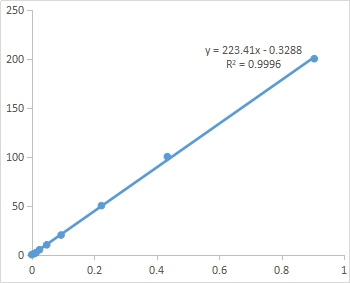
Understanding the dynamics of reactive oxygen species (ROS) remains a fundamental challenge in modern cell biology and pathophysiology. Among these, the superoxide anion (O2•−) serves as a primary ROS, acting as a pivotal signaling molecule in normal physiology and a contributor to oxidative damage in numerous disease states. Accurate quantification of its generation is therefore not merely a technical step, but a critical determinant for validating hypotheses related to cellular stress, mitochondrial function, and inflammatory responses. The CheKine™ Micro Superoxide Anion Assay Kit (Abbkine, Cat# KTB1210) emerges as a tailored solution designed to address the specific sensitivities and practical demands of this measurement.
A significant advantage of this methodology lies in its optimized design for biological samples. The assay utilizes a probe that selectively reacts with superoxide anion to produce a stable, colored product with absorbance measurable at a defined wavelength. This direct approach minimizes interference from other cellular components, providing a clearer representation of actual O2•− flux. Its micro-scale format is a direct response to contemporary research needs, enabling high-throughput screening from limited sample volumes—a necessity for precious cell cultures or tissue homogenates. This efficiency translates into more robust datasets from single experiments.
From an application perspective, the utility of this kit spans diverse experimental models. Researchers investigating the mechanisms of apoptosis, neuronal degeneration, or ischemia-reperfusion injury will find it indispensable for correlating superoxide bursts with cellular outcomes. In plant biology, it facilitates the study of oxidative bursts in response to pathogen attack. Furthermore, in drug discovery, it provides a reliable tool for screening compounds that either mitigate or induce oxidative stress, offering a quantitative endpoint for efficacy or toxicity.
When evaluated against common alternatives, the kit’s procedural coherence becomes evident. Traditional methods, such as those relying on cytochrome c reduction or less specific fluorescent dyes, often present challenges with stability, specificity, or adaptability to plate readers. The CheKine™ kit standardizes the process with ready-to-use reagents, reducing procedural variability and enhancing inter-experiment reproducibility. This reliability is paramount when comparative analyses across treatment groups or time points are required.
The broader context of oxidative stress research underscores the necessity for such optimized tools. As the field moves beyond mere detection towards understanding spatiotemporal generation and compartmentalized effects within cells, the initial step of accurate, quantitative measurement becomes even more foundational. This assay kit effectively serves that foundational need, empowering researchers to establish clear baselines and experimentally induced changes in superoxide levels with confidence.
In conclusion, the CheKine™ Micro Superoxide Anion Assay Kit (KTB1210) represents a thoughtfully developed resource for the scientific community. It aligns technical precision with practical workflow considerations, supporting rigorous investigation into one of cell biology's most dynamic processes. For researchers committed to elucidating the role of ROS, integrating this tool can strengthen experimental validity and accelerate project progression. Detailed protocol and specification information is available via the product link: CheKine™ Micro Superoxide Anion Assay Kit - KTB1210.





