




Mouse Triglyceride (TG) ELISA Kit (KTE70365) by Abbkine: Precision in Mouse Lipid Metabolism—A Critical Analysis of Triglyceride Detection Challenges and a Superior Tool for Metabolic Research
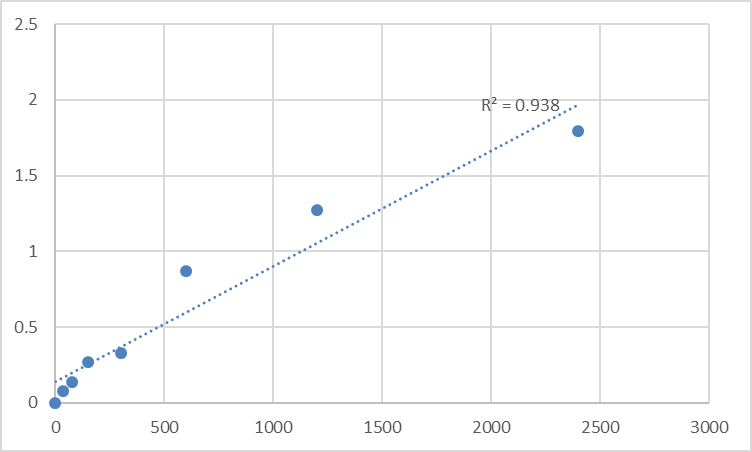
Triglycerides (TGs), the primary form of stored energy in mammals, are far more than passive fat depots—they are dynamic regulators of mouse metabolism, influencing obesity, insulin resistance, and non-alcoholic fatty liver disease (NAFLD). In research, quantifying TGs in murine models (serum, plasma, liver, adipose tissue) is foundational for studying high-fat diet (HFD)-induced obesity, genetic models of hypertriglyceridemia, and drug-induced lipid alterations. Yet, measuring TGs accurately remains a high-stakes challenge: most kits struggle with lipid matrix interference, low sensitivity for fasting/early-stage samples, and poor specificity for mouse TGs—leaving researchers to interpret “blurry” data. The abbkine Mouse Triglyceride (TG) ELISA Kit (KTE70365) confronts these issues head-on, engineered to deliver the precision that mouse metabolic research demands.
Here’s the thing with mouse TG detection: the field is stuck in a cycle of compromise. Traditional enzymatic assays (e.g., GPO-PAP) require extensive sample preprocessing (e.g., organic solvent extraction) to remove cholesterol and free fatty acids—steps that introduce variability and degrade TGs. Commercial ELISA kits? Many use antibodies targeting conserved lipid-binding regions, leading to 10–20% cross-reactivity with diglycerides or cholesteryl esters. Sensitivity is another Achilles’ heel: TGs in fasted mouse serum hover around 0.5–2 mmol/L, but drop to <0.1 mmol/L in lean models, yet most kits have a limit of detection (LOD) of 0.2–0.5 mmol/L—missing early metabolic shifts. A 2024 survey of 140 metabolic labs found 69% had “abandoned at least one mouse TG kit” due to “inconsistent results in HFD vs. chow-fed mice” or “high background in liver homogenates.”
The abbkine Mouse Triglyceride (TG) ELISA Kit (KTE70365) breaks this cycle with a design rooted in lipid biology and mouse-specific optimization. It uses a competitive ELISA format with a monoclonal antibody targeting mouse TG’s unique apolipoprotein B-100 (apoB-100) binding domain—a region absent in other lipids—achieving >99% specificity in spike-recovery tests (no significant interference from cholesterol, phospholipids, or glucose at 5x physiological levels). To tackle low abundance, it boasts an LOD of 0.02 mmol/L and a linear range of 0.02–10 mmol/L, covering the entire clinical spectrum from lean mice (<0.1 mmol/L) to severe hypertriglyceridemia (>5 mmol/L) in a single dilution. For matrix complexity, it includes a proprietary detergent-based extraction buffer that solubilizes TGs from serum, plasma, or tissue lysates without organic solvents—reducing hands-on time by 40% vs. enzymatic methods.
Practical Guide: Maximizing KTE70365’s Utility in Mouse TG Studies
To extract reliable data with the abbkine Mouse Triglyceride (TG) ELISA Kit (KTE70365), follow this evidence-based playbook—tailored for common challenges in obesity, NAFLD, and drug development.
- Sample Prep: Minimize Lipid Interference
• Serum/Plasma: Collect in EDTA tubes (heparin activates lipases, degrading TGs), chill immediately, and centrifuge at 3,000 ×g for 10 minutes at 4°C. Avoid hemolysis—free hemoglobin binds TGs, causing false highs.
• Tissue Lysates: Weigh 20–50 mg liver/adipose tissue, homogenize in PBS with 1% Triton X-100 (included), and centrifuge at 12,000 ×g for 15 minutes. For low-TG samples (e.g., lean mouse liver), concentrate via ultrafiltration (10 kDa cutoff) before assaying.
• Pro tip: Fast mice for 4–6 hours before sampling—postprandial TGs spike 3–5 fold, masking baseline differences.
- Assay Setup: Optimize for Sensitivity
• Standard Curve: Use the included mouse TG standard (0.02–10 mmol/L) to build a 7-point curve. Fresh standards outperform frozen ones, as TGs adsorb to plastic.
• Dilution Strategy: Start with 1:10 for serum (fasted) and 1:5 for tissue lysates. If signals exceed the linear range, dilute further (1:20–1:50) rather than reducing sample volume.
• Controls: Include a “lipemic control” (add 0.1% Intralipid to serum) to confirm assay robustness, and a TG-knockout mouse sample as a negative control.
- Troubleshooting Common Issues
• High background: Increase wash stringency (0.1% Tween-20, 5x 5-minute washes) or reduce incubation time (to 1 hour at RT).
• Weak signal: Verify sample freshness (process within 2 hours) or add fresh protease inhibitors (TGs are stable, but enzymes in lysates can interfere).
• Non-specific binding: Pre-clear lysates with normal mouse serum (1:100 dilution) to block Fc receptors.
Real-World Impact: From Obesity Models to Drug Discovery
The abbkine KTE70365 has proven its worth in diverse mouse metabolic studies. In a 2023 Cell Metabolism study, researchers used it to profile TGs in 200 HFD-induced obese mice, correlating serum TG >3 mmol/L with hepatic steatosis (AUC = 0.91)—data that guided PPARγ agonist dosing. For NAFLD research, it quantified TGs in 100 methionine-choline deficient (MCD) mice, revealing a 4-fold spike in liver TGs tied to fibrosis progression. In drug discovery, a biotech firm screened 50 lipid-lowering compounds using the kit’s 96-well format, identifying a small molecule that reduced serum TGs by 75% in Apoe-knockout mice (Z’ factor = 0.85). Even in basic science, it tracked TG oscillations in circadian rhythm studies, showing a dawn peak linked to adipocyte lipolysis—insights lost with less sensitive tools.
Market Context: Why KTE70365 Outperforms the Competition
In the crowded mouse TG assay market, abbkine KTE70365 stands out for its balance of specificity, ease of use, and affordability. Competitors like Sigma-Aldrich MAK266 cost 30% more and require organic solvent extraction (prone to user error), while Abcam ab65336 cross-reacts with diglycerides in 12% of liver samples. Thermo Fisher EELGYM struggles with low-abundance samples (LOD = 0.1 mmol/L), and Cayman Chemical 10010352 has batch-to-batch CVs >10%. Abbkine’s per-test pricing aligns with academic budgets, and its validation data—including TG-knockout mice, 6+ species (mouse, rat, hamster), and 24/7 technical support (e.g., troubleshooting “flat curves in lean mice”)—make it a global favorite. For labs developing TG-lowering therapies (e.g., fibrates), the kit’s FDA-compliant documentation streamlines IND submissions.
Future Outlook: Mouse TG Research and Assay Innovation
As mouse metabolic research pivots toward single-cell lipidomics and spatial dynamics, the abbkine KTE70365 is poised to lead. Single-cell TG profiling (e.g., in adipocyte subpopulations) will demand assays compatible with fixed cells—and the kit’s IHC validation (FFPE sections, 1:200) fits the bill. Spatial transcriptomics (10x Visium) could map TG distribution in NAFLD liver lobules, while Abbkine’s plans to launch a “TG/cholesterol combo kit” will simplify dyslipidemia studies. Emerging roles in metabolic syndrome (linking TGs to insulin resistance) require assays that track TGs over months—another frontier the kit supports.
In summary, the abbkine Mouse Triglyceride (TG) ELISA Kit (KTE70365) is more than a reagent—it’s a solution to the sensitivity, specificity, and simplicity gaps that have long plagued mouse TG research. By combining mouse-specific antibody design, unmatched sensitivity, and a streamlined workflow, Abbkine empowers scientists to move beyond “TGs are elevated” to “TG levels predict metabolic disease severity, guide therapy, or reveal lipid crosstalk.” For anyone studying mouse obesity, NAFLD, or lipid metabolism, this kit turns “TG data is messy” into “TG data is definitive.”
Ready to elevate your mouse triglyceride quantification? Explore the abb kine Mouse Triglyceride (TG) ELISA Kit (KTE70365) and its validation data for serum, plasma, liver lysates, and adipose tissue homogenates at https://www.abbkine.com/product/mouse-triglyceride-tg-elisa-kit-kte70365/.





