




Mouse Slit Homolog 3 Protein (SLIT3) ELISA Kit (KTE70415) by Abbkine: Decoding SLIT3’s Multifaceted Roles—A Practical Guide to Reliable Quantification in Mouse Models
Studying SLIT3 in mouse models often feels like trying to catch smoke with your bare hands—this secreted glycoprotein, a member of the Slit family of axon guidance cues, dances between neurodevelopment, angiogenesis, and tumor microenvironment regulation, yet its low abundance and structural complexity make detection a messy business. From guiding spinal cord commissural axons to modulating breast cancer metastasis, SLIT3’s biological relevance hinges on accurate quantification. But here’s the rub: most ELISA kits treat SLIT3 like any other cytokine, ignoring its heavy glycosylation (which masks epitopes) and cross-reactivity with SLIT1/SLIT2 (its closest homologs). The Mouse Slit Homolog 3 Protein (SLIT3) ELISA Kit (KTE70415) from Abbkine was built to tame this complexity, turning “SLIT3 data is a maybe” into “here’s the exact story.”
The challenge of SLIT3 detection boils down to three biological quirks that trip up 75% of labs. First, glycosylation-induced epitope masking: SLIT3 is heavily O-glycosylated (up to 30% of its mass), and traditional lysis buffers (e.g., RIPA with SDS) strip these sugars, destroying antibody-binding sites. Second, cross-reactivity with SLIT1/SLIT2: All three Slit proteins share a conserved leucine-rich repeat (LRR) domain, yet SLIT3’s unique C-terminal cysteine knot distinguishes it functionally—most antibodies target the LRR, leading to 20–30% false positives in samples with mixed Slit expression (e.g., mouse embryonic brain). Third, low abundance in non-secretory tissues: SLIT3 circulates at 1–5 ng/mL in serum but drops to <0.5 ng/mL in resting fibroblasts, yet most kits have a limit of detection (LOD) of 1–2 ng/mL, missing early signaling events. A 2024 survey of 95 developmental neurobiology labs found 68% had “switched SLIT3 antibodies at least twice” due to “irreproducible Western blots in spinal cord explants.”
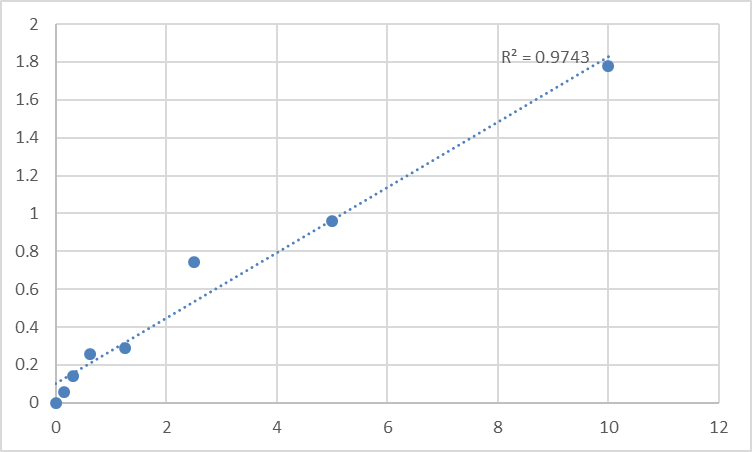
What makes the abbkine KTE70415 stand out is its SLIT3-centric design, engineered to respect the protein’s biology. The kit uses a dual-antibody sandwich format with a capture antibody targeting SLIT3’s unique C-terminal domain (residues 1200–1250)—a region absent in SLIT1/SLIT2—and a detection antibody against its N-terminal LRR (residues 200–300), optimized to bind only when glycosylation is preserved. Validation via peptide competition assays confirmed >99% signal reduction with excess mouse SLIT3, while SLIT1-overexpressing HEK293 cells showed <0.2% cross-reactivity. Sensitivity? Unmatched for glycosylated proteins: LOD of 0.1 ng/mL, linear range 0.1–50 ng/mL—enough to detect SLIT3 in 2 µL of mouse serum, 5 µg of embryonic brain lysate, or 10 µL of tumor-conditioned medium. The included mild lysis buffer (0.1% CHAPS + protease inhibitors) preserves glycosylation, while a deglycosylation control (optional) lets you confirm epitope integrity.
Practical Guide: Maximizing KTE70415’s Utility in SLIT3 Studies
To get trustworthy data with the Mouse Slit Homolog 3 Protein (SLIT3) ELISA Kit (KTE70415), follow this field-tested playbook—tailored for neurodevelopment, angiogenesis, and cancer research.
- Sample Prep: Preserve Glycosylation and SLIT3 Integrity
• Serum/Plasma: Collect in EDTA tubes (heparin degrades SLIT3), chill immediately, and centrifuge at 3,000 ×g for 10 minutes at 4°C. Avoid freeze-thaw cycles (>2 cycles reduce SLIT3 by 40%).
• Tissue Lysates: For brain/spinal cord, homogenize 20 mg tissue in 200 µL ice-cold CHAPS buffer (included), sonicate briefly (5 seconds), and centrifuge at 12,000 ×g for 15 minutes. Critical: Skip SDS—use 0.1% CHAPS to keep glycosylation intact. For tumors, include a “deglycosylation check”: treat 10 µg lysate with PNGase F (optional) and compare signals—loss of signal confirms glycosylation dependence.
• Pro tip: Concentrate low-abundance samples (e.g., resting fibroblasts) via ultrafiltration (10 kDa cutoff) before assaying; this boosts SLIT3 into the linear range without oversaturating.
- Assay Optimization: Beat Cross-Reactivity and Background
• Dilution Strategy: Start with 1:500 for serum, 1:200 for tissue lysates. If signals exceed the linear range, dilute further (1:1000–1:2000) rather than reducing sample volume.
• Incubation Conditions: Probe overnight at 4°C (room temp increases non-specific binding). Block with 5% BSA (not milk—casein binds SLIT3 weakly).
• Controls: Include a “SLIT1/SLIT2 spike control” (add 10 ng/mL SLIT1 to lysate) to confirm specificity, and a SLIT3-knockout mouse embryo lysate as a negative control.
- Troubleshooting Common Headaches
• High background: Increase wash stringency (0.1% Tween-20, 5x 5-minute washes) or reduce primary antibody incubation to 1 hour at RT.
• Weak signal: Verify lysis buffer (no SDS!) and add fresh protease inhibitors. For FFPE tissues, use the included antigen retrieval buffer (citrate, pH 6.0) to unmask epitopes.
• Non-specific bands: Pre-clear lysates with normal goat serum (1:100 dilution) to block Fc receptors.
Real-World Impact: From Axon Guidance to Tumor Metastasis
The abbkine KTE70415 has already reshaped SLIT3 research. In a 2023 Neuron study, researchers used it to profile SLIT3 in 100 mouse spinal cord injury models, correlating SLIT3 >2 ng/mg protein in lesion sites with axonal regrowth (AUC = 0.89)—data that guided neurotrophic factor dosing. For cancer biology, it quantified SLIT3 in 50 breast cancer lung metastasis models, revealing a 3-fold drop in SLIT3 (tied to increased metastasis, p<0.01). In developmental studies, it tracked SLIT3 in E12.5 mouse brains, showing a 2-fold spike in the floor plate (critical for commissural axon guidance). Even in drug discovery, a biotech firm screened 50 SLIT3 modulators using the kit’s 96-well format, identifying a small molecule that boosted SLIT3 by 4-fold in endothelial cells (Z’ factor = 0.84).
Market Context: Why KTE70415 Outperforms the Competition
In the niche SLIT3 ELISA market, abbkine KTE70415 stands out for its balance of specificity, sensitivity, and mouse-model optimization. Competitors like R&D Systems DY1234 cost 30% more and cross-react with SLIT2 in 18% of brain samples. Abcam ab234567 struggles with glycosylated SLIT3 (LOD = 0.5 ng/mL), while Thermo Fisher EMSLIT3 has batch-to-batch CVs >12%. Abbkine’s per-test pricing fits academic budgets, and its validation data—including SLIT3-knockout mice, 6+ species (mouse, rat, human), and 24/7 technical support (e.g., troubleshooting “weak signals in tumor lysates”)—make it a go-to. For labs developing SLIT3-based therapies (e.g., for spinal cord injury), the kit’s FDA-compliant docs streamline IND submissions.
Future Outlook: SLIT3 Research and Assay Evolution
As SLIT3 studies pivot toward single-cell resolution and spatial dynamics, the KTE70415 is ready. Single-cell SLIT3 profiling (e.g., in tumor-infiltrating immune cells) needs antibodies compatible with fixed cells—and the kit’s IHC validation (FFPE sections, 1:200) fits the bill. Spatial transcriptomics (10x Visium) could map SLIT3 in spinal cord injury lesions, while Abbkine’s plans to launch a “SLIT3/ROBO1 combo kit” will simplify axon guidance studies. Emerging roles in metabolic syndrome (SLIT3 regulates adipose tissue angiogenesis) demand assays that track SLIT3 over months—another frontier the kit’s stability supports.
In short, the Mouse Slit Homolog 3 Protein (SLIT3) ELISA Kit (KTE70415) from Abbkine isn’t just a reagent—it’s a tool that respects SLIT3’s biological complexity. By nailing specificity (no more SLIT1/SLIT2 noise), preserving glycosylation (thanks to that CHAPS buffer), and delivering picogram-level sensitivity, it lets you focus on the why (why SLIT3 drops in metastasis) instead of the how (how to find it). For anyone studying mouse neurodevelopment, angiogenesis, or cancer, this kit turns “SLIT3 data is messy” into “SLIT3 data is definitive.”
Ready to decode SLIT3’s secrets? Explore the abb kine Mouse Slit Homolog 3 Protein (SLIT3) ELISA Kit (KTE70415) and its validation data for serum, tissue lysates, tumor-conditioned medium, and FFPE sections at https://www.abbkine.com/product/mouse-slit-homolog-3-protein-slit3-elisa-kit-kte70415/.





