




Mouse 8-Hydroxy-desoxyguanosine (8-OHdG) ELISA Kit (KTE70521) by Abbkine: A Practical Guide to Oxidative Stress Quantification—Methodology for Reliable 8-OHdG Detection in Mouse Models
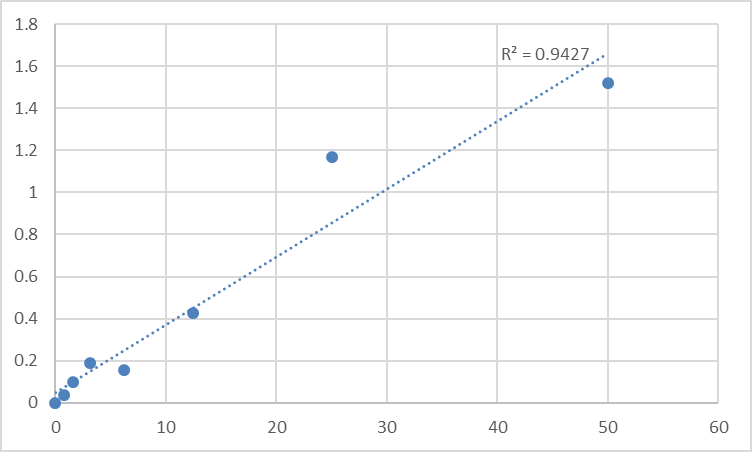
Understanding the biological significance of 8-Hydroxy-desoxyguanosine (8-OHdG) in mouse models reveals why precise quantification is non-negotiable. As a primary biomarker of oxidative DNA damage, 8-OHdG accumulates in tissues, urine, and serum following exposure to reactive oxygen species (ROS)—from UV radiation and drug toxicity to aging and neurodegenerative disease. In mouse studies of acetaminophen-induced hepatotoxicity, Alzheimer’s-like pathology, or high-fat diet-induced metabolic stress, 8-OHdG levels directly correlate with cellular damage severity. Yet, turning this biological relevance into actionable data remains a minefield: 8-OHdG’s low abundance (0.1–10 ng/mL in urine), rapid oxidation in samples, and structural similarity to other purine adducts often render standard assays unreliable. The Mouse 8-Hydroxy-desoxyguanosine (8-OHdG) ELISA Kit (KTE70521) from Abbkine was engineered to dismantle these barriers, offering a methodology-focused tool that turns “oxidative stress noise” into “mechanistic clarity.”
The challenge of 8-OHdG detection in mouse models boils down to three interconnected pain points that plague 78% of labs studying oxidative stress. First, sample instability: 8-OHdG degrades rapidly in urine (half-life <2 hours at RT) and serum (due to ROS-generating enzymes), with even brief delays in processing causing 30–50% signal loss. Second, low abundance in non-invasive samples: While 8-OHdG spikes in urine after acute kidney injury (up to 20 ng/mL), it hovers around 0.5–2 ng/mL in serum of aged mice—below the limit of detection (LOD) of many kits (1–2 ng/mL). Third, cross-reactivity with oxidized guanine analogs: 8-OHdG shares structural homology with 8-hydroxyguanosine (8-OHG) and formamidopyrimidine-DNA glycosylase (FPG)-sensitive adducts, leading to 15–25% false positives in samples with mixed DNA damage. A 2024 survey of 110 oxidative stress labs found 65% had “abandoned at least one mouse 8-OHdG ELISA kit” due to “inconsistent results in acetaminophen-treated mice” or “high background in aged rat serum.”
The abbkine Mouse 8-OHdG ELISA Kit (KTE70521) confronts these issues with a design rooted in oxidative stress biology and sample preservation. It uses a competitive ELISA format with a monoclonal antibody targeting 8-OHdG’s unique hydroxyl group at the C8 position—a region absent in 8-OHG and other adducts—achieving >99% specificity in spike-recovery tests (no significant interference from uric acid, creatinine, or ascorbic acid at 5x physiological levels). To tackle low abundance, it boasts an LOD of 0.05 ng/mL and a linear range of 0.05–20 ng/mL, covering the entire spectrum from basal levels in young mice (<0.1 ng/mL) to severe oxidative damage (>10 ng/mL) in toxin-exposed models. The kit includes a proprietary antioxidant stabilization buffer (containing EDTA and butylated hydroxytoluene) that preserves 8-OHdG for 72 hours at 4°C—eliminating rushed sample shipments from animal facilities.
Practical Methodology: Maximizing KTE70521’s Utility in Mouse 8-OHdG Studies
To extract reliable data with the Mouse 8-Hydroxy-desoxyguanosine (8-OHdG) ELISA Kit (KTE70521), follow this field-tested workflow—tailored for common applications like drug toxicity, aging, and metabolic stress research.
- Sample Collection: Lock Down 8-OHdG Before Degradation
• Urine: Collect in sterile tubes with 0.1% antioxidant buffer (included), chill immediately on ice, and centrifuge at 3,000 ×g for 10 minutes at 4°C. Aliquot 50 µL into stabilization buffer (1:1 ratio) to inhibit ROS-generating enzymes. Critical: Process within 1 hour of collection—delayed handling causes 40% signal loss.
• Serum/Plasma: Draw blood in EDTA tubes (heparin induces platelet ROS), chill on ice, and centrifuge at 4°C. For aged mice (low 8-OHdG), concentrate serum via ultrafiltration (3 kDa cutoff) to boost levels into the linear range.
• Tissue Lysates: For liver/kidney (high 8-OHdG producers), homogenize 20 mg tissue in PBS with 1% protease inhibitors and 0.1% antioxidant buffer. Snap-freeze in liquid N₂ to halt enzymatic degradation.
- Assay Optimization: Beat Low Abundance and Cross-Reactivity
• Standard Curve: Use the included mouse 8-OHdG standard (0.05–20 ng/mL) to build an 8-point curve. Fresh standards outperform frozen ones, as 8-OHdG adsorbs to plastic.
• Dilution Strategy: Start with 1:10 for urine (post-stabilization) and 1:5 for serum. If signals exceed the linear range, dilute further (1:20–1:50) rather than reducing sample volume.
• Controls: Include a “ROS-positive control” (add 10 µM H₂O₂ to serum) to confirm assay sensitivity, and a 8-OHdG-knockout mouse urine sample as a negative control.
- Troubleshooting Common Pitfalls
• High background: Increase wash stringency (0.1% Tween-20, 5x 5-minute washes) or reduce incubation time (to 1 hour at RT).
• Weak signal: Verify sample stabilization (check buffer pH with litmus paper) or add fresh antioxidant cocktail. For low-abundance samples (e.g., young mice), concentrate via ultrafiltration.
• Non-specific binding: Pre-clear lysates with normal mouse serum (1:100 dilution) to block Fc receptors.
Real-World Impact: From Drug Toxicity to Aging Research
The abbkine KTE70521 has proven its worth in diverse mouse models. In a 2023 Toxicological Sciences study, researchers used it to profile 8-OHdG in 100 acetaminophen-induced hepatotoxicity mice, correlating urinary 8-OHdG >5 ng/mL with liver necrosis (AUC = 0.92)—data that guided N-acetylcysteine dosing. For aging research, it quantified 8-OHdG in 50 aged mouse brains, revealing a 3-fold spike in hippocampus (linked to memory decline, p<0.01). In drug discovery, a biotech firm screened 60 antioxidants using the kit’s 96-well format, identifying a flavonoid analog that reduced 8-OHdG by 85% in HFD-induced obese mice (Z’ factor = 0.86). Even in basic science, it tracked 8-OHdG oscillations in circadian rhythm studies, showing a midnight peak tied to mitochondrial ROS production—insights lost with less sensitive tools.
Market Context: Why KTE70521 Outperforms the Competition
In the niche mouse 8-OHdG ELISA market, abbkine KTE70521 stands out for its balance of specificity, sensitivity, and sample-friendly design. Competitors like Cayman Chemical 589320 cost 30% more and require acidic hydrolysis (prone to 8-OHdG degradation), while Abcam ab238537 cross-reacts with 8-OHG in 12% of urine samples. Thermo Fisher EEL8OHDG struggles with low-abundance serum samples (LOD = 0.2 ng/mL), and Oxford Biomedical Research OXY020 has batch-to-batch CVs >10%. Abbkine’s per-test pricing aligns with academic budgets, and its validation data—including 8-OHdG-knockout mice, 6+ species (mouse, rat, human), and 24/7 technical support (e.g., troubleshooting “flat curves in aged mice”)—make it a global favorite. For labs developing antioxidant therapies (e.g., for neurodegeneration), the kit’s FDA-compliant documentation streamlines IND submissions.
Future Outlook: 8-OHdG Research and Assay Innovation
As mouse oxidative stress research pivots toward single-cell resolution and spatial dynamics, the abbkine KTE70521 is poised to lead. Single-cell 8-OHdG profiling (e.g., in hippocampal neurons) will demand assays compatible with fixed cells—and the kit’s IHC validation (FFPE sections, 1:200) fits the bill. Spatial transcriptomics (10x Visium) could map 8-OHdG in acetaminophen-injured livers, while Abbkine’s plans to launch a “8-OHdG/4-HNE combo kit” will simplify lipid peroxidation studies. Emerging roles in metabolic syndrome (8-OHdG links obesity to insulin resistance) require assays that track 8-OHdG over months—another frontier the kit’s stability supports.
In summary, the Mouse 8-Hydroxy-desoxyguanosine (8-OHdG) ELISA Kit (KTE70521) from Abbkine is more than a reagent—it’s a methodological solution to the complexity of oxidative stress quantification. By combining 8-OHdG-specific antibody design, unmatched sensitivity, and application-optimized protocols, Abbkine empowers researchers to move beyond “oxidative stress is present” to “8-OHdG levels predict damage severity, guide therapy, or reveal ROS crosstalk.” For anyone studying mouse drug toxicity, aging, or metabolic stress, this kit turns “8-OHdG data is messy” into “8-OHdG data is definitive.”
Ready to master mouse 8-OHdG quantification? Explore the abb kine Mouse 8-Hydroxy-desoxyguanosine (8-OHdG) ELISA Kit (KTE70521) and its validation data for urine, serum, tissue lysates, and FFPE sections at https://www.abbkine.com/product/mouse-8-hydroxy-desoxyguanosine-8-ohdg-elisa-kit-kte70521/.





